Inside the World's Largest Data Centers: How the Internet Really Runs
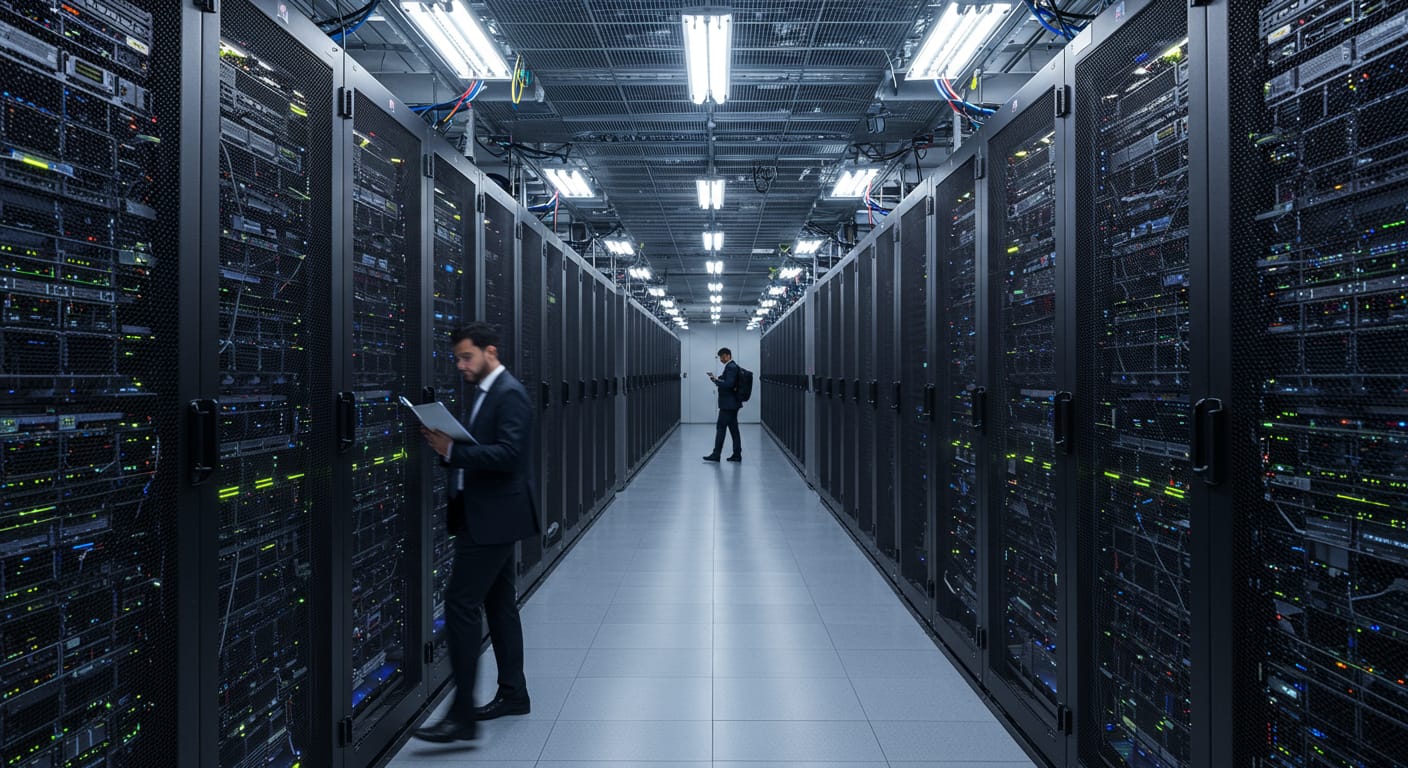
Behind every Google search, Netflix stream, and video call lies an invisible empire of concrete, steel, and silicon. The world's largest data centers—sprawling facilities that can stretch for miles—form the physical backbone of our digital lives. These hyperscale operations represent some of humanity's most impressive engineering achievements, quietly powering the internet for billions of users worldwide.
The Scale Behind the Screen: Understanding Hyperscale Data Centers
Hyperscale data centers dwarf traditional facilities in every dimension. While conventional data centers might house hundreds of servers, hyperscale facilities operate tens of thousands of machines across multiple buildings. These technological cities serve a single purpose: processing and storing the ever-growing flood of digital information that defines modern life.
Amazon Web Services, Google, and Microsoft operate the largest networks of these facilities globally. AWS alone runs over 80 availability zones across 25 geographic regions, with each zone containing multiple data centers. Google's infrastructure spans more than 20 regions worldwide, processing over 8.5 billion searches daily. Microsoft Azure operates in more than 60 regions, making it one of the most geographically distributed cloud platforms.
The numbers behind these operations are staggering. A single hyperscale facility might contain 50,000 to 80,000 servers, store exabytes of data, and handle millions of simultaneous user requests. Facebook's data center in Prineville, Oregon, spans 334,000 square feet—equivalent to six football fields. These facilities don't just store data; they're constantly processing, analyzing, and moving information at speeds that make global real-time communication possible.
Power and Cooling: The Engineering Challenge of Massive Scale
Operating at hyperscale means confronting energy demands that rival small cities. A large data center can consume between 20 to 50 megawatts of power—enough to supply 15,000 to 37,000 homes. Some of the world's largest facilities push beyond 100 megawatts, making them among the most power-intensive buildings ever constructed.
Reliability demands redundancy at every level. Hyperscale facilities maintain multiple power sources: primary grid connections, backup generators, and uninterruptible power supplies that can bridge any gap. Google's data centers feature N+1 redundancy, meaning every critical system has at least one backup. When Hurricane Sandy knocked out power across the northeastern United States, affected data centers seamlessly switched to generator power, maintaining operations throughout the outage.
Cooling represents an equally complex challenge. Servers generate enormous amounts of heat, and cooling systems often account for 30-40% of a facility's total energy consumption. Modern hyperscale operations employ sophisticated cooling technologies: liquid cooling systems that directly cool server components, free air cooling that leverages outside temperatures, and heat recovery systems that capture waste heat for other uses.
The industry measures efficiency through Power Usage Effectiveness (PUE), comparing total facility power consumption to power used directly by computing equipment. Leading hyperscale operators achieve PUE ratings below 1.2, meaning less than 20% of total power goes to non-computing functions. Google reports an average PUE of 1.10 across its global fleet, representing world-class efficiency.
The Physical Backbone: Network Infrastructure and Connectivity
Hyperscale data centers exist within a global web of fiber optic cables that span continents and ocean floors. These facilities connect to multiple internet service providers and maintain direct peering relationships with other major networks, ensuring data travels the most efficient routes possible.
Content delivery networks represent a crucial evolution in this infrastructure. Rather than serving all users from central locations, hyperscale operators deploy smaller facilities closer to population centers. This edge computing approach reduces latency—the delay users experience when requesting information. A user in Tokyo accessing content stored in Virginia might experience delays of 200+ milliseconds, while the same content served from a local edge facility responds in under 20 milliseconds.
Geographic location profoundly impacts performance. Data centers in Northern Virginia benefit from proximity to major internet exchange points and submarine cable landing sites. Singapore serves as a crucial hub for Asian internet traffic, while London facilities connect European users to global networks. Hyperscale operators carefully select locations based on connectivity, regulatory environment, and proximity to users.
Redundancy extends beyond individual facilities to entire networks. Major operators maintain multiple data centers in each region, automatically shifting traffic when issues arise. When a fiber cut disrupts connectivity, traffic reroutes through alternative paths within seconds, often invisibly to end users.
Security Fortress: Protecting the Digital World's Foundation
Hyperscale data centers implement security measures that exceed those found at many government facilities. Physical access requires multiple authentication factors, often including biometric scanners, smart cards, and human verification. Perimeter security features motion sensors, thermal cameras, and 24/7 human monitoring.
Interior security employs "defense in depth" principles with multiple security zones. Visitors must pass through man-traps—small rooms with interlocking doors that prevent unauthorized access. Server areas maintain separate access controls, ensuring that even authorized personnel only access equipment relevant to their roles.
Digital security measures complement physical protections. Networks employ sophisticated monitoring systems that detect unusual traffic patterns or potential threats. Automated systems can isolate compromised segments within seconds, preventing issues from spreading across the broader infrastructure.
Compliance requirements add another layer of complexity. Hyperscale operators must meet regulatory standards including SOC 2, ISO 27001, and various government certifications. These requirements influence everything from hiring practices to equipment disposal procedures, ensuring that security considerations permeate every aspect of operations.
Green Computing Revolution: Sustainability in Hyperscale Operations
The environmental impact of hyperscale computing has driven unprecedented sustainability innovations. Major cloud providers have committed to ambitious renewable energy goals: Google achieved carbon neutrality in 2007 and aims for 24/7 renewable energy by 2030. Microsoft pledges to be carbon negative by 2030, while Amazon targets net-zero carbon emissions by 2040.
Water usage presents a significant environmental consideration. Traditional cooling systems consume millions of gallons annually, straining local water resources. Advanced facilities now employ closed-loop cooling systems that recycle water, and some operate without water-based cooling entirely. Microsoft's Arizona facilities use zero water for cooling, relying instead on outside air and evaporative cooling systems.
Innovative design approaches push sustainability boundaries further. Microsoft's Project Natick deployed underwater data centers that leverage ocean temperatures for cooling while potentially reducing environmental impact. Waste heat recovery systems capture thermal energy for heating nearby buildings or powering other processes.
The sustainability challenge intensifies as digital demand grows exponentially. Video streaming, artificial intelligence, and cryptocurrency mining drive ever-increasing computational demands. Hyperscale operators must balance environmental responsibility with growing capacity requirements, spurring continued innovation in efficient design and renewable energy integration.
The Human Element: Operations Teams Keeping the Internet Alive
Despite extensive automation, hyperscale data centers depend on highly skilled human operators working around the clock. Network Operations Centers monitor thousands of systems simultaneously, staffed by engineers who can diagnose and resolve complex technical issues under pressure.
Specialized roles reflect the complexity of hyperscale operations. Network engineers manage routing protocols and connectivity relationships. Facility managers oversee power and cooling systems. Security personnel coordinate physical and digital protection measures. Each role requires years of specialized training and continuous learning as technology evolves.
Automation handles routine tasks and immediate responses to common issues, but human expertise remains irreplaceable for complex problem-solving. When Hurricane Maria devastated Puerto Rico's power grid, human operators at affected facilities coordinated generator fuel deliveries and load management strategies that kept critical services online despite infrastructure failures.
Crisis response protocols reflect the critical nature of these operations. Disaster recovery plans account for scenarios ranging from natural disasters to cyberattacks. Teams regularly conduct drills simulating various failure modes, ensuring rapid response when real incidents occur.
The expertise required for these roles commands significant compensation and ongoing professional development. Major operators invest heavily in training programs and certifications, recognizing that human capital represents their most valuable asset in maintaining reliable operations.
As our digital world continues expanding, hyperscale data centers will only grow in importance and complexity. These technological marvels represent humanity's largest-scale engineering projects, quietly enabling the connected world we increasingly take for granted. Understanding their scale, challenges, and innovations provides crucial insight into the infrastructure that powers modern civilization.