Inside the Hardware Powering Modern Drones and Autonomous Flight
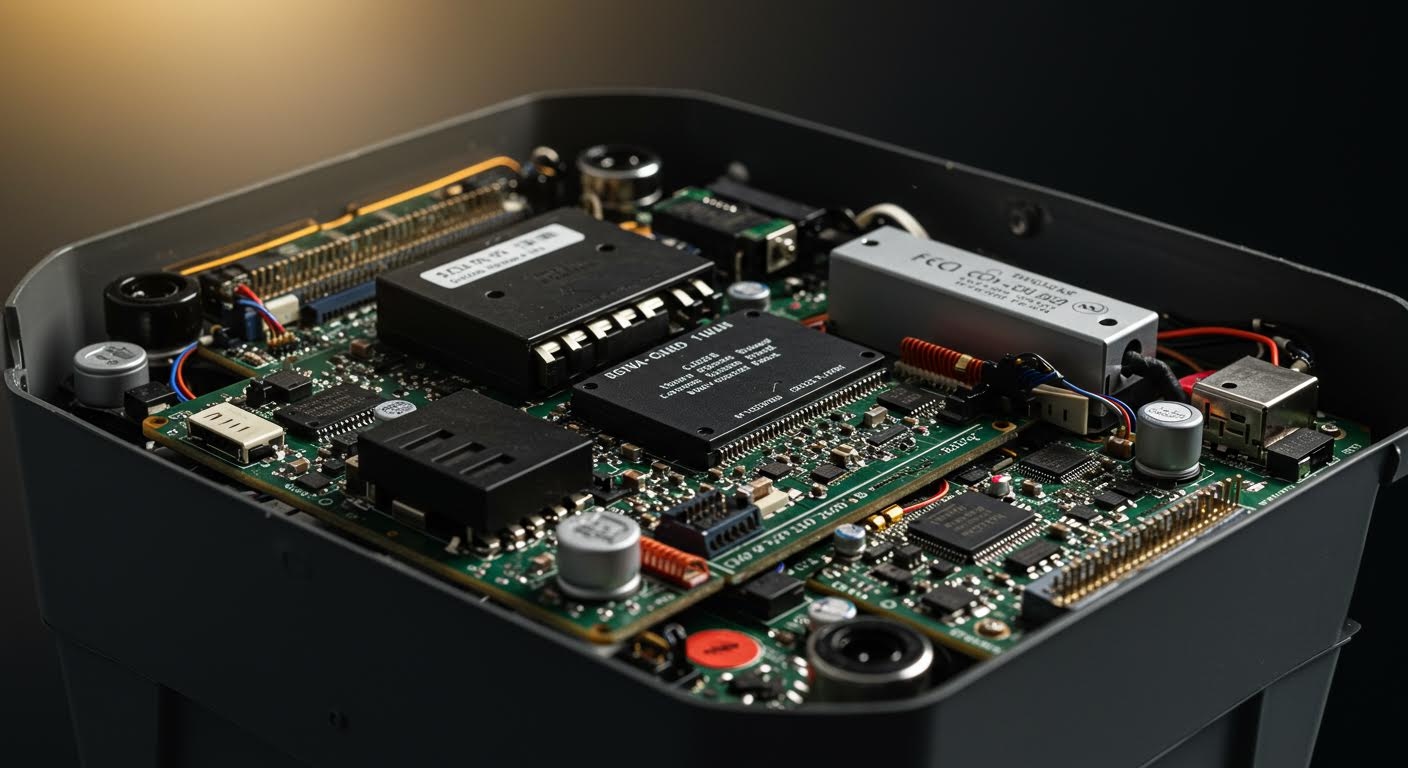
The evolution of drone technology has transformed these devices from simple remote-controlled aircraft into sophisticated autonomous systems capable of complex navigation, obstacle avoidance, and intelligent decision-making. This transformation is powered by a carefully orchestrated collection of specialized hardware components, each playing a crucial role in enabling today's autonomous flight capabilities.
The Brain: Processing Power and Flight Controllers
Modern drones rely on ARM-based processors specifically optimized for real-time flight calculations. These processors handle thousands of computations per second, processing sensor data, executing flight algorithms, and making split-second decisions that keep aircraft stable and on course.
The flight control unit (FCU) serves as the central nervous system, integrating specialized microcontrollers that manage sensor data and motor control. These systems are designed with redundancy in mind, ensuring backup processors can take over critical functions if primary systems fail.
Processing speed requirements for autonomous decision-making are particularly demanding. The system must continuously calculate optimal flight paths, adjust for wind conditions, and respond to unexpected obstacles in real-time—requiring processing capabilities that were unimaginable in consumer devices just a decade ago.
The Senses: Sensor Fusion and Navigation Systems
Inertial measurement units (IMUs) form the foundation of drone navigation, providing precise attitude and motion sensing data. These miniaturized sensors detect the smallest changes in orientation, acceleration, and angular velocity, feeding this information to flight control systems dozens of times per second.
GPS integration enables precision positioning, though modern systems go far beyond basic satellite navigation. Advanced positioning technologies incorporate differential GPS corrections and real-time kinematic (RTK) positioning for centimeter-level accuracy in professional applications.
Optical sensors and camera systems provide visual navigation capabilities, allowing drones to recognize landmarks, track objects, and navigate using visual cues when GPS signals are unavailable. Ultrasonic sensors handle close-range obstacle detection, while LiDAR systems create detailed three-dimensional maps of surrounding environments.
The real innovation happens through sensor fusion algorithms that combine multiple data streams into a coherent understanding of the drone's position, orientation, and environment. This integration allows systems to compensate for individual sensor limitations and maintain accurate navigation even when some sensors are compromised.
The Eyes: Computer Vision and AI Processing
Dedicated computer vision chips have revolutionized drone capabilities, enabling real-time image processing and object recognition. These specialized processors can identify and track moving objects, recognize specific landmarks, and even read text or signage during flight.
Edge AI accelerators bring machine learning capabilities directly to the drone, eliminating the latency and connectivity requirements of cloud-based processing. These hardware accelerators enable real-time object recognition, allowing drones to identify and avoid birds, distinguish between different types of obstacles, and even recognize human gestures for control purposes.
Machine learning hardware enables adaptive flight behavior, allowing drones to learn from experience and optimize performance over time. This includes everything from improving battery efficiency based on flight patterns to developing better obstacle avoidance strategies.
Processing requirements for simultaneous localization and mapping (SLAM) are particularly intensive, as systems must build and maintain real-time environment maps while simultaneously determining their own position within those maps.
The Lifeline: Power Management and Battery Systems
Lithium polymer battery technology represents both the enabling factor and primary limitation of modern drone design. Energy density challenges continue to drive innovation as engineers work to maximize flight time while minimizing weight and maintaining safety standards.
Power distribution systems must balance performance requirements with efficiency concerns, intelligently routing power to different subsystems based on current needs. During hover operations, more power flows to motors, while during autonomous navigation, additional power is allocated to processing and sensor systems.
Dynamic power scaling allows drones to adjust power consumption based on different flight modes. Sport modes prioritize performance over efficiency, while endurance modes optimize every aspect of power usage to maximize flight time.
Emerging battery technologies, including solid-state batteries and advanced lithium chemistries, promise significant improvements in energy density and charging speed. Some experimental systems are exploring hybrid power solutions that combine batteries with fuel cells or even small combustion engines.
Communication and Safety Hardware
Radio frequency systems provide the vital link between drone and operator, handling both telemetry data and control commands. Modern systems use frequency-hopping spread spectrum technology to maintain reliable connections even in electromagnetically noisy environments.
Redundant communication pathways ensure drones can maintain contact through multiple channels, automatically switching to backup frequencies if primary connections are interrupted. These systems include traditional radio links and emerging cellular and satellite communication options.
Hardware-based geofencing systems use dedicated processors to enforce no-fly zone restrictions, preventing drones from entering restricted airspace even if software systems are compromised. These systems can access real-time airspace data and automatically adjust flight paths to maintain compliance.
Emergency systems include autonomous landing capabilities that activate when battery levels become critical, communication is lost, or other safety concerns arise. These systems use onboard sensors to identify safe landing zones and execute controlled descents without operator intervention.
Industry Trends and Future Hardware Evolution
Miniaturization continues to enable more powerful systems in increasingly smaller packages. Modern drones pack processing power that would have required room-sized computers just a few decades ago into lightweight, energy-efficient packages suitable for consumer and commercial use.
Standardization efforts through IEEE and industry consortiums are working to establish common interfaces and protocols, making it easier for manufacturers to integrate components from different suppliers and for developers to create applications that work across multiple drone platforms.
Integration challenges grow as hardware becomes more sophisticated. Managing heat dissipation, electromagnetic interference, and mechanical vibration in increasingly compact designs requires innovative engineering solutions and new materials.
Next-generation hardware is being designed specifically to address evolving regulatory requirements, including remote identification systems, enhanced collision avoidance capabilities, and improved security features to prevent unauthorized access or control.
The hardware powering modern drones represents one of the most impressive miniaturization achievements in recent technological history, combining the processing power of supercomputers, the precision of scientific instruments, and the reliability of aerospace systems in packages small enough to fit in a backpack. As regulatory frameworks evolve and new applications emerge, this hardware foundation will continue pushing the boundaries of what's possible in autonomous flight.