IBM, AMD and Oak Ridge Pair a 120-Qubit Nighthawk With a Supercomputer to Chase 100 Logical Qubits
IBM, AMD and Oak Ridge Pair a 120-Qubit Nighthawk With a Supercomputer to Chase 100 Logical Qubits
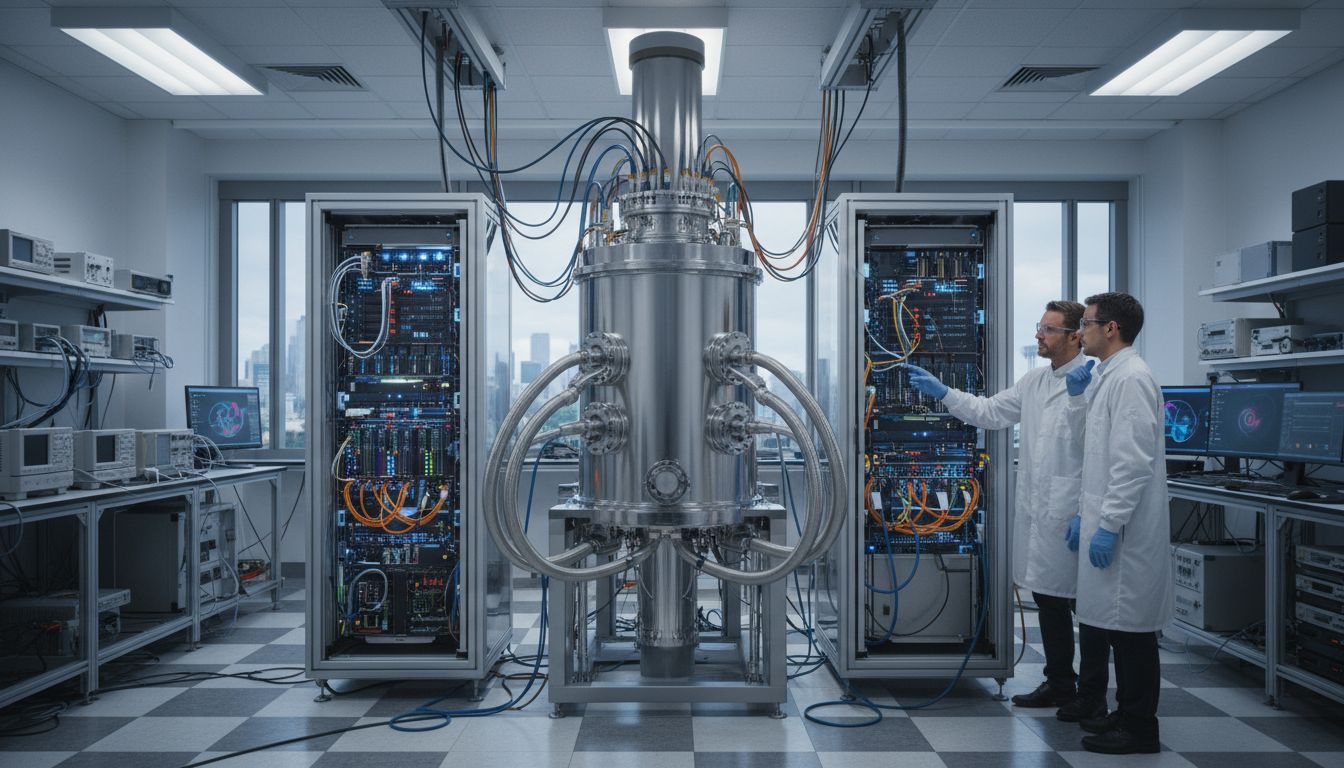
IBM, Oak Ridge National Laboratory's Quantum Science Center, and AMD have announced a new co-design platform intended to pair IBM's 120-qubit Nighthawk quantum processor with Oak Ridge's Umbra high-performance computing system. The stated goal is to accelerate research into quantum error correction, a persistent technical hurdle on the path toward practical, large-scale quantum computing. Announcements like this one often blend genuine technical milestones with forward-looking narrative framing, so it's worth separating what has been demonstrated from what is being targeted.
Because this announcement originates from the companies and laboratory involved, the claims presented should be read as stakeholder communications rather than independently verified results. No independent journalism or peer-reviewed analysis was available alongside the source material reviewed for this article.
What Nighthawk and Umbra Actually Are
IBM describes Nighthawk as its most powerful quantum processor to date, built with 120 qubits. Oak Ridge's Umbra system, meanwhile, is reported to run on AMD Instinct MI355X GPUs paired with 5th Generation AMD EPYC CPUs, forming the classical computing backbone of the collaboration.
The underlying concept is "co-design": rather than developing quantum processors and classical supercomputers separately, the partners intend to develop them in tandem, with tighter feedback loops between quantum hardware and the classical systems that help interpret and correct its output. This is presented as a way to speed up progress on quantum error correction specifically.
It's worth noting that terms like "most powerful" and "industry-leading," used in the companies' own materials, function as promotional language. These phrases convey confidence but are not independently benchmarked claims, and readers should treat them as marketing framing rather than settled fact.
The DOE's Quantum Genesis Mission and the 100-Logical-Qubit Target
The initiative is framed as supporting the Department of Energy's "Quantum Genesis Mission," which reportedly sets a goal of achieving 100 logical qubits capable of running 100,000 "hard operations" by late 2028.
In plain terms, a logical qubit is a unit of quantum information built from multiple physical qubits working together with error correction, intended to be more reliable than any single physical qubit alone. A "hard operation" in this context refers to a computational step significant enough to serve as a meaningful benchmark of progress toward useful, fault-tolerant quantum computing.
This 2028 target is a benchmark set by the DOE, not a guarantee of success. A recurring concern around ambitious technology roadmaps is the gap between stated targets and eventual delivery, and quantum computing has historically been an area where timelines have shifted.
Where IBM Says It Stands Today
According to IBM's own reporting, the company has currently achieved up to 70 logical qubits and 438 hard operations, tracked through what it calls its Quantum Advantage Tracker.
Comparing this figure to the DOE's 2028 target suggests a roughly 230-fold increase in hard operations would be needed to meet the stated goal. That is a substantial gap, and it's one that IBM itself references when discussing the scale of the remaining challenge.
These figures come from IBM's internal tracking tools rather than from an independent or third-party verification process. As such, they should be understood as self-reported progress markers rather than externally audited results.
Built on Prior Work: Frontier, Materials Simulation, and Error-Correction Decoding
This announcement builds on earlier collaboration between IBM and Oak Ridge, which reportedly used quantum computers in combination with the Frontier supercomputer to simulate magnetic materials and molecular configurations. These use cases are presented in company materials as proof points for the broader strategy of combining quantum and classical computing resources.
The companies also point to a claimed demonstration by IBM and AMD of an algorithm designed to decode quantum error correction data. As with other claims in this announcement, this demonstration is described in corporate materials rather than documented through peer-reviewed publication, so it is best understood as a reported achievement awaiting broader scientific scrutiny.
Roadmap and Open Questions
IBM has publicly stated a roadmap goal of scaling beyond 1,000 physical qubits by 2027, alongside the 2028 logical-qubit target tied to the DOE's Quantum Genesis Mission. Both timelines are forward-looking projections rather than committed outcomes, and the companies themselves frame them using exploratory language such as "pathway to explore" and "may inform."
Those who follow the quantum computing field closely tend to urge caution about distinguishing ambitious roadmaps from demonstrated capability. The source materials available for this announcement are predominantly corporate and institutional in origin, with no independent journalism or academic peer review included. That absence makes it difficult to independently corroborate the specific technical claims or to weigh them against skeptical or competing perspectives in the field.
Whether the roughly 230-fold leap in performance implied by current benchmarks can be achieved within the stated 2028 timeline remains an open question. For now, the announcement represents a stated intention and an early-stage technical collaboration, with its ultimate success to be determined by future, hopefully independently verifiable, results.