Hyperscale AI Data Centers: The Growing Energy Crisis Behind Machine Learning
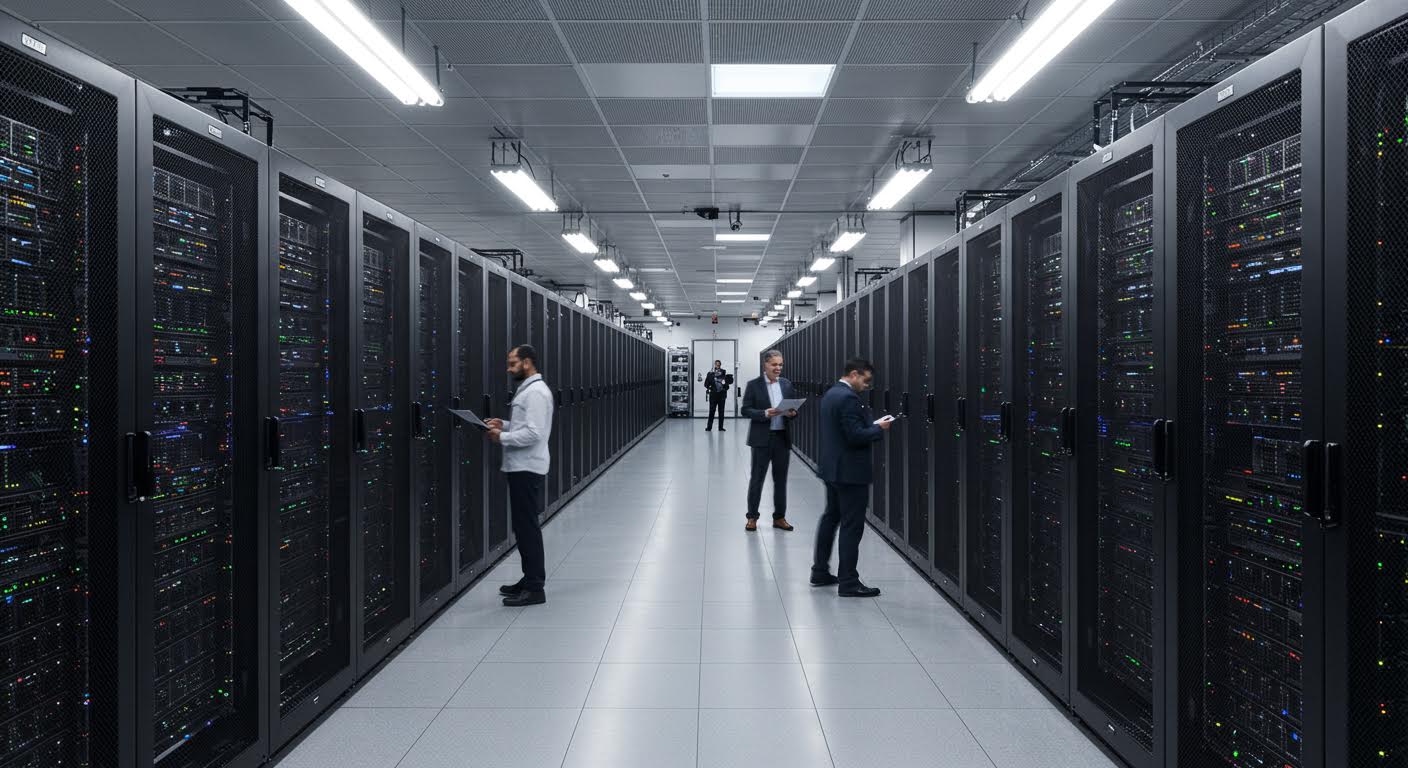
The artificial intelligence revolution is consuming electricity at an unprecedented rate, with hyperscale data centers emerging as the epicenter of a growing energy crisis. As tech giants race to deploy increasingly sophisticated AI models, their massive computing facilities are straining electrical grids, undermining corporate sustainability commitments, and creating new challenges for global energy infrastructure.
The Scale of the Problem: AI's Unprecedented Power Hunger
AI workloads consume dramatically more energy than traditional computing tasks. Training a single large language model can require as much electricity as hundreds of homes use in a year, while the ongoing inference operations needed to run AI services create continuous, intensive power demands that dwarf conventional data processing.
Hyperscale data centers supporting AI operations are experiencing exponential growth in power requirements. These facilities now routinely demand 100-200 megawatts of continuous power, with some planned installations reaching 500 megawatts or more. To put this in perspective, a typical data center might have consumed 10-30 megawatts just a few years ago.
The geographic concentration of these massive facilities is creating critical stress points in regional electrical grids. Areas like Northern Virginia, Silicon Valley, and parts of Ireland have become hotspots where multiple hyperscale facilities compete for limited grid capacity, forcing utility companies to rapidly expand infrastructure or risk reliability issues.
Real-world examples illustrate the scale of consumption. Google's global data center network consumed over 24 terawatt-hours in 2023, roughly equivalent to the annual electricity use of a small country. Microsoft's Azure cloud infrastructure showed similar patterns, with AI workloads driving much of the increased demand.
The Corporate Sustainability Paradox
Tech companies face a growing contradiction between their public renewable energy commitments and the reality of AI's energy appetite. While firms like Google, Microsoft, and Amazon have pledged carbon neutrality or negativity by 2030, their AI expansion is pushing actual energy consumption far above projected levels.
The gap between promised and delivered clean energy infrastructure is widening. Companies are signing renewable energy contracts at record rates, but the physical deployment of solar farms and wind installations cannot keep pace with the immediate energy demands of new AI data centers coming online.
Corporate strategies to manage this energy-sustainability tension vary widely. Some companies are investing in on-site renewable generation, others are purchasing renewable energy credits to offset fossil fuel consumption, and a few are experimenting with energy storage systems to better match consumption with clean generation periods.
However, these efforts often fall short of addressing the fundamental issue: AI workloads require constant, reliable power that intermittent renewable sources cannot always provide without substantial grid-scale storage infrastructure that doesn't yet exist at scale.
Grid Infrastructure Under Pressure
Regional electrical grids are struggling to accommodate the concentrated power demands of hyperscale AI facilities. Traditional grid infrastructure was designed for distributed loads with predictable usage patterns, not the massive, continuous demands of AI training clusters.
Peak demand challenges are becoming more frequent as AI workloads don't follow typical usage curves. Unlike traditional data centers that might see lower utilization during off-peak hours, AI training and inference operations often run at maximum capacity around the clock, creating sustained stress on transmission and generation systems.
Competition between data centers and other users is intensifying. In some markets, utility companies must choose between supporting new AI facilities or ensuring adequate capacity for residential and industrial customers during peak demand periods.
Case studies from major data center markets reveal the scope of grid strain. According to the Uptime Institute Global Data Center Survey, Northern Virginia's power grid operator has warned of potential reliability issues as data center load is projected to triple by 2030. Similarly, Dublin's electrical system has imposed moratoriums on new data center connections in certain areas due to capacity constraints.
The Renewable Energy Resource Battle
Tech companies are effectively monopolizing available clean energy supply in many markets, signing long-term contracts that absorb most new renewable generation capacity before it reaches the broader market. This concentration of renewable energy procurement power is creating unintended consequences for other sectors attempting to reduce their carbon footprints.
The impact on other industries seeking renewable energy access is significant. Manufacturing companies, utilities serving residential customers, and smaller businesses find themselves competing with tech giants who can offer premium pricing and long-term commitments that renewable energy developers prefer.
Geographic mismatches between renewable generation and data center locations compound the problem. While wind and solar resources are abundant in certain regions, hyperscale facilities are often located near existing grid infrastructure or fiber optic networks, creating transmission challenges and efficiency losses.
Market dynamics in clean energy procurement have shifted dramatically. Premium pricing for renewable energy contracts has increased substantially in markets with heavy data center presence, effectively pricing out smaller buyers and slowing broader decarbonization efforts across the economy.
Technical Factors Driving Energy Intensity
AI-specific processors consume far more power than traditional server chips. Graphics processing units (GPUs) and tensor processing units (TPUs) optimized for machine learning can draw 400-700 watts per chip, compared to 100-200 watts for conventional processors. Modern AI servers might house 8-16 of these high-power chips.
Cooling infrastructure demands have escalated accordingly. The heat generated by densely packed AI hardware requires sophisticated cooling systems that can consume 30-40% of a facility's total power budget. Advanced liquid cooling systems, while more efficient than traditional air cooling, still represent substantial energy overhead.
Training versus inference workloads have different energy profiles, but both are problematic. Training large models requires enormous bursts of computational power over weeks or months, while inference operations create sustained, high-volume energy demand as millions of users interact with AI services simultaneously.
Efficiency improvements, while meaningful, face fundamental limitations. Even as chip manufacturers improve performance per watt, the scale and complexity of AI models are growing faster than efficiency gains can offset. A more efficient chip still consumes substantial power when deployed in clusters of thousands.
Industry Responses and Mitigation Strategies
Emerging technologies for energy-efficient AI computing show promise but remain early-stage solutions. Specialized neuromorphic chips that mimic brain architecture could dramatically reduce power consumption, but they require fundamental changes to how AI software is written and deployed.
On-site renewable generation and energy storage initiatives are becoming more common at hyperscale facilities. Solar arrays and battery storage systems allow data centers to reduce grid dependency during peak hours and take advantage of renewable generation when available, though the scale required remains challenging.
Workload optimization and intelligent scheduling represent more immediate opportunities for energy reduction. By shifting non-urgent AI training tasks to periods when renewable energy is abundant and grid demand is lower, operators can reduce peak consumption and better align with clean energy availability.
Regulatory and policy developments are beginning to address data center energy use more directly. Some jurisdictions are implementing energy efficiency standards for data centers, while others are requiring environmental impact assessments for large facilities. However, the global nature of hyperscale operations means that comprehensive regulation remains fragmented.
The path forward will likely require a combination of technological innovation, infrastructure investment, and policy coordination. As AI continues to reshape computing demands, addressing the energy crisis created by hyperscale data centers becomes critical for both technological progress and environmental sustainability goals. The International Energy Agency projects that without significant intervention, data center electricity consumption could double by 2030, making this challenge one of the defining technical and policy issues of the decade.