Hyperscale AI Data Centers Are Turning Compute Growth Into a Power-System Challenge
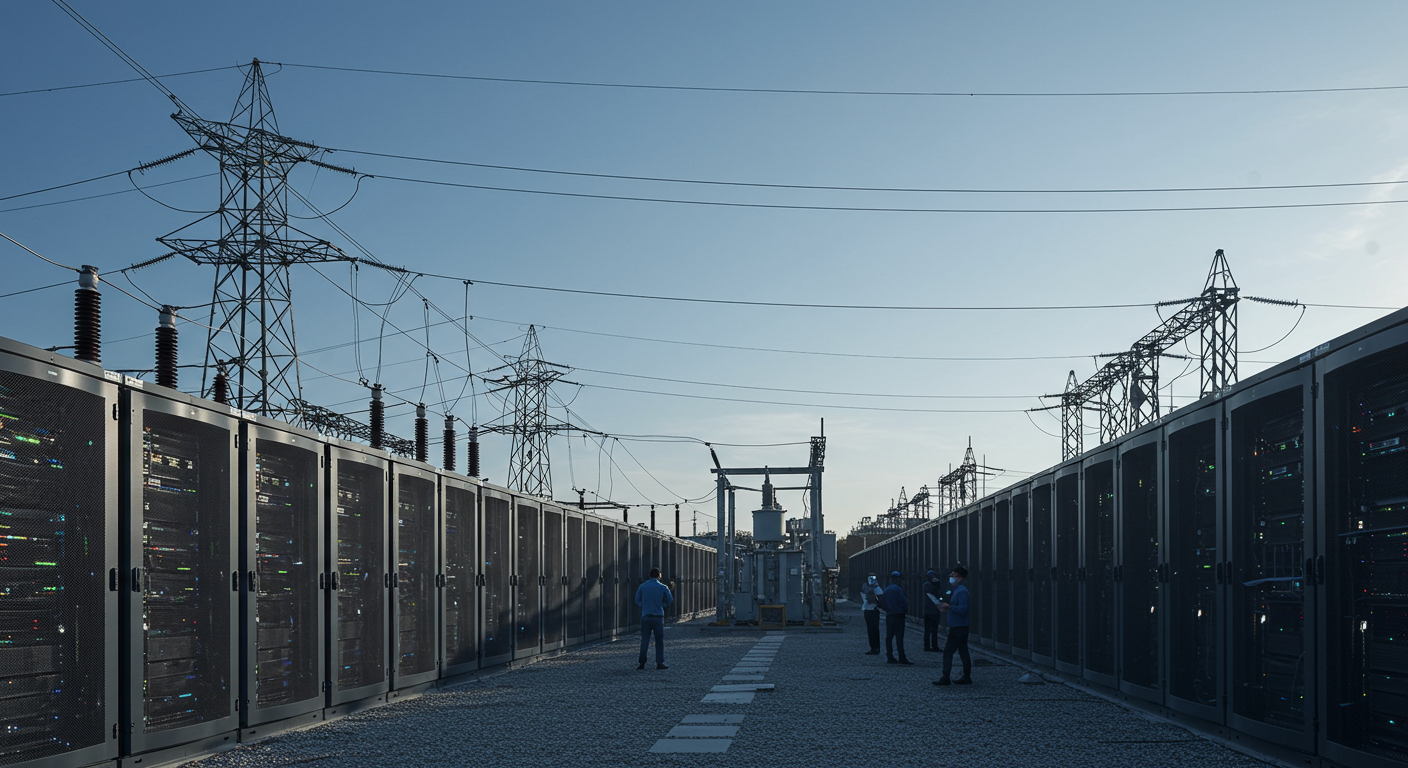
Artificial intelligence has quickly become an energy story as much as a computing story. The reason is simple: the newest wave of hyperscale data centers is not just adding more servers to the internet economy, but concentrating extremely large, continuous electricity loads in specific places. Training clusters, high-intensity inference systems, and the cooling infrastructure needed to run them are pushing demand higher than many utilities and planners expected during the earlier cloud era.
That does not mean every market is facing an immediate energy crisis. In many regions, a more accurate description is rapid load growth colliding with grid infrastructure that takes years to expand. The distinction matters. National or annual electricity supply can look manageable on paper even while local substations, transmission corridors, and interconnection queues are already under strain.
Why AI-oriented campuses are different
Traditional data-center growth was already significant, but AI-heavy facilities are changing the demand profile. They tend to use denser racks, more specialized chips, more aggressive cooling systems, and steadier around-the-clock power consumption. The challenge is not only how much electricity these campuses use over a year, but how quickly very large loads are appearing and seeking grid connections.
Hyperscalers and major AI infrastructure developers also tend to cluster in preferred markets. They want access to fiber, large parcels of land, tax incentives, water resources, and strong links to transmission networks or major generation fleets. That concentration can make the problem feel local long before it looks national. A utility territory that attracts several large campuses in a short period can face very different planning pressures from a neighboring region with similar overall economic conditions.
Where the strain appears first
The first signs of stress usually show up in the grid itself rather than in headline figures about total energy use. Transmission constraints, substation upgrades, transformer availability, and long interconnection waits are often the immediate bottlenecks. In some cases, utilities can eventually serve new data-center demand, but not on the timetable developers want.
That timing mismatch is becoming one of the defining issues of the AI buildout. Power plants, high-voltage lines, and major substation expansions cannot be delivered at software speed. Even where enough generation may exist in a broader market, local delivery capacity can lag. A region may therefore have adequate energy in aggregate while still facing peak-load problems, reliability concerns, or expensive infrastructure upgrades in the exact places where new campuses are being built.
Clustered development amplifies the effect. Once a few major operators commit to a hub, more suppliers, customers, and developers often follow. That can create a feedback loop in which one successful market becomes harder and more expensive to serve.
A regional problem, not a universal one
The impact of AI data centers is highly regional. Some power systems have stronger reserve margins, faster transmission development, or more flexible generation mixes that can absorb new load with less disruption. Others are already managing tight capacity conditions, delayed infrastructure projects, or difficult permitting environments. In those markets, even a small number of hyperscale campuses can have outsized consequences.
This is why broad claims about an AI-driven energy crisis should be treated carefully. The underlying issue is real, but it is uneven. Some areas may integrate new load relatively smoothly, especially where planners moved early or where new clean generation and transmission are already under development. Other markets may face long delays, contentious cost-recovery battles, or rising concern about reliability during peak periods.
How utilities and policymakers are reacting
Utilities are responding with a familiar but expanding list of options: transmission expansion, substation and distribution upgrades, new gas generation, delayed retirements of older fossil assets, renewable procurement, storage additions, and long-term power agreements with large customers. Some are also exploring flexible-load arrangements that could allow certain facilities to curtail or shift demand under specific grid conditions.
Another major question is who pays. Large-load customers may be asked to shoulder more of the upfront cost for dedicated infrastructure, but cost allocation and rate design remain disputed. Regulators face growing pressure to ensure ordinary customers are not left subsidizing speculative or fast-changing demand forecasts, while also avoiding policies that drive investment elsewhere.
Planning processes are under pressure as well. Utilities and grid operators increasingly need better forecasting tools for very large loads, faster interconnection procedures, and more realistic timelines for projects that can transform regional demand almost overnight.
The climate tradeoff
The climate implications are mixed. On one hand, hyperscalers can accelerate investment in renewables, storage, and more sophisticated procurement structures. Their buying power can help bring new clean generation onto the system and support long-term contracts that smaller customers could not easily secure.
On the other hand, constrained grids often fall back on whatever can be built or dispatched fastest. In some places, that may mean more gas-fired generation, heavier reliance on peaking units, extended use of existing fossil assets, or increased deployment of backup generators around data-center campuses. Corporate clean-energy commitments can be meaningful, but they do not automatically resolve the physical reality of local hourly grid emissions or limited transmission capacity.
The real emissions outcome depends on region, timing, and whether clean generation and transmission are added quickly enough to keep pace with AI-driven demand growth. That is why the same type of hyperscale project can look relatively climate-aligned in one market and much more carbon-intensive in another.
What forecasts say, and why caution is warranted
Forecasts for data-center electricity demand are rising, but they vary widely. Research from the International Energy Agency and EPRI has helped establish that data centers are becoming a more important factor in power planning, while utility filings, investor research, and industry reporting suggest that AI could accelerate that trend further.
Still, no single forecast should be treated as settled fact. Projections depend on assumptions about chip efficiency, model design, inference volumes, construction timing, customer concentration, and whether announced projects are actually energized on schedule. There is also a major difference between a load request in an interconnection queue and durable long-term demand that is fully built, financed, and operating.
That makes it important to separate observable pressure from speculative excess. The observable part is that utilities, grid planners, and developers in several key markets are already adjusting to large new data-center loads. The speculative part is assuming every announced AI campus will arrive on time and consume power at maximum levels indefinitely.
What this means for AI infrastructure next
The central question is no longer just whether the technology industry can finance enough chips and buildings. It is whether power systems can add generation, transmission, and interconnection capacity fast enough to support AI expansion without undermining reliability or climate goals. In that sense, power availability is becoming a strategic input to AI competition, not just a background operating cost.
The likely outcome is neither total grid breakdown nor effortless scaling. AI data centers are creating real stress in certain utility territories and development hubs, but the severity of that stress will be determined by policy choices, infrastructure investment, and geography. Where grids are strong and planning is proactive, new campuses may be absorbed with manageable disruption. Where systems are already tight, the next wave of hyperscale development could force hard choices about cost, reliability, and emissions.
AI's growth therefore depends on more than advances in models and semiconductors. It increasingly depends on whether the physical power system can keep up.