Hyperscale AI Data Centers and the Energy Crisis They Create
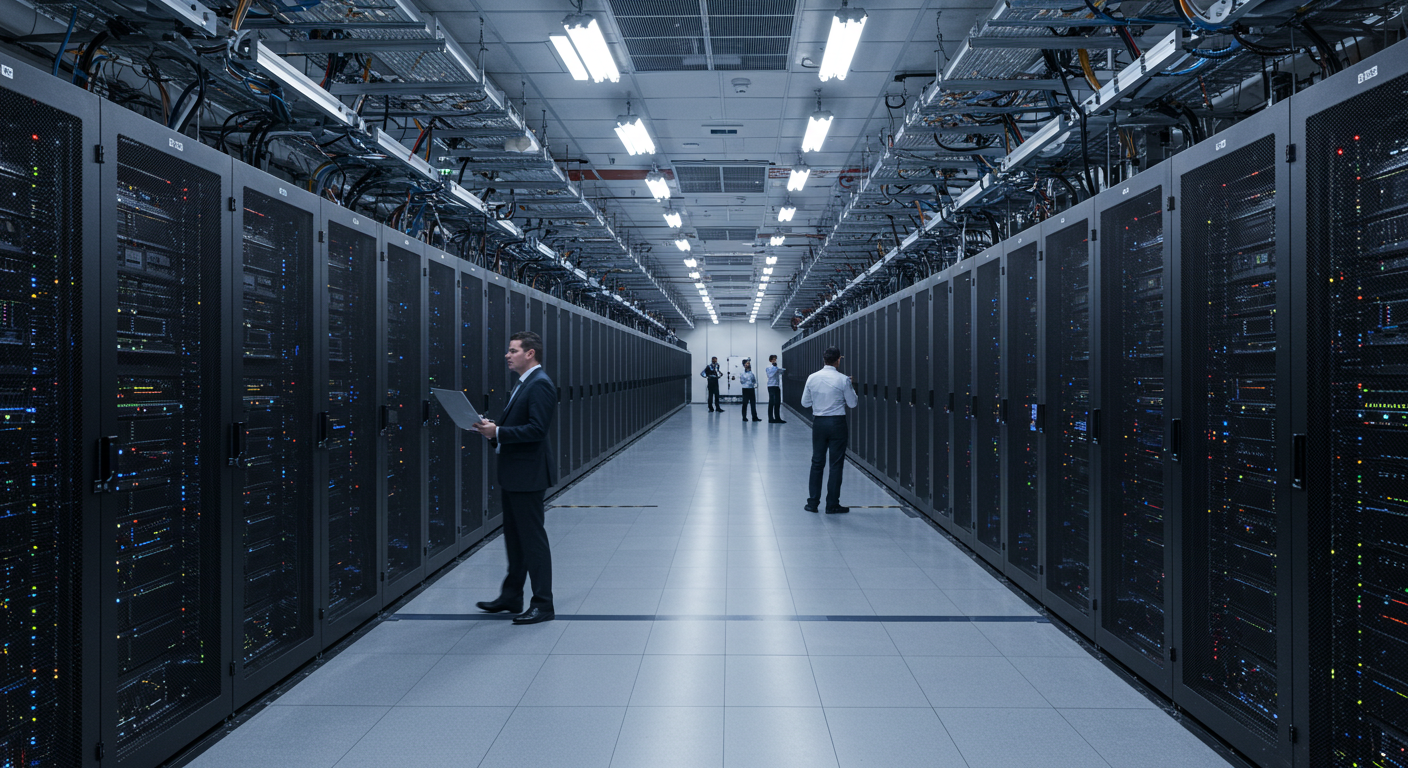
The AI boom is often framed as a software revolution, but its physical footprint is becoming just as important. Behind every surge in model training, cloud inference, and enterprise AI deployment is a growing network of hyperscale data centers that require enormous amounts of electricity, cooling, land, and grid access. The issue is not simply that data centers use a lot of power. It is that AI is accelerating demand quickly, in specific places, and on timelines that electric systems were not built to match.
That makes this more than a technology story. It is increasingly an energy-system story, shaped by transmission constraints, utility planning, permitting delays, generation shortages, and local tradeoffs over water and land use. Exact forecasts differ, but the overall direction is supported by major institutional and official sources: AI-driven data center growth is becoming a meaningful driver of electricity demand in key markets, especially in the United States.
Why AI data centers are different from the last cloud boom
Traditional cloud growth was already energy-intensive, but AI workloads are changing the scale and density of demand. Hyperscale AI data centers are large facilities, or clusters of facilities, built to house vast numbers of servers, networking equipment, and cooling systems. What sets the current buildout apart is the concentration of high-performance chips used to train and run large AI models. These systems can draw far more power per rack than earlier generations of enterprise or web-hosting infrastructure.
AI training is especially demanding because it compresses massive computational work into large, continuous runs. Inference, the process of delivering model outputs to users and applications, can also become a substantial load when deployed at scale. Together, these uses create a different operating profile from older cloud demand. The industry is not just adding more data centers; it is building facilities with higher power density and tighter requirements for continuous, reliable electricity.
That distinction matters because the strain on the grid comes from both total energy use and the speed at which new load appears. Current data shows demand rising, while many headline projections describe what may happen if the buildout continues at its current pace. Those are related but different claims. The measured trend is clear: data centers are becoming more important to electricity demand growth. The more speculative question is how large that growth becomes over the next several years.
What the data says about electricity demand
International and U.S. energy data now place data centers much closer to the center of the electricity-demand conversation than they were only a few years ago. The International Energy Agency has identified data centers, alongside electrification and industrial demand, as part of the changing structure of power consumption. In the United States, the Energy Information Administration has also pointed to data centers as a growing source of load growth, particularly in markets already seeing heavy digital infrastructure investment.
The United States sits at the heart of the issue because many of the largest AI and cloud operators are expanding there. That concentration matters. It means national electricity statistics can understate the pressure in specific regions where utilities are receiving large requests for new capacity from hyperscale campuses. A state or service territory can face acute strain even if the national grid appears manageable in aggregate.
Forecasts vary widely, and some of the most aggressive ones come from banks or industry analysts rather than grid operators. Those estimates can still be useful, but they should be treated as scenarios, not settled outcomes. The stronger conclusion is narrower and more defensible: available institutional evidence supports the idea that data centers are moving from being a notable electricity user to being one of the most important sources of incremental demand growth in some power markets.
The real bottleneck is how fast new load hits the grid
The most important constraint is not annual electricity use in the abstract. It is how quickly very large new loads arrive in particular places. A new hyperscale campus can require transmission upgrades, substation expansion, and sometimes additional generation capacity before it can be served reliably. If multiple projects seek power in the same region at once, the local system can become the limiting factor.
That is why timing and geography matter so much. A utility may be able to serve a large data center eventually, but not on the developer's preferred schedule. Interconnection queues, transformer lead times, permitting requirements, transmission planning, and local infrastructure upgrades can all delay energization. These are not marginal obstacles. They are now central to whether major AI infrastructure projects can proceed on time.
In practical terms, hyperscale expansion can collide with a grid-planning model that moves much more slowly than digital capital. AI companies and cloud providers can decide to scale quickly when chips, financing, and demand align. Utilities and regulators, by contrast, must plan around reliability standards, cost recovery, environmental review, and construction timelines that often stretch for years.
Why utilities and grid operators are under pressure
For utilities and grid operators, the challenge is operational as much as financial. They must serve very large, concentrated customers without undermining service quality for everyone else. A major new data center load can require investment in high-voltage transmission, local substations, backup arrangements, and in some cases entirely new generation resources. Even when a utility welcomes the economic development, integrating the load can be difficult.
This creates a broader policy tension over who pays for the necessary upgrades and how risks are allocated. If a utility builds infrastructure based on expected data center demand, regulators and ratepayers may ask whether ordinary customers are subsidizing private expansion. If utilities move too slowly, however, they may lose investment to other regions. That tension is one reason data center demand has become a regulatory issue rather than only a commercial one.
Reuters has reported that the U.S. power grid is already under strain from the artificial intelligence boom, reflecting concern not just about long-term consumption but about whether systems can absorb rapid, clustered growth. In that sense, the pressure is structural: the grid must accommodate one of the fastest-growing categories of load while also managing electrification, extreme weather risks, and the retirement or repowering of older assets.
How the AI boom can complicate climate goals
Many technology companies emphasize renewable energy procurement, carbon-free energy ambitions, and cleaner operations. Those efforts matter, but they do not automatically solve the near-term grid problem. A company may contract for renewable power, yet still depend on a local grid that lacks enough transmission, storage, or dispatchable generation to maintain reliability around the clock.
The result is a timing mismatch. Digital infrastructure can expand rapidly, while clean power systems often take much longer to build. New solar, wind, storage, and transmission projects face their own interconnection queues and permitting barriers. If data center demand rises faster than low-carbon supply can be added and delivered, the system may rely longer on existing fossil generation or support new gas-fired capacity to preserve reliability.
That does not mean AI growth and climate progress are fundamentally incompatible. It means the path is more complicated than simple corporate procurement announcements suggest. In the near term, the growth of AI infrastructure can make decarbonization harder by increasing the amount of firm, always-available power the grid needs before cleaner alternatives are fully built out.
Efficiency helps, but it does not erase absolute growth
Technology companies are not ignoring the energy problem. They are deploying more efficient chips, improving power management, refining model architecture, and redesigning cooling systems and facilities. Google, for example, has described machine-learning-based approaches and data center optimization efforts aimed at reducing operational waste and improving efficiency.
Those advances are real, but they should be understood in context. Efficiency lowers energy use per computation, not necessarily total energy use. If cheaper or faster computation leads to much wider deployment of AI services, overall electricity demand can still rise sharply. This is a classic rebound dynamic: efficiency improvements can coexist with rapid absolute growth when underlying demand expands even faster.
That is why company sustainability claims should be treated as one part of the story, not as proof that sector-wide energy pressure is under control. The critical question is not whether data centers are becoming more efficient. It is whether those gains can keep pace with the scale of new AI-related compute demand. So far, the broader market signal suggests efficiency is helping, but not neutralizing growth.
Water, siting, and local tradeoffs beyond electricity
Electricity is the headline issue, but it is not the only one. Data centers also raise concerns about water use, especially in hotter or drier regions where cooling choices matter. Some facilities depend heavily on water-intensive cooling methods, while others try to reduce water use through different system designs. Either way, local resource conditions increasingly shape where projects can be built and how communities respond.
Siting decisions are now deeply strategic. Developers are looking for places with available power, expandable transmission access, large parcels of land, tax incentives, and political support. Those conditions do not always align. A region may have land but not grid capacity, or power availability but growing local opposition over water, noise, or land-use priorities.
This makes the AI energy crisis more than a question of generation totals. It is also a regional planning problem. The winners in the next phase of digital infrastructure may be the places that can align grid readiness, permitting, cooling strategy, and public acceptance faster than their competitors.
What to watch next
The near-term reality is clearer than the long-term forecast. Today, data center demand is rising, utilities are fielding large new load requests, and grid constraints are becoming more visible in the markets attracting hyperscale investment. What remains uncertain is how quickly those pressures intensify and whether infrastructure buildouts can catch up.
The most useful signals to watch are practical ones: utility disclosures about major load additions, transmission and substation upgrade plans, interconnection delays, announcements of new gas, storage, or renewable capacity, and regulatory decisions about cost recovery and service obligations for very large customers. These indicators say more about the real trajectory of AI's energy impact than headline projections alone.
The central takeaway is straightforward. AI is no longer just a computing race measured in models, chips, and product launches. It is becoming a contest over electricity, transmission, cooling, and infrastructure timing. Hyperscale AI data centers do not merely consume power. They are starting to reshape how power systems plan, build, and prioritize growth.