Huawei’s reported chipmaking breakthrough shows progress, but not parity with TSMC
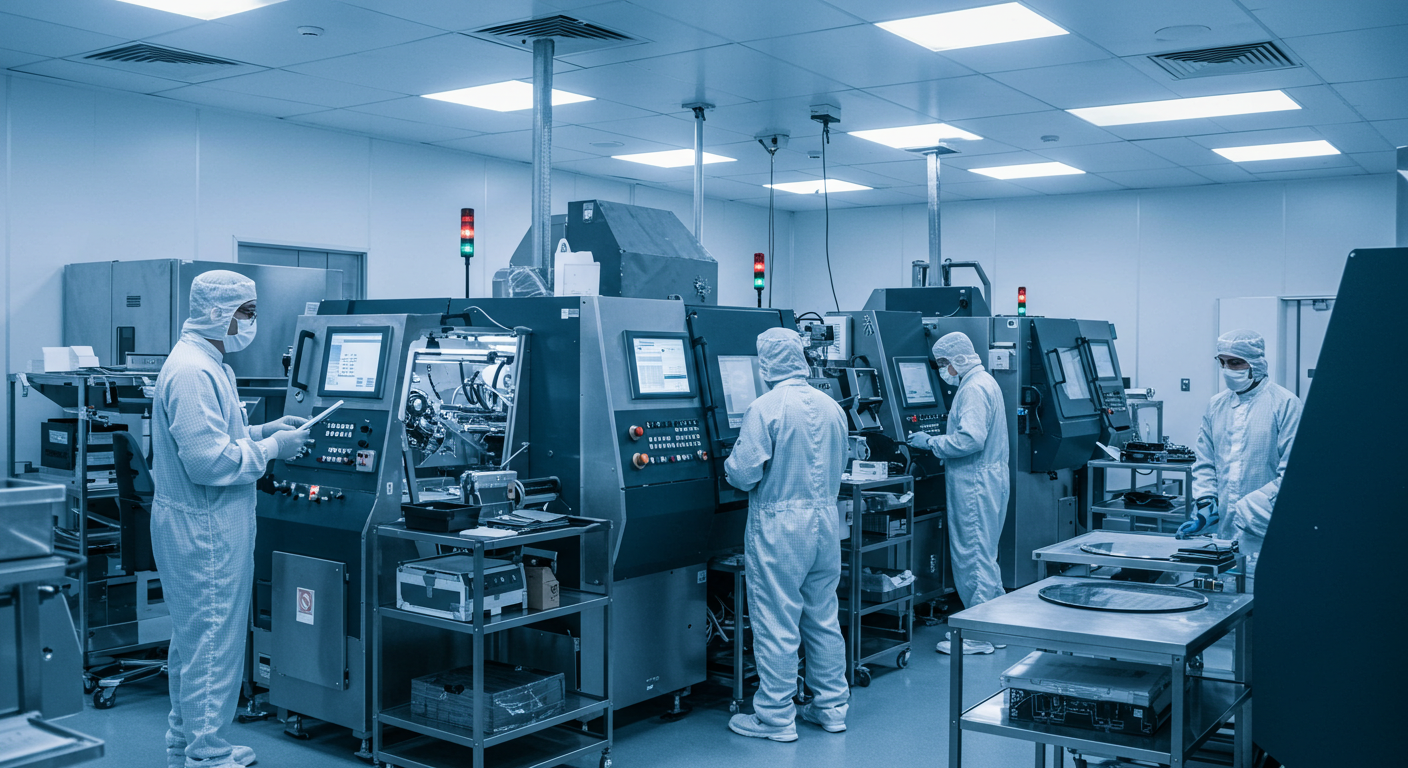
Huawei says it has achieved a new chipmaking breakthrough that could help narrow part of its gap with Taiwan Semiconductor Manufacturing Co., or TSMC, despite years of U.S. export controls designed to limit China’s access to advanced semiconductor technology.
The claim matters because chip manufacturing is one of the most difficult industrial races in the world. Any sign that Huawei or its partners are making progress under those restrictions would be significant for China’s domestic tech ambitions and for the broader debate over whether export controls can durably slow advanced chip development.
At the same time, the reported breakthrough deserves careful scrutiny. A company milestone, even if technically meaningful, is not the same as proof of reliable, high-volume manufacturing at the industry’s leading edge.
What Huawei is claiming, and what remains unclear
Based on reporting from The Wall Street Journal and Huawei’s broader public push for semiconductor self-reliance, the core claim is that the company sees a path to improving advanced chip production despite limited access to the most cutting-edge foreign tools.
What remains unclear is the exact nature of the breakthrough. In semiconductors, a process advance can mean many things: a new engineering method, a packaging improvement, a fabrication workaround, or a limited production result that works in a lab or pilot setting. Those are important steps, but they do not automatically show that a manufacturer can produce chips consistently, affordably, and at scale.
Key unknowns include manufacturing yields, long-term reliability, production costs, equipment availability, and whether the process can support sustained commercial output. Without those details, it is difficult to judge how close Huawei really is to narrowing the gap in a way that matters to customers and device makers.
Why comparisons with TSMC require caution
Comparisons with TSMC are natural because Taiwan Semiconductor Manufacturing Co. is the global benchmark in contract chip manufacturing. But TSMC’s position rests on much more than reaching an advanced node on paper.
Its lead reflects years of volume production experience, high yields, trusted customer relationships, advanced packaging, deep supplier integration, and the ability to deliver consistent output for the world’s largest chip designers. Narrowing part of a technology gap is not the same as matching that manufacturing system.
That means even if Huawei has found a meaningful workaround or process improvement, it would still face a steep climb to approach TSMC’s scale, consistency, and ecosystem depth. In practical terms, the real competition is not just who can demonstrate a result first, but who can turn it into repeatable industrial output.
How U.S. export controls shaped the race
Huawei’s reported progress is drawing attention largely because it comes under unusually tough restrictions. The U.S. government, through export-control measures administered by the U.S. Bureau of Industry and Security, has tightened limits on advanced chips, semiconductor manufacturing equipment, and related technology flowing to China.
Those controls have made it harder for Chinese firms to obtain the tools and inputs needed for leading-edge chip production. Restrictions affecting lithography equipment, high-performance computing components, and other parts of the semiconductor supply chain have raised the cost and difficulty of catching up.
That context is essential. If Huawei has moved forward despite those barriers, the development would suggest that Chinese firms are still finding ways to improve domestic capabilities, even if they remain well short of the world’s top tier.
What outside reporting and analysts say
Outside reporting has generally framed Huawei’s semiconductor progress as noteworthy but difficult to verify fully from public information alone. Reuters and Bloomberg have both tracked the company’s efforts to rebuild capacity and reduce dependence on foreign technology, while also noting the limits imposed by sanctions and restricted tool access.
That outside view tends to split the issue into two parts. First, there is the technical question of whether Huawei or affiliated suppliers have made a genuine manufacturing advance. Second, there is the commercial question of whether that advance can support meaningful production volumes.
Analysts often treat those as very different hurdles. A result can be technically impressive and still fall far short of what is needed to compete with top foundries on cost, output, or consistency. That gap between engineering progress and industrial competitiveness is likely to define how this claim is judged.
The real test: from lab progress to mass production
Semiconductor leadership is ultimately measured by repeatable manufacturing, not by a single breakthrough announcement. The industry will want evidence that any new process can move beyond demonstration and into dependable production.
That means watching for signs such as stable yields, rising wafer volumes, customer adoption, product performance, and the ability to manufacture without excessive cost or delay. Pilot output can show promise, but mass production is the standard that determines competitive standing.
For Huawei, that transition may be the hardest part. Technical ingenuity can help overcome some constraints, but scaling a semiconductor process requires an entire manufacturing chain to perform reliably over time.
What this could mean for the global chip industry
If Huawei’s claimed advance proves credible and scalable, it could strengthen China’s push for greater semiconductor self-sufficiency and intensify geopolitical competition around chip technology. It could also shape future debates over whether export controls are achieving their intended effect or simply encouraging domestic alternatives.
For the broader industry, the development would be another reminder that chip supply chains are becoming more fragmented and more political. Governments and companies alike are investing heavily in resilience, local capacity, and strategic control over key technologies.
For now, the most measured conclusion is also the most useful one: Huawei’s reported breakthrough is important enough to watch closely, especially given the restrictions it faces, but its true significance depends on whether independent evidence and eventual production results show that it can translate a claimed advance into manufacturing at scale.