How Technology Could Enable Human Expansion Beyond Earth
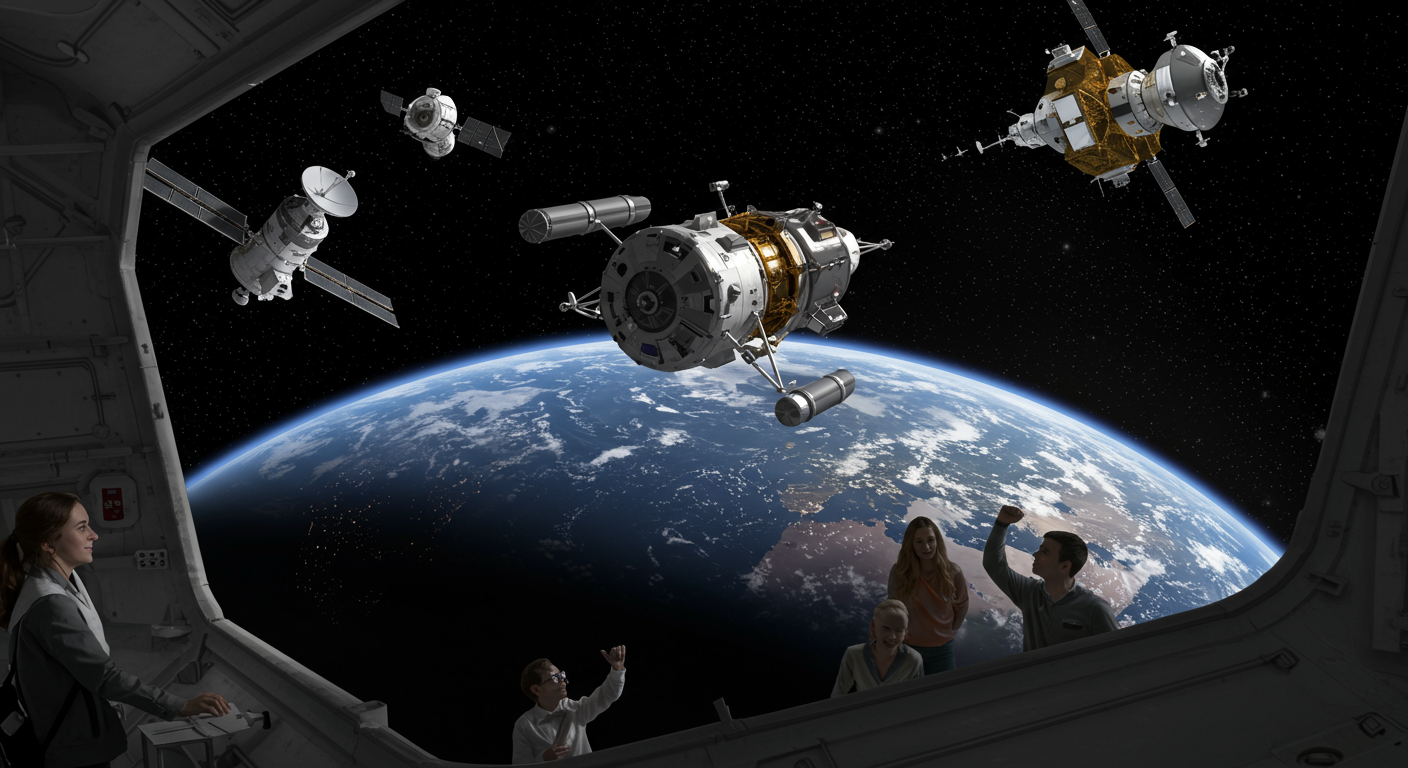
Talk of humanity becoming a multi-planet species often focuses on spectacular launches and ambitious mission timelines. But the future of human expansion beyond Earth is better understood as a systems problem. Reaching orbit, landing on the Moon, and eventually sending people to Mars are only the most visible parts of a much larger technological stack.
To move from short visits to a sustained presence, space agencies and private companies will need many interlocking capabilities to mature together: transportation, habitats, environmental control, robotics, power, communications, navigation, surface mobility, and ways to use local resources. Progress is real, but it is also incremental, expensive, and tightly constrained by reliability.
Why the Moon Matters First
NASA and the European Space Agency both describe the Moon as a practical proving ground for deeper human exploration. The logic is straightforward: the Moon is close enough for relatively short travel times, faster operational feedback, and communications with only brief delay compared with Mars. If a system fails on the Moon, recovery options are far better than they would be in deep space.
That makes lunar missions valuable for more than prestige. They provide a place to test surface operations, crew procedures, cargo delivery, power systems, spacesuits, and habitation concepts under harsh but still reachable conditions. Orbital infrastructure around the Moon and repeated surface missions could help agencies learn what is required for campaigns that last longer and rely less on constant resupply from Earth.
In that sense, the Moon is not just a destination. It is the nearest real-world laboratory for learning how humans might live and work off Earth for extended periods.
Transportation Starts With Reusability
None of this works without cheaper and more frequent access to space. Reusable launch systems have become one of the most important technological shifts in modern spaceflight because they aim to reduce the cost of reaching orbit and increase launch cadence. That matters not only for crews, but also for cargo, fuel, spare parts, scientific instruments, and infrastructure modules.
Commercial providers now play a major role in this picture. SpaceX describes its human spaceflight architecture as a foundation for transporting crews and cargo at larger scale, while Blue Origin has promoted lunar cargo and landing concepts tied to future Moon operations. Those plans are useful indicators of industry direction, though the most ambitious timelines and capability projections are better understood as company roadmaps than guaranteed outcomes.
Even with reusable rockets, transportation is only the first layer. A true off-Earth presence requires logistics chains that can deliver supplies repeatedly, coordinate launches reliably, and support operations after arrival.
Habitats and Life-Support Are the Real Barrier
Launching people into space is difficult, but keeping them alive there for months or years is the deeper challenge. Long-duration human presence depends on robust habitats and environmental control systems that can provide breathable air, clean water, stable temperatures, waste management, and protection from extreme conditions.
This is where the glamorous narrative of expansion gives way to engineering reality. A lunar or Martian outpost cannot function if filters fail too often, if water recovery systems are inefficient, or if maintenance demands overwhelm the crew. Closed-loop and high-efficiency life-support technologies are especially important because every kilogram not launched from Earth can reduce mission cost and complexity.
In practical terms, the future of settlement may depend less on who builds the biggest rocket and more on who can make off-Earth living systems reliable enough to operate continuously with limited help from Earth.
Robots Will Prepare the Way
Before humans can establish a durable presence, robots are likely to do much of the early work. Robotic systems can scout landing zones, map terrain, inspect hazards, pre-position cargo, deploy instruments, and begin basic construction or site preparation before crews arrive.
This overlap between robotic and human exploration is becoming more important, not less. The European Space Agency and NASA both emphasize the growing role of robotic systems in extending what human crews can accomplish. Autonomous systems and teleoperation can expand the capabilities of small crews, especially in places where time, energy, and safety margins are limited. A robot can work in conditions that would be risky or exhausting for astronauts, and it can keep operating between crewed missions.
That makes robotics a force multiplier. In many scenarios, the path to human expansion is not humans first and robots second, but robots first, humans after.
Using Local Resources Could Change the Economics
One of the most important ideas in long-term exploration is in-situ resource utilization, or ISRU. The principle is simple: instead of bringing everything from Earth, missions would try to use materials already present on the Moon or Mars. In theory, local water ice could support drinking water, oxygen production, and even fuel generation. Local soil and rock might also be used for construction materials or shielding.
This is strategically important because resupply from Earth is costly and limiting. If missions can produce even part of what they need on site, they become more flexible and potentially more sustainable. NASA has highlighted lunar ice as a potentially important resource because it could support both human survival and broader logistics.
But ISRU remains a developing capability rather than a mature operational foundation. Research covered by Nature and other science publications points to strong potential, but also to a substantial gap between demonstrating a concept and running dependable industrial processes on another world.
Power and Communications Are the Hidden Infrastructure
Any serious human foothold beyond Earth will depend on infrastructure that gets less attention than rockets or landers. Habitats need dependable power. Rovers need charging. Mining or processing systems need energy. Scientific operations need stable support. Without reliable power, almost every other technology becomes fragile.
Communications and navigation are just as essential. Crews, robots, orbiting assets, and mission control all need to coordinate activity safely. As operations become more complex, off-Earth expansion will require something closer to an ecosystem of support services than a sequence of isolated missions.
This is one reason permanent presence is so difficult to achieve. Building a settlement is not only about transporting people to a destination. It is about creating the technical backbone that allows a distant location to function day after day.
What Still Makes Expansion So Hard
Deep-space environments remain punishing. Radiation exposure, bone and muscle loss, isolation, limited medical capacity, and the challenge of maintaining critical systems far from Earth all complicate long-duration missions. These are not abstract concerns; they affect crew health, mission design, and the amount of redundancy engineers must build into every plan.
There are also blunt practical barriers. Launch remains expensive. Maintenance in hostile environments is difficult. Supply chains are vulnerable. A mission architecture that looks plausible on paper can become fragile when delayed launches, equipment wear, or small system failures cascade across a tightly coupled operation.
Independent coverage from Scientific American and peer-reviewed research published by Nature has helped keep this conversation grounded. The broad picture is that major progress is being made, but the distance between exploration and self-sustaining settlement remains wide. Ambition is abundant, but demonstrated capability is still uneven across the many systems that would have to work together.
From Exploration to Permanent Presence
For exploration missions to become continuously occupied outposts, several things would need to change at once. Transportation would need to become more routine. Habitats and life-support would need higher reliability with lower maintenance burdens. Surface power and communications would need to operate as durable infrastructure. Robotics and local resource use would need to move from support roles toward operational necessity.
That is the difference between flags-and-footprints missions and true expansion. A short visit proves access. A permanent presence requires resilience, repeatability, and systems that continue working when the mission is no longer a one-off event.
The long-term future of human expansion beyond Earth therefore does not hinge on a single breakthrough. It depends on whether multiple technologies mature together, whether institutions can sustain the cost and political will, and whether early lunar efforts can teach the lessons needed for much harder destinations. The dream is bold, but its success will be decided as much by infrastructure, logistics, and survival systems as by rockets.