How Space Mining Technology Could Reshape the Global Economy
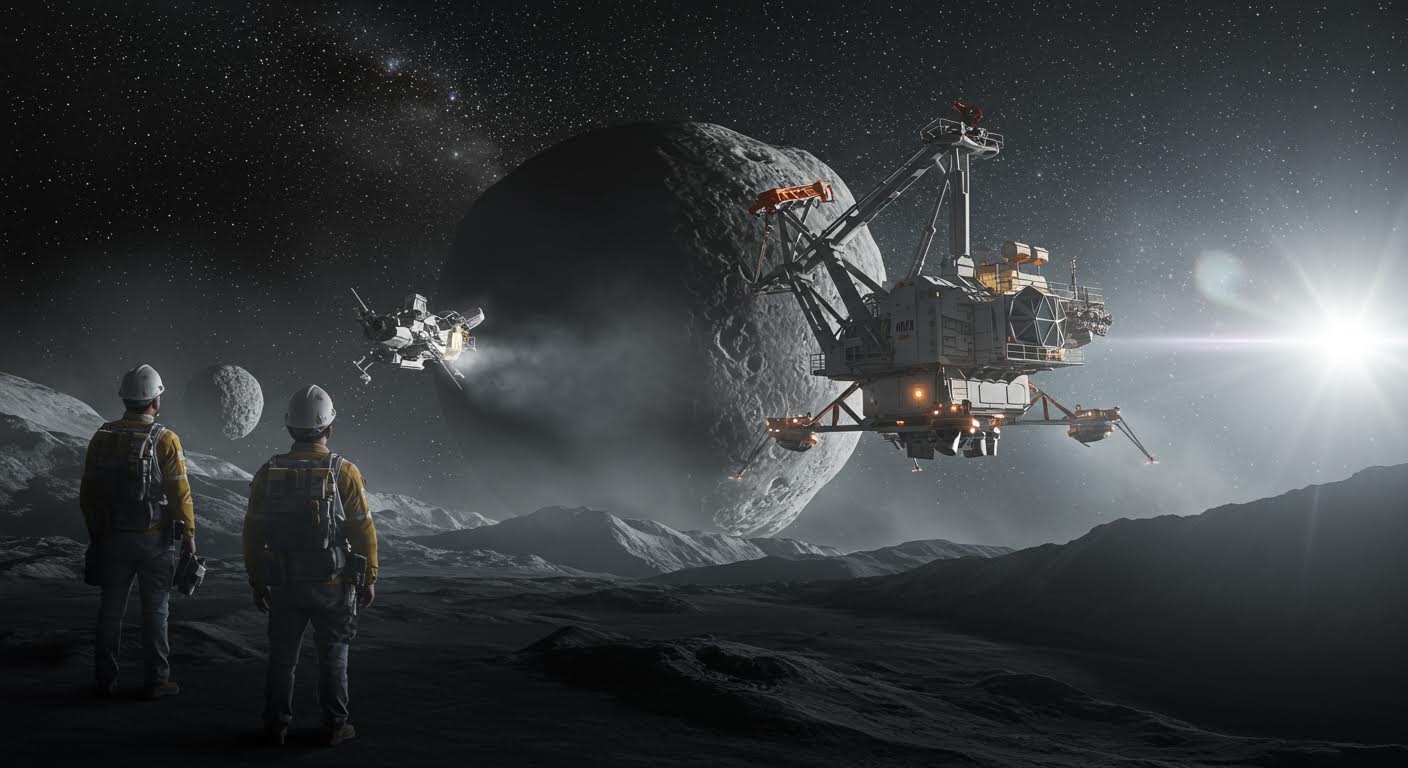
The prospect of mining asteroids and other celestial bodies for their vast mineral wealth is rapidly transitioning from science fiction to economic reality. Space mining technology represents one of the most potentially transformative developments for the global economy, promising access to resources that dwarf Earth's known reserves while creating entirely new industries and reshaping existing markets.
The Technology Behind Space Mining
Modern space mining operations rely on sophisticated autonomous systems designed to function in the harsh environment of space. Robotic extraction systems form the backbone of these operations, utilizing advanced drilling, crushing, and collection mechanisms that can operate without human oversight for extended periods. These systems must be incredibly reliable, as repair missions would be prohibitively expensive and time-consuming.
Spacecraft designed for asteroid approach and resource collection represent another critical technological component. These vessels must navigate complex orbital mechanics to rendezvous with target asteroids, maintain stable positioning during extraction operations, and transport collected materials back to processing facilities or Earth orbit.
In-situ resource utilization capabilities enable the processing of raw materials directly in space, reducing the need to transport unrefined ore across vast distances. This technology can convert raw asteroid material into refined metals, water, and even fuel, dramatically improving the economics of space mining operations.
Current technological readiness levels vary across different aspects of space mining, with some robotic systems approaching commercial viability while others remain in early development phases. According to the National Aeronautics and Space Administration research, most industry experts project that integrated commercial operations could begin in the late 2020s to early 2030s.
The Astronomical Value of Space Resources
The economic potential of space mining stems from the extraordinary abundance of valuable materials in asteroids and other celestial bodies. A single metallic asteroid could contain more platinum group metals than have ever been extracted from Earth's crust, with some estimates valuing individual asteroids in the trillions of dollars.
Rare earth elements, critical for modern electronics and renewable energy technologies, exist in much higher concentrations in many asteroids than in terrestrial deposits. This abundance could eliminate current supply chain vulnerabilities and reduce the environmental impact of rare earth extraction.
Water represents perhaps the most strategically important space resource, serving both as a consumable for human space operations and as a source of hydrogen and oxygen for rocket fuel production. The ability to refuel spacecraft in space would dramatically reduce the cost of deep space missions and enable more ambitious exploration programs.
Economic projections from industry research suggest that successful space mining operations could access resources worth hundreds of trillions of dollars, dwarfing the value of Earth's remaining economically viable mineral reserves.
Market Disruption and Commodity Impact
The introduction of space-sourced materials into global markets could fundamentally alter commodity pricing and availability. The Economist reports that precious metals like platinum, gold, and rare earth elements could see significant price adjustments as supply constraints ease.
Traditional Earth-based mining industries may face unprecedented challenges as space mining scales up. However, the transition is likely to be gradual, allowing time for adaptation and potentially creating new opportunities in supporting infrastructure and services.
Supply chain implications extend beyond raw materials to affect electronics manufacturing, renewable energy production, and advanced technology development. More abundant and affordable rare earth elements could accelerate innovation in clean energy technologies and electronics.
The geographic redistribution of resource control represents perhaps the most significant geopolitical implication. Nations and companies that successfully develop space mining capabilities could gain substantial economic advantages, potentially reshaping global power dynamics.
New Industries and Economic Opportunities
Space mining is catalyzing the emergence of entirely new economic sectors. Space-based manufacturing and processing facilities could take advantage of microgravity conditions and abundant raw materials to produce goods impossible or impractical to manufacture on Earth.
Commercial space transportation and logistics networks are expanding rapidly to support mining operations. This infrastructure development creates opportunities across multiple industries, from advanced materials and propulsion systems to space-based construction and maintenance services.
Job creation spans traditional aerospace roles and emerging specialties in space operations, robotics, and remote systems management. The space mining sector is attracting significant talent from mining, robotics, aerospace, and software engineering disciplines.
Investment activity in space mining ventures has accelerated dramatically, with venture capital firms, government agencies, and large corporations committing billions of dollars to technology development and early-stage operations.
Regulatory and Legal Frameworks
Current international space law, primarily based on the 1967 Outer Space Treaty, was not designed to address commercial resource extraction. The treaty's prohibition on national appropriation of celestial bodies creates ambiguity around the ownership of extracted materials.
Several nations have enacted legislation to clarify commercial space mining rights for their citizens and companies. The United States, Luxembourg, and other countries have passed laws recognizing property rights in extracted space resources, though international consensus remains elusive.
Property rights and ownership questions for celestial resources continue to evolve through diplomatic channels and international legal discussions. The development of clear, internationally recognized frameworks will be crucial for large-scale commercial operations.
International cooperation and regulatory development efforts are underway through various multilateral organizations, though progress remains slow compared to the pace of technological advancement.
Challenges and Timeline to Commercial Viability
Massive capital requirements represent the primary barrier to space mining development. Initial missions require hundreds of millions or billions of dollars in upfront investment before generating any revenue, creating significant financial risks for investors and companies.
Technical risks and potential mission failures add another layer of uncertainty. The complexity of space operations, combined with the impossibility of immediate repairs or interventions, means that single system failures can result in total mission loss.
Timeline projections for first commercial operations vary widely. Mining Technology reports that the most optimistic estimates suggest limited operations by the late 2020s, with more substantial commercial activity expected in the 2030s and 2040s. These timelines depend heavily on continued technological progress and sustained investment.
Infrastructure development needs for space-based operations include orbital refueling stations, processing facilities, and transportation networks. Building this infrastructure requires coordinated investment and planning across multiple organizations and potentially nations.
Despite these challenges, the World Economic Forum notes that the transformative potential of space mining technology continues to drive innovation and investment. As technical hurdles are overcome and costs decline, space mining could indeed reshape the global economy in ways that are only beginning to be understood.