How Massive Data Centers Are Reshaping Local Power Grids
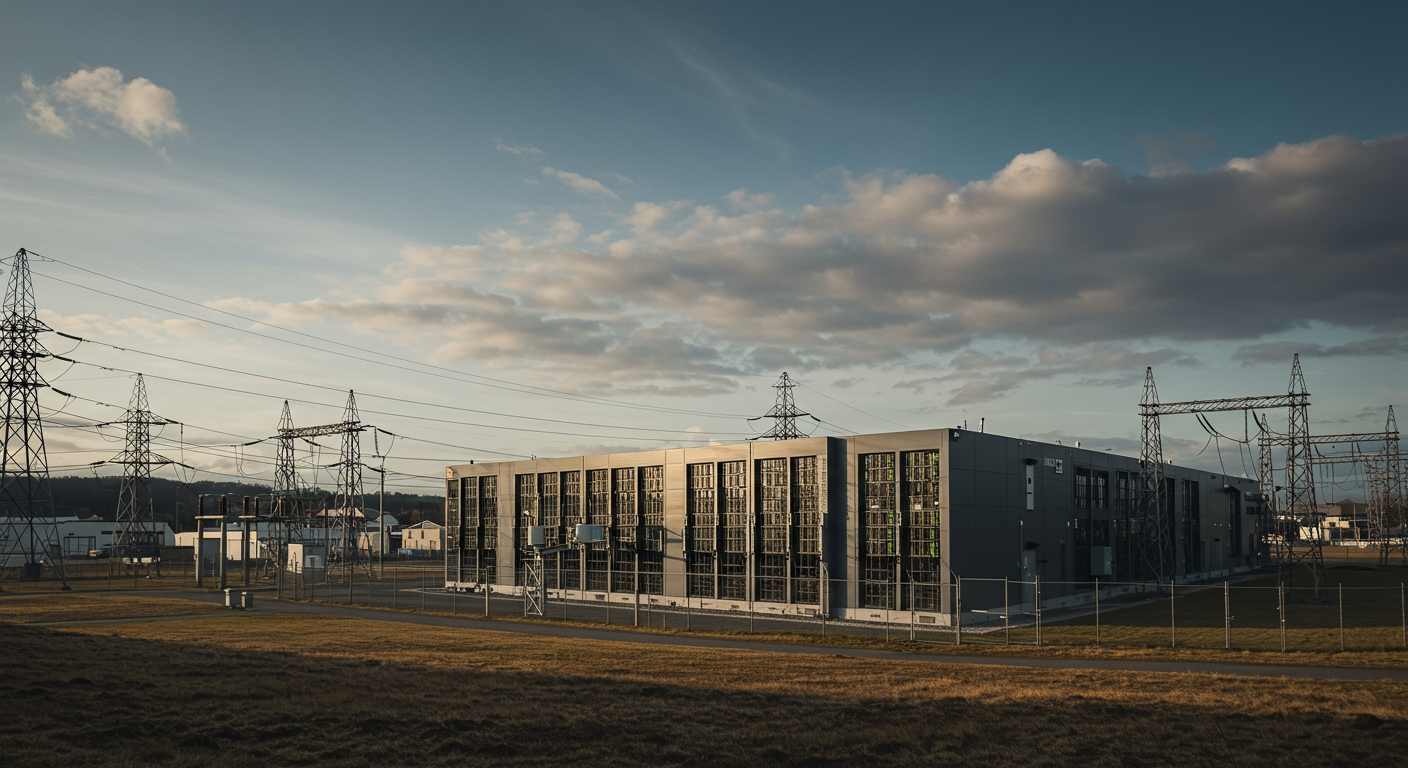
For years, electricity demand across much of the United States was relatively stable. Efficiency gains, slower industrial growth in some regions, and predictable planning assumptions gave utilities a steady backdrop for long-term investment. That is changing, and one of the biggest reasons is the rapid expansion of large data centers.
These facilities are no longer just another category of commercial customer. In many regions, they have become a major grid-planning challenge because of the sheer scale of their electricity needs, the speed at which developers want service, and the way projects cluster in specific locations instead of spreading demand evenly across a state or region. The rise of AI-related computing is intensifying the trend by increasing power density and accelerating demand for new server capacity.
That means this is not simply a technology growth story. It is a story about physical infrastructure: whether local power systems can add enough wires, substations, transformers, and generation capacity quickly enough to support a new class of very large electricity users.
Why Data Centers Have Become a New Grid Planning Challenge
Large data centers can consume electricity on a scale that materially alters utility forecasts. A single hyperscale campus can represent the kind of load growth utilities once expected to see gradually over many years. When multiple campuses are proposed in the same service territory, planners may have to revisit assumptions about peak demand, reserve margins, and the timing of major capital projects.
AI is making the challenge even sharper. Newer computing workloads often require denser server deployments and more energy-intensive operations, which can push total facility demand above that of earlier generations of cloud infrastructure. Developers also tend to move quickly, seeking power commitments on timelines that do not always match the pace of regulated utility planning or transmission construction.
As a result, utilities and regional planners are operating in a more uncertain environment. They are no longer asking only whether demand will grow, but how fast, where, and which proposed projects are real enough to justify expensive new infrastructure.
Why the Impact Is So Local
Data center growth does not affect the grid evenly. It is concentrated in particular utility service territories, transmission zones, and counties where developers can find land, fiber connectivity, tax incentives, and a plausible path to power. That concentration helps explain why the effects can feel dramatic at the local level even when national demand statistics still appear manageable.
A county that lands one major campus may suddenly face new pressure on substations, transmission import capability, and local land-use planning. In another area, a cluster of proposed facilities may prompt utilities to study whether entirely new infrastructure corridors are needed. The practical constraints are often highly specific: available transmission headroom, nearby generation, water access, substation capacity, zoning, and the lead times for specialized grid equipment.
This local dimension also explains why the public debate varies so much from place to place. In one region, the central issue may be reliability. In another, it may be who pays for upgrades. Elsewhere, community concerns may center on water consumption, diesel backup generators, noise, or industrial land conversion.
What Utilities Must Build or Upgrade to Serve These Loads
Serving a very large data center often requires much more than extending a line to a new customer site. Utilities may need to build new substations, upgrade transmission lines, expand distribution facilities, and install transformers and switching equipment dedicated to large-load service. In some cases, entire network reinforcements are needed before a project can operate at full scale.
Utilities may also need to secure additional generation or capacity resources so reliability standards are maintained as demand grows. Even if a local area can physically connect a data center, the broader system still must maintain enough supply to serve all customers during peak conditions or emergencies.
The timing problem is one of the hardest parts. Data center developers often want rapid energization, but major transmission upgrades and grid equipment procurement can take years. Transformers and other critical components have faced long lead times, and large transmission projects must move through engineering, permitting, and often contentious approval processes. That mismatch between digital-economy speed and grid-construction speed is becoming a defining tension.
How Data Centers Are Changing Reliability and Resource Adequacy Debates
In simple terms, resource adequacy means having enough power resources available to meet expected demand while preserving a safety buffer for extreme conditions, outages, or forecasting errors. Large new data center loads complicate that calculation because they can rapidly push demand projections higher in specific markets.
Grid operators and regulators must ask whether reserves that once looked sufficient are still adequate if several major facilities come online within a short period. Forecasting becomes especially difficult when many projects are announced at once but not all are completed on schedule. Some may be delayed, downsized, or canceled, while others may expand faster than expected.
That uncertainty matters because planners cannot afford to underbuild, but overbuilding can also impose costs on the system. The North American Electric Reliability Corporation has increasingly focused on whether fast load additions could outpace generation growth, transmission expansion, or emergency preparedness, particularly in regions already facing tight reserve conditions.
The Regulatory Bottlenecks: Interconnection, Queue Management, and Co-Location Rules
The regulatory framework is also under pressure. Interconnection systems were largely built around adding generators to the grid, not around processing waves of very large new customer loads on urgent timelines. As a result, regulators and utilities are rethinking how studies are performed, how queues are managed, and how much certainty developers must provide before grid investments move forward.
One emerging flashpoint involves co-location arrangements, where large loads seek to connect near existing generation facilities or secure especially favorable access to power. The Federal Energy Regulatory Commission is scrutinizing these arrangements because they raise broader questions about fairness, reliability, and whether one class of customer is receiving preferential treatment that could affect the rest of the grid.
These debates are not just procedural. They shape which projects move ahead, how quickly utilities can respond, and whether existing rules are adequate for a period of unusually concentrated load growth.
The Cost Question: Who Pays for Grid Upgrades?
Perhaps the most politically sensitive issue is cost allocation. If a data center project triggers expensive new substations, transmission upgrades, or system reinforcements, who should pay? Many policymakers argue that the customer creating the need for the upgrade should bear most or all of the associated cost. Others note that some infrastructure may also provide broader system benefits over time.
The concern is that if costs are spread too broadly, households and smaller businesses could end up subsidizing infrastructure built primarily to serve some of the largest corporate electricity users in the market. That has pushed states, utilities, and regulators to explore new tariffs, special contracts, minimum-demand commitments, phased service agreements, and other guardrails.
The goal is to align private development incentives with public-grid costs. That is easier said than done, especially when utilities are under pressure to attract investment while also protecting existing ratepayers.
How Utilities, Regulators, and Communities Are Responding
Across the country, the response is evolving. Utilities are refining load forecasts to account for clusters of large-load proposals and to distinguish between speculative projects and those with a realistic path to completion. Some are imposing stricter service requirements or phased energization schedules so infrastructure can be built in a more manageable sequence.
Regulators are also revisiting planning methods, large-load tariffs, and interconnection rules. In some regions, the emphasis is on ensuring that projected demand is credible before major costs are assigned. In others, the focus is on transmission planning and resource procurement so reliability does not erode as new loads are connected.
Communities are adding another layer of scrutiny. Local officials and residents may support data centers for tax revenue and jobs, but they also want answers about land use, water demand, backup generation emissions, noise, and potential effects on electricity prices. These debates are likely to intensify as more projects move from proposal to construction.
What This Means for the Future of the Power Grid
Massive data centers are reshaping utility investment decisions and grid governance at the local and regional level. Their importance lies not only in how much electricity they use, but in how quickly they can alter planning assumptions for entire service territories.
The core issue is whether the systems designed to plan, permit, finance, and allocate the cost of grid infrastructure can keep pace with a new wave of digital development. In many places, that challenge is becoming more urgent because AI-driven demand is arriving on top of already complex reliability, transmission, and generation constraints.
The U.S. Energy Information Administration, Reuters, Utility Dive, and Goldman Sachs Insights have all highlighted different parts of this trend, from rising electricity demand to the investment pressures now facing utilities and grid operators.
The next phase of digital infrastructure growth will increasingly be constrained by physical power infrastructure. That makes data centers not just a technology story, but one of the clearest examples of how the digital economy now depends on the speed, strength, and governance of the electric grid.