How Massive Data Centers Are Reshaping Local Power Grids
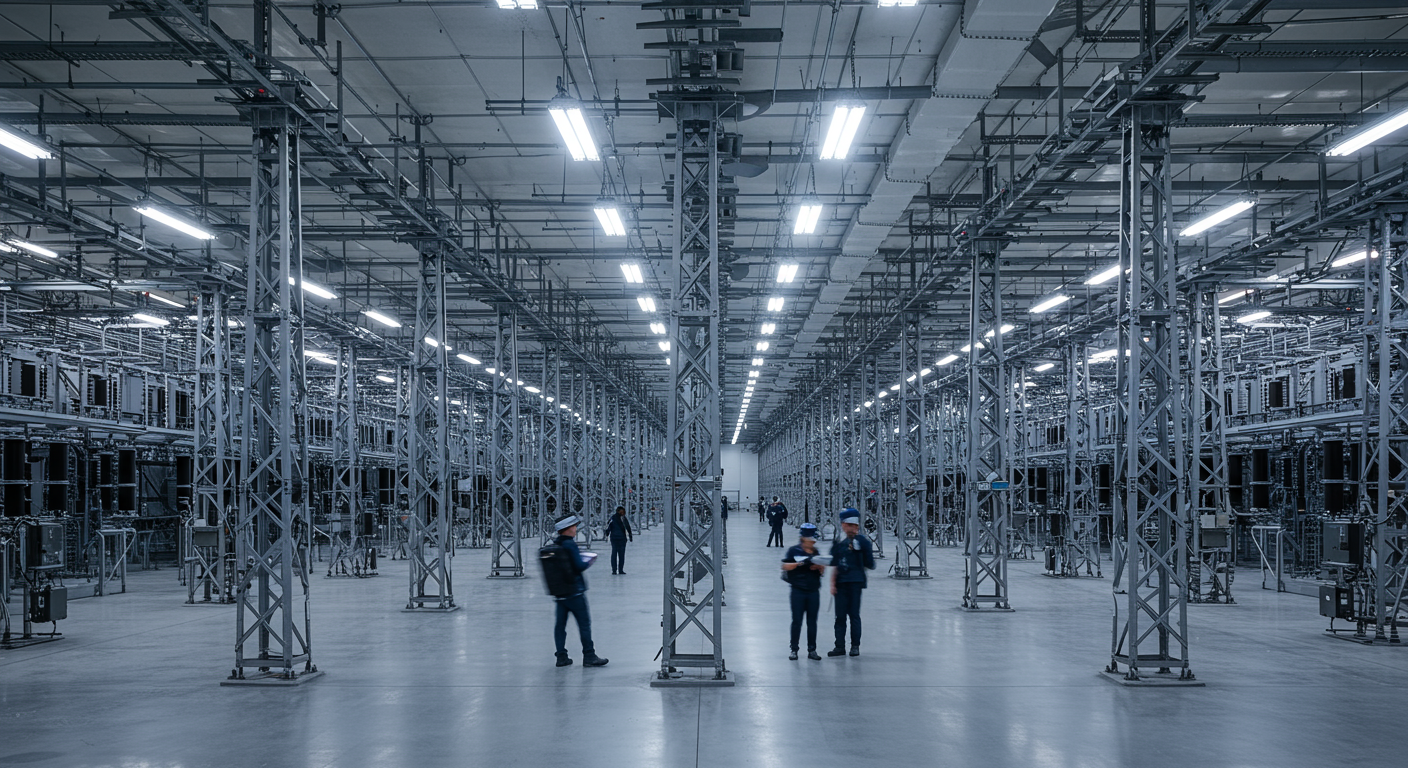
The digital revolution has created an unexpected consequence: massive data centers are fundamentally reshaping how local power grids operate. As cloud computing, artificial intelligence, and digital services expand exponentially, the facilities that power our digital lives are placing unprecedented demands on electrical infrastructure designed for a different era.
The Scale of the Challenge: Data Center Power Demands Surge
Data centers now consume approximately 1-2% of global electricity, with usage growing at an annual rate of 10-15%. According to the U.S. Energy Information Administration, data centers consumed about 73 billion kilowatt-hours in 2020 alone—equivalent to the annual electricity consumption of 6.9 million American homes. This figure is projected to reach 100 billion kilowatt-hours by 2030.
The drivers behind this surge are multifaceted. Cloud computing migration continues accelerating as businesses digitize operations, while artificial intelligence workloads require substantially more computational power than traditional applications. A single AI training session can consume as much electricity as 100 homes use in a year. Cryptocurrency mining, though more volatile, adds another layer of demand in regions where it concentrates.
What makes data center demand particularly challenging is its concentration. Unlike residential or commercial loads distributed across neighborhoods, data centers create massive point loads that can range from 10 megawatts for smaller facilities to over 100 megawatts for hyperscale operations. To put this in perspective, a large data center consumes as much power as a small city.
Grid Infrastructure Under Pressure
Local transmission and distribution networks face capacity constraints as they struggle to deliver industrial-scale power to facilities originally planned for lighter commercial use. Many regional grids are operating near capacity limits, with data center growth outpacing infrastructure investment.
Reliability challenges compound the problem. Data centers require extremely consistent power quality and availability, often demanding 99.99% uptime. This creates pressure for grid operators to maintain higher reserve margins and invest in redundant infrastructure. When large data centers experience outages, the sudden load drops and reconnections can destabilize local grid frequency and voltage.
Northern Virginia exemplifies these challenges. Known as "Data Center Alley," the region hosts over 70% of global internet traffic but faces increasing grid stress. Dominion Energy has invested over $2 billion in transmission upgrades to serve the region's data center growth, while still projecting potential capacity shortfalls.
Similar stress points are emerging across Texas, where ERCOT grid operators manage massive facilities from hyperscale cloud providers, and in Silicon Valley, where legacy grid infrastructure struggles with both data centers and electric vehicle charging demands.
Utility Response: Adapting to Industrial-Scale Customers
Electric utilities are fundamentally restructuring how they serve large customers. Traditional rate schedules designed for predictable industrial loads don't work for data centers with their unique power quality requirements and load profiles. Utilities are developing specialized tariffs that account for power factor, harmonics, and reliability premiums.
Grid modernization investments have accelerated, with utilities spending billions on smart grid technologies, advanced sensors, and automated switching systems. These investments enable better load forecasting and real-time grid management, essential for integrating large, variable loads.
Long-term capacity planning has become more complex as utilities balance data center growth projections with residential and commercial customer needs. Some utilities now require data centers to provide 5-10 year demand forecasts and participate in long-term capacity planning processes.
The challenge extends to cost allocation. Residential customers increasingly question whether they should subsidize grid upgrades primarily benefiting large commercial customers. This has led some utilities to implement more granular cost recovery mechanisms and demand charges.
Innovative Solutions and Partnerships
The scale of data center power demands has sparked innovative partnerships between operators, utilities, and energy providers. Power purchase agreements between data centers and renewable energy developers have become a major driver of clean energy investment, with tech companies now among the largest corporate buyers of renewable electricity.
Some data centers are pursuing direct utility partnerships, including custom grid connections that bypass traditional distribution systems. These arrangements often involve data center operators contributing to transmission infrastructure costs in exchange for priority grid access and customized service levels.
On-site generation is gaining traction as data centers deploy solar panels, battery storage, and even fuel cells to reduce grid dependency. Major cloud providers are investing in microgrids that can operate independently during grid disturbances while providing grid services during normal operations.
Demand response programs represent another frontier, with data centers using their flexible workloads to provide grid stability services. By shifting non-critical computing tasks to off-peak hours or pausing certain operations during grid stress, data centers can act as virtual power plants.
Regional Hotspots and Geographic Implications
Virginia's Data Center Alley remains the most concentrated example of grid transformation. Dominion Energy has developed specialized interconnection processes and invested in transmission projects specifically designed for data center loads. The utility now forecasts data center demand separately from other customer classes and coordinates with regional transmission organizations on capacity planning.
In Texas, ERCOT's competitive electricity market creates different dynamics, with data centers participating in wholesale energy markets and providing ancillary services. The state's renewable energy growth, driven partly by data center demand, demonstrates how large loads can accelerate clean energy deployment.
International examples provide additional models. Ireland's grid operator EirGrid has implemented connection policies specifically for data centers, while Singapore has imposed temporary moratoria on new data center development pending grid infrastructure upgrades.
Looking Ahead: Sustainable Growth Models
The future relationship between data centers and power grids will likely center on integration rather than simple consumption. Advanced grid technologies, including artificial intelligence for load forecasting and automated demand response, promise more sophisticated coordination between data centers and grid operations.
Renewable energy integration offers a path toward sustainable growth, with data centers increasingly co-located with wind and solar farms. Research from the National Renewable Energy Laboratory shows this model reduces transmission losses while providing stable offtake for renewable developers.
Policy frameworks are evolving to address grid impacts, with some jurisdictions implementing data center-specific interconnection requirements, energy efficiency standards, and renewable energy mandates. These policies aim to ensure data center growth contributes to rather than undermines grid reliability and sustainability goals.
The transformation of power grids to accommodate massive data centers represents one of the most significant infrastructure challenges of the digital age. Success will require continued innovation in technology, regulation, and business models that align the needs of digital infrastructure with reliable, affordable, and sustainable electricity systems.