How AI Is Transforming the Next Generation of Children's Toys
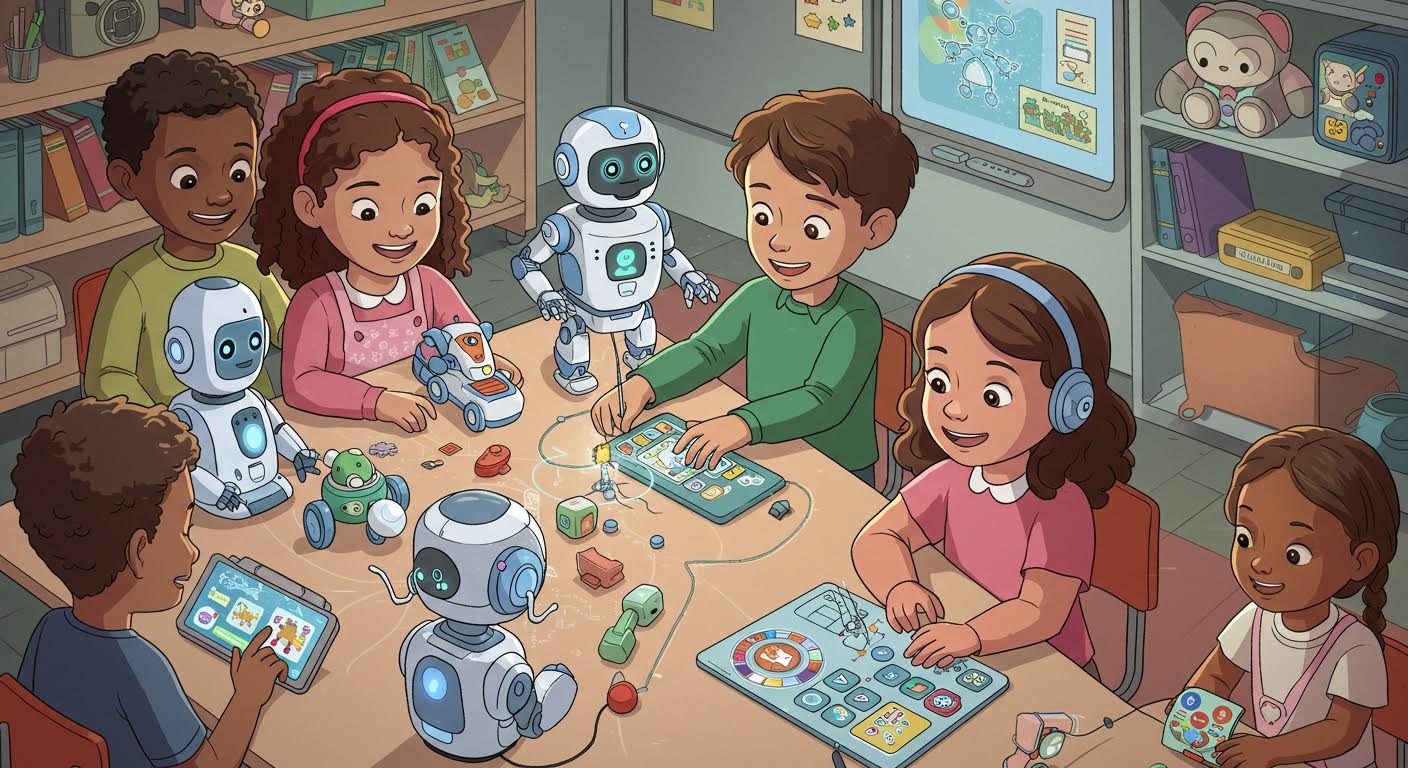
The toy industry is undergoing a technological revolution as artificial intelligence transforms how children play and learn. From talking teddy bears that remember your child's name to educational games that adapt in real-time, AI-powered toys are creating entirely new play experiences tailored to individual kids.
The Smart Toy Boom
The AI toy market has exploded in recent years, fueled by breakthroughs in voice recognition, machine learning, and smart algorithms. Industry giants like Mattel and Hasbro are teaming up with tech companies to add AI capabilities to their products, while innovative startups are inventing completely new types of intelligent playthings.
Investment in smart toys has surged as the industry recognizes AI's potential to enhance traditional play. Thanks to cheaper AI processing power, better speech understanding, and tiny sensors, manufacturers can now pack sophisticated intelligence into toys at prices families can afford.
What AI Toys Can Do Today
Modern AI toys fall into several exciting categories. Interactive companions like smart stuffed animals and robotic pets can chat naturally with children, answer questions, and join in imaginative adventures.
Educational toys represent another major breakthrough, offering personalized learning that adjusts to each child's skill level and preferred learning style. These smart toys can make lessons harder or easier on the fly and give customized feedback to help kids master new skills.
Building sets and robotics kits now include AI programming features, letting children create robots that learn behaviors and respond to their surroundings. Meanwhile, augmented reality toys merge physical and digital play, using AI to create immersive worlds that react to how kids interact with real objects.
Learning Benefits and Better Play
AI toys offer compelling advantages over traditional playthings. Their ability to personalize experiences means they can match each child's pace and interests, potentially boosting engagement and helping kids retain what they learn better than generic educational materials.
Language development is a particular strength of AI toys. They can have real conversations with children and tell stories together, helping kids practice communication skills in a relaxed setting while building vocabulary and storytelling abilities.
STEM education also gets a boost from AI integration. Interactive programming and problem-solving activities help children develop logical thinking skills, with many AI toys introducing coding concepts through fun activities that make abstract ideas concrete and accessible.
Privacy and Safety Challenges
The rise of AI toys has sparked serious concerns among parents, advocacy groups, and regulators about privacy and safety. Many AI toys collect extensive information about how children play, including recorded conversations, behavior patterns, and learning data.
Questions about how companies store, share, and potentially profit from this data have become central to AI toy safety discussions. Some connected toys have suffered security breaches that could expose children's personal information or allow strangers to access microphones and cameras.
Parents increasingly want transparency about data collection and demand strong parental controls. The challenge is balancing the personalization benefits that require data with legitimate privacy protection needs.
Regulators Step In
Government agencies are working to create safety frameworks for AI toys that address both traditional toy safety and new digital privacy issues. The Federal Trade Commission has increased oversight of connected toys and their data practices, while international organizations coordinate on standards for AI children's products.
New safety standards specifically for AI toys are being developed, covering everything from data encryption requirements to age-appropriate interaction design. Industry groups are also creating self-regulation initiatives and best practices to address concerns proactively.
The regulatory environment continues evolving as lawmakers balance innovation with child protection, seeking approaches that encourage beneficial AI development while establishing clear safeguards.
Effects on Child Development
Child development experts are studying how AI toys affect traditional play and developmental outcomes. While AI toys can provide educational benefits and personalized engagement, questions remain about their impact on imagination, creativity, and free play.
Social skill development is also under examination, as researchers investigate how interacting with AI differs from human interaction in terms of emotional growth and communication skills. Some experts worry that over-reliance on AI companions might affect children's ability to navigate complex human relationships.
Screen time considerations factor into these discussions, as many AI toys blur the line between physical and digital play. Parents and educators are working to understand how to balance AI toy engagement with physical activity and offline experiences.
What's Coming Next
The next wave of AI toys promises even more sophisticated capabilities, including better emotional intelligence, improved conversation abilities, and enhanced personalization. Integration with smart home systems may allow toys to work with family digital assistants and other connected devices.
Therapeutic applications represent an emerging opportunity, with potential for AI toys to support children with special needs or developmental challenges through customized interaction patterns and learning approaches.
Industry experts predict continued strong growth over the next five years, with AI becoming standard in many toy categories rather than a specialty feature. Success will likely depend on finding the right balance between technological sophistication and the fundamental joy of play that makes great toys timeless.