How AI-Controlled Systems Manage Hyperscale Infrastructure
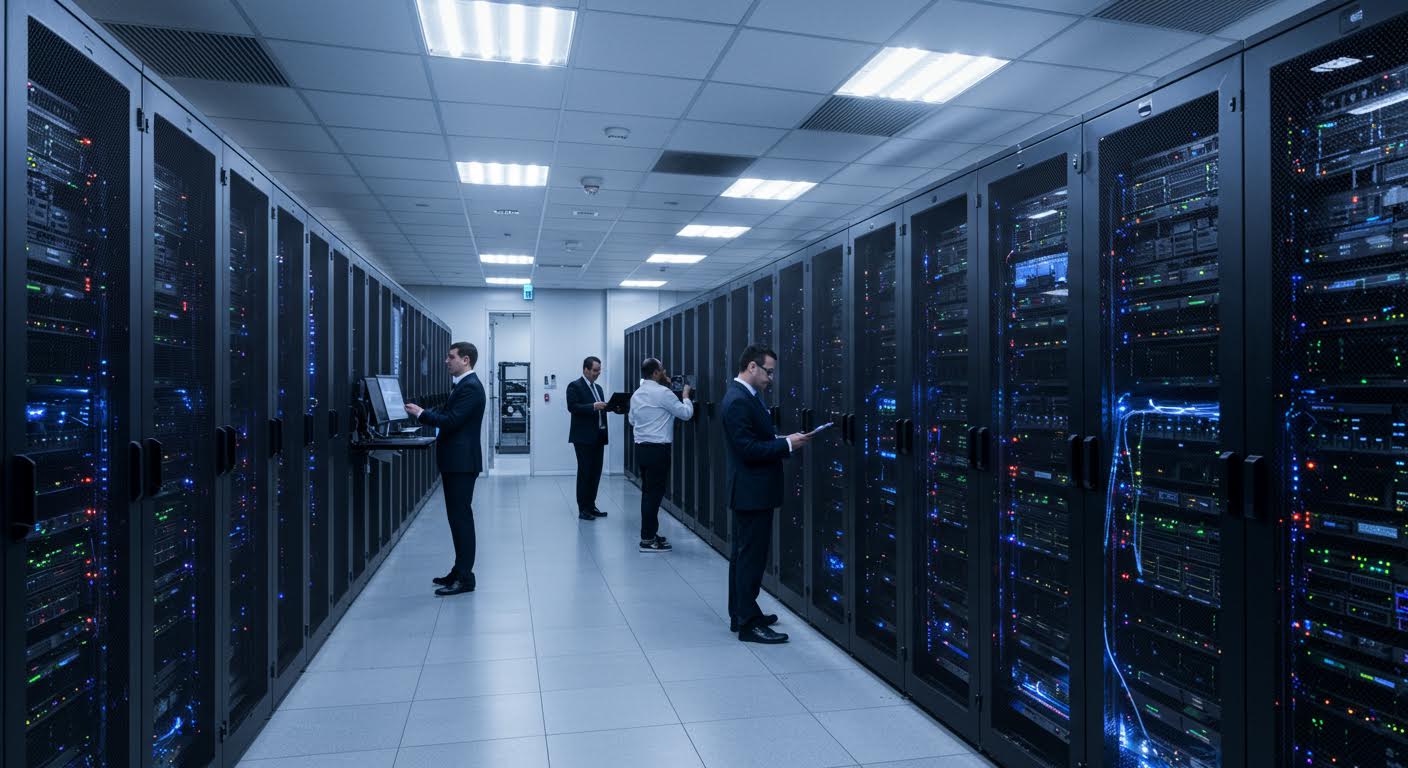
How AI-Controlled Systems Manage Hyperscale Infrastructure
The Scale Challenge
Hyperscale infrastructure represents computing environments that seamlessly scale across thousands of servers and manage petabytes of data. Companies like Google, Amazon, Microsoft, and Meta operate data centers containing millions of servers distributed across hundreds of facilities worldwide. The operational complexity of these environments far exceeds human management capabilities.
Managing hyperscale infrastructure involves coordinating compute resources, storage systems, networking equipment, cooling mechanisms, and power distribution across vast facilities. Traditional manual approaches become impossible when dealing with systems that process billions of requests daily and require microsecond-level response times. This complexity has driven major cloud providers to implement AI-controlled management systems that operate at machine speed and scale.
Predictive Maintenance Revolution
AI systems are transforming data center maintenance by analyzing hardware telemetry data to predict equipment failures before they occur. These systems continuously monitor temperature sensors, disk performance metrics, CPU utilization patterns, and network traffic to identify early warning signs of potential failures.
Machine learning models trained on historical failure data can recognize patterns that precede hardware malfunctions. Slight temperature fluctuations or minor performance degradations that human operators might overlook can indicate impending disk failures or cooling system problems. By identifying these patterns, AI systems trigger preventive maintenance procedures or automatically redistribute workloads away from at-risk hardware.
Major cloud providers report significant improvements in system reliability through predictive maintenance. These AI-driven approaches reduce unplanned downtime by up to 50% while optimizing maintenance schedules to minimize operational disruption. The cost savings from preventing major equipment failures and optimizing maintenance resources are substantial across hyperscale operations.
Real-Time Energy and Cooling Optimization
Energy consumption represents one of the largest operational costs for hyperscale data centers. According to Google Cloud, AI algorithms continuously optimize cooling systems by analyzing workload patterns, external weather conditions, and facility utilization to minimize energy usage while maintaining optimal operating temperatures.
Machine learning models process data from thousands of environmental sensors to create detailed thermal maps of data center facilities. These systems predict how workload changes will affect temperature distribution and proactively adjust cooling systems. By optimizing airflow patterns and cooling intensity in real-time, AI systems achieve significant energy savings.
Advanced AI implementations also optimize power distribution by analyzing usage patterns across different facility zones. These systems automatically balance electrical loads, identify opportunities for power efficiency improvements, and coordinate with renewable energy sources to minimize carbon footprint. Industry reports indicate that AI-optimized cooling systems reduce energy consumption by 15-30% compared to traditional approaches.
Intelligent Workload Distribution
AI-driven load balancing systems manage traffic distribution across global server networks by analyzing real-time performance metrics, network latency, and capacity utilization. These systems make thousands of routing decisions per second to optimize user experience and resource efficiency.
Machine learning algorithms analyze traffic patterns to predict demand spikes and pre-position computing resources in optimal locations. By understanding user behavior patterns and application requirements, AI systems route requests to servers that provide the best performance while maintaining efficient resource utilization.
Geographic workload optimization involves complex calculations considering network latency, local server capacity, energy costs, and regulatory requirements. AI systems process these variables continuously to make optimal routing decisions that improve application performance while minimizing operational costs.
Automated Resource Scaling
AI systems excel at anticipating demand fluctuations and scaling infrastructure resources proactively. Machine learning models analyze historical usage patterns, seasonal variations, and external events to predict when additional computing capacity will be needed.
These predictive scaling systems automatically provision new server instances, allocate storage resources, and configure network capacity before demand spikes occur. This proactive approach ensures consistent application performance while avoiding the waste associated with over-provisioning resources.
Integration with cloud service APIs enables seamless resource provisioning across different service types. AI systems coordinate scaling decisions across compute, storage, and networking resources to maintain optimal performance ratios. This automated coordination reduces response times during traffic spikes while minimizing unnecessary resource consumption during low-demand periods.
Implementation Challenges and Solutions
Deploying AI systems at hyperscale involves significant technical challenges. Data quality requirements are enormous, as AI models need access to clean, consistent telemetry data from millions of hardware components. Establishing reliable data collection and processing pipelines across diverse hardware environments requires substantial infrastructure investment.
Model training and validation present additional challenges when dealing with hyperscale environments. AI systems must learn from operational data while avoiding disruption to production services. This requires sophisticated testing environments and gradual deployment strategies that minimize risk to critical infrastructure.
Integration with legacy infrastructure systems often requires custom solutions and careful planning. Many data centers contain equipment from multiple vendors with different management interfaces. AI systems must be designed to work with these heterogeneous environments while providing consistent optimization capabilities.
Security considerations are paramount when implementing AI-controlled infrastructure systems. These systems require extensive access to operational data and control over critical infrastructure components. Robust security frameworks, access controls, and monitoring systems are essential to prevent unauthorized access or manipulation of AI management systems.
Future Implications
The trend toward AI-controlled infrastructure management is accelerating as cloud providers seek competitive advantages through operational efficiency. Emerging technologies like neuromorphic computing and quantum-inspired optimization algorithms promise even more sophisticated infrastructure management capabilities.
The potential for fully autonomous data center operations is becoming realistic as AI systems demonstrate reliable performance in critical infrastructure management roles. Future developments may include AI systems that design optimal data center layouts, coordinate construction projects, and manage entire facility lifecycles with minimal human intervention.
Industry-wide adoption of AI infrastructure management is creating new competitive dynamics. Organizations with advanced AI capabilities can operate more efficiently, offer better service reliability, and respond more quickly to changing market demands. This technological advantage is becoming increasingly important in cloud computing markets.
According to Microsoft Research, long-term implications include fundamental changes in cloud computing economics. As AI systems optimize infrastructure utilization and reduce operational costs, these savings can be passed on to customers through lower service prices and improved performance. The cumulative effect of AI-driven infrastructure management may reshape the entire cloud computing industry.