How Advanced Sensors Are Expanding Our Understanding of the Universe
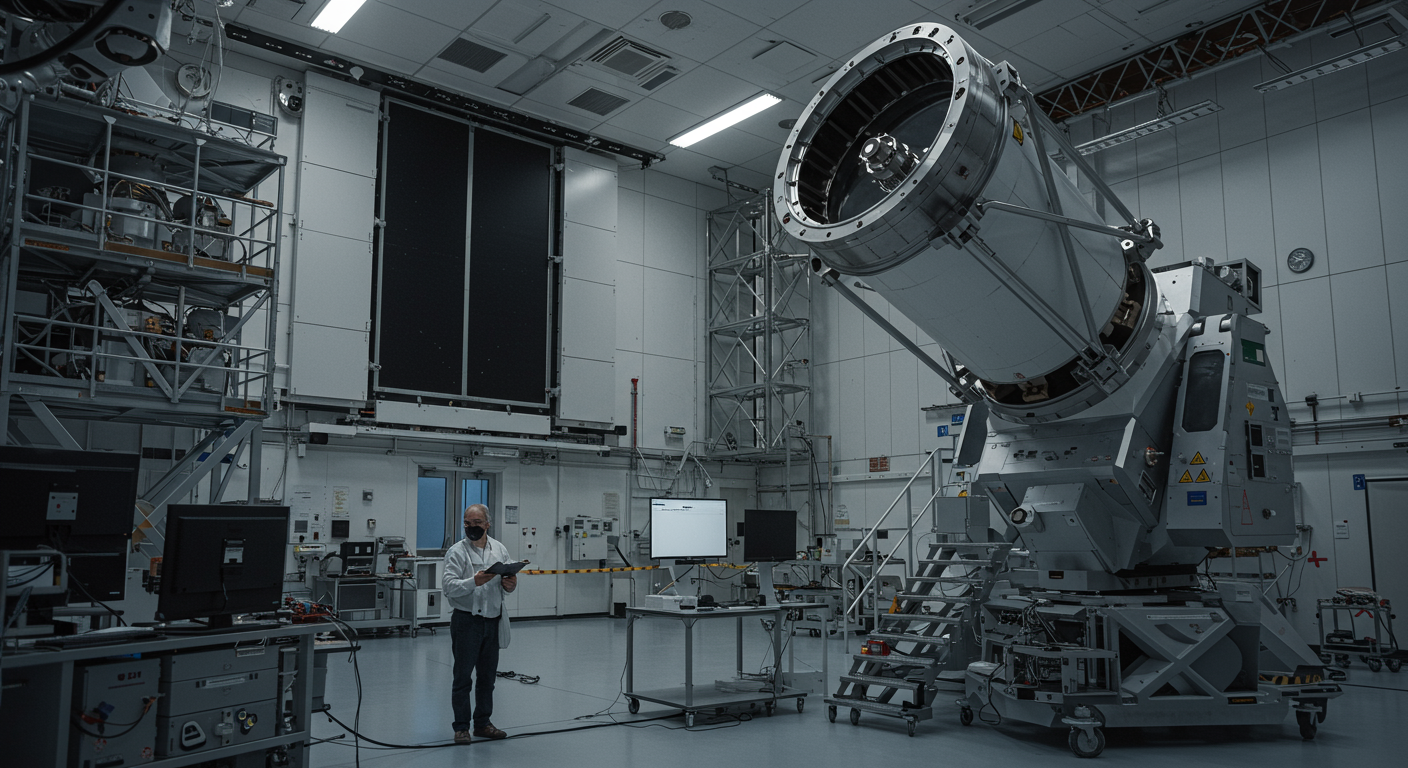
The universe is revealing its secrets through an unprecedented revolution in sensor technology. From detecting the faintest infrared light from the cosmos' earliest galaxies to measuring gravitational waves smaller than atomic nuclei, advanced sensors are fundamentally transforming our understanding of space and time. This technological leap represents the most significant advancement in observational astronomy since Galileo first pointed a telescope skyward.
Space-Based Infrared Sensors: Peering Through Cosmic Dust
The James Webb Space Telescope stands as the pinnacle of infrared sensor technology, equipped with detector arrays so sensitive they can capture light that has traveled over 13 billion years. These advanced sensors operate at temperatures colder than deep space, allowing them to detect thermal radiation from the universe's first stars and galaxies that formed when the cosmos was merely a few hundred million years old.
Unlike visible light telescopes that are blocked by cosmic dust, infrared sensors peer through these cosmic clouds to reveal hidden star formation regions and the structural evolution of early galaxies. The telescope's Near Infrared Camera and Mid-Infrared Instrument represent quantum leaps in sensitivity compared to previous space telescopes, capturing images with clarity that was unimaginable just decades ago.
Recent discoveries enabled by these infrared sensors include the detection of fully formed galaxies existing much earlier in cosmic history than theoretical models predicted, forcing astronomers to reconsider the timeline of cosmic evolution.
Gravitational Wave Detection: Listening to Spacetime
The Laser Interferometer Gravitational-Wave Observatory represents perhaps the most precise measurement technology ever created, using sensors capable of detecting changes in distance smaller than 1/10,000th the width of a proton. This extraordinary precision allows scientists to detect gravitational waves—ripples in spacetime itself—generated by the most violent events in the universe.
The system works by splitting laser light along two perpendicular arms, each stretching four kilometers. When a gravitational wave passes through Earth, it causes infinitesimal changes in these distances that the sensors can detect. The technology requires isolating the detectors from every conceivable source of vibration, from seismic activity to passing trucks.
Since LIGO's first detection in 2015, gravitational wave sensors have identified dozens of black hole mergers and neutron star collisions, opening an entirely new window into cosmic phenomena. Upcoming improvements include enhanced sensitivity and new observatories in Europe and Japan, promising to detect gravitational waves from even more distant cosmic events.
Ground-Based Adaptive Optics: Overcoming Earth's Atmosphere
Earth's atmosphere has long been astronomy's greatest obstacle, creating the twinkling effect that limits ground-based telescope resolution. Advanced sensor systems now solve this problem through adaptive optics technology that measures atmospheric distortion hundreds of times per second and corrects for it in real-time.
The European Southern Observatory's Very Large Telescope employs sophisticated sensor arrays that track guide stars—both natural and artificial laser guide stars—to map atmospheric turbulence. Deformable mirrors then reshape themselves to counteract these distortions, achieving image quality that rivals or exceeds space-based telescopes.
Multi-conjugate adaptive optics takes this concept further by correcting atmospheric distortion across wider fields of view, enabling large-scale surveys of astronomical objects with unprecedented clarity. These sensor-driven systems have transformed ground-based astronomy, making discoveries that would have been impossible without atmospheric correction.
Multi-Messenger Astronomy: Combining Sensor Technologies
The most exciting astronomical discoveries now emerge from coordinated observations using multiple sensor types simultaneously. Multi-messenger astronomy combines electromagnetic observations across the entire spectrum with gravitational wave detection to create comprehensive pictures of cosmic events.
The 2017 detection of a neutron star merger exemplifies this approach. Gravitational wave sensors detected the collision first, triggering rapid alerts to telescopes worldwide. Within hours, sensors across the electromagnetic spectrum—from radio waves to gamma rays—captured the event's aftermath, revealing the cosmic forges where heavy elements like gold and platinum are created.
Rapid alert systems now connect gravitational wave observatories with optical, infrared, and radio telescope networks, enabling real-time coordination of observations. This sensor integration has revealed that neutron star mergers are responsible for much of the universe's heavy element production, solving a decades-old mystery about cosmic chemical evolution.
AI-Enhanced Data Processing: Smart Sensors and Analysis
Modern astronomical sensors generate data at unprecedented rates, requiring artificial intelligence to process and analyze the information streams. Machine learning algorithms now automatically identify transient events, classify astronomical objects, and detect subtle patterns that might escape human attention.
These AI systems can process terabytes of sensor data daily, automatically flagging potentially interesting events for human follow-up. Advanced algorithms detect supernovae within hours of explosion, identify new asteroids, and classify galaxies based on their structural characteristics. The speed of AI analysis enables rapid response observations that capture time-sensitive phenomena.
Future sensor systems will integrate AI processing directly into the detection hardware, creating intelligent sensors that can make autonomous decisions about which observations to prioritize and which discoveries warrant immediate attention from the global astronomical community.
Future Frontiers: Next-Generation Sensor Technologies
The next generation of sensor technology promises even more revolutionary capabilities. Quantum sensors under development could detect dark matter interactions, while miniaturized sensor systems will enable swarms of small spacecraft to create distributed observation networks throughout the solar system.
Upcoming space missions will deploy sensors with sensitivity improvements of orders of magnitude over current systems. The proposed Laser Interferometer Space Antenna will detect gravitational waves from space, free from Earth's seismic interference. Next-generation infrared sensors will push observations back to the very first stars that ignited after the cosmic dark ages.
The long-term vision includes sensor networks positioned at strategic points throughout the solar system, creating a cosmic early warning system for potentially hazardous events while enabling observations impossible from Earth's vicinity. These distributed sensor arrays will provide multiple perspectives on cosmic phenomena, revealing three-dimensional structures and motions of astronomical objects.
As sensor technology continues advancing, our understanding of the universe expands exponentially. Each breakthrough in detection capability opens new cosmic windows, revealing phenomena we never knew existed and answering fundamental questions about our place in the cosmos.