How Advanced Sensors Are Expanding Our Understanding of the Universe
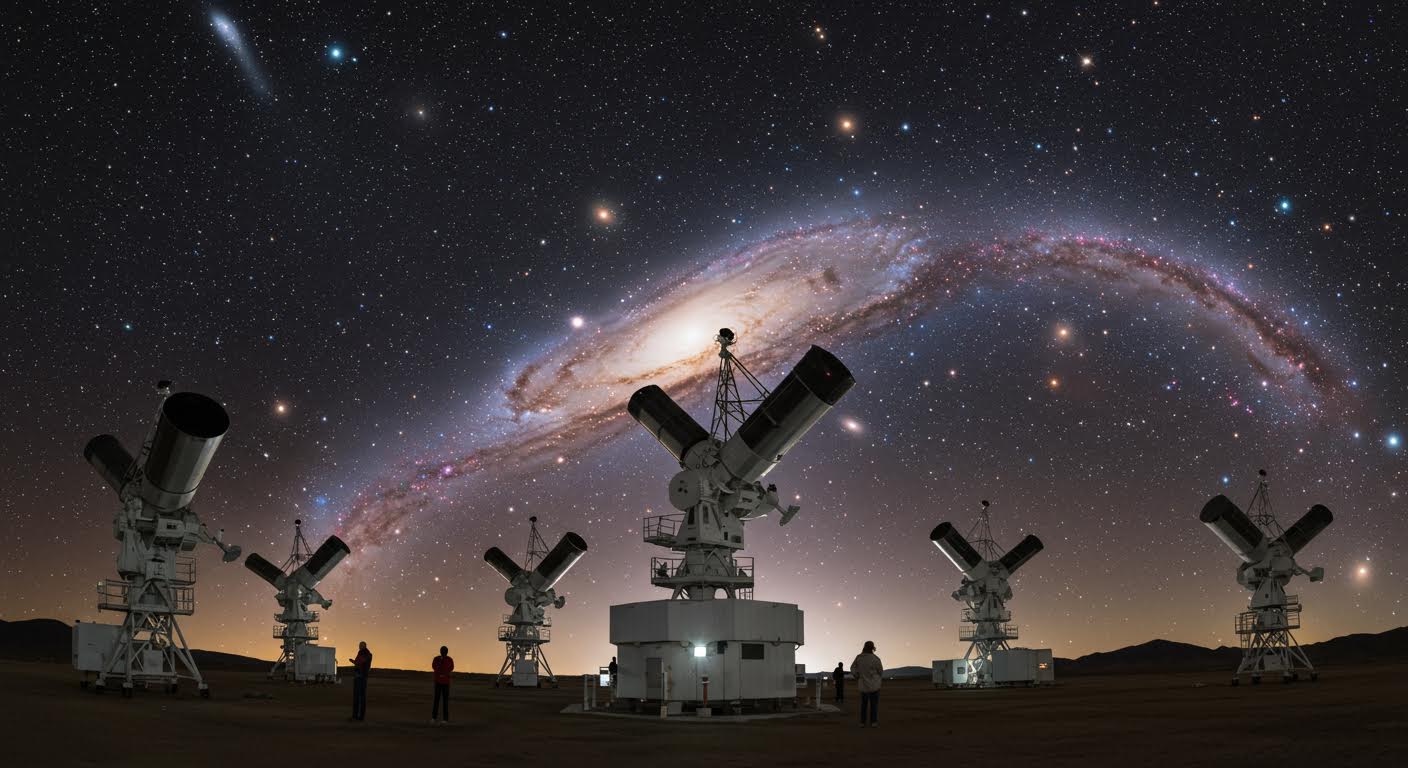
We're living through a golden age of cosmic discovery, driven by revolutionary advances in sensor technology. While traditional optical telescopes have served astronomy for centuries, modern sensors are breaking through fundamental barriers that once limited our view of the universe. From detecting gravitational waves rippling through spacetime to peering through cosmic dust with infrared vision, these advanced instruments are revealing phenomena that were purely theoretical just decades ago.
Space-Based Infrared Sensors: Seeing Through Cosmic Dust
The James Webb Space Telescope represents perhaps the most dramatic leap forward in infrared sensor capability ever achieved. Unlike visible light, infrared radiation can penetrate cosmic dust clouds that obscure much of the universe, allowing scientists to observe star formation in real-time and trace galaxy evolution back to its earliest stages.
According to the National Aeronautics and Space Administration, Webb's advanced sensor array operates at temperatures just above absolute zero, enabling detection of incredibly faint infrared signals from objects billions of light-years away. This sensitivity has already led to the discovery of fully formed galaxies existing just 400 million years after the Big Bang—much earlier than previously thought possible.
The technical breakthroughs behind this ultra-sensitive infrared imaging include revolutionary detector materials, precision cryogenic cooling systems, and adaptive mirror technologies that maintain perfect focus across temperature variations. These innovations have effectively created a time machine, allowing astronomers to observe the universe's infancy with unprecedented clarity.
Gravitational Wave Detectors: Listening to Spacetime
Perhaps no sensor technology has opened a more fundamentally new window on the cosmos than gravitational wave detectors. The Laser Interferometer Gravitational-Wave Observatory and its European counterpart Virgo represent engineering marvels of precision, capable of detecting distortions in spacetime smaller than 1/10,000th the width of a proton.
These detectors work by measuring tiny changes in the length of laser beams traveling between mirrors positioned kilometers apart. When gravitational waves pass through Earth, they stretch and compress space itself, creating measurable variations in the laser path lengths. Since the first detection in 2015, these instruments have confirmed dozens of black hole mergers and neutron star collisions—events that produce no visible light but generate tremendous gravitational disturbances.
This new form of astronomy complements traditional optical observation by detecting phenomena that remain completely invisible to electromagnetic sensors. Future improvements include planned space-based gravitational wave detectors that will be orders of magnitude more sensitive, potentially revealing the gravitational signature of the Big Bang itself.
Quantum Sensors: Hunting for the Universe's Hidden Components
Quantum sensor technology is pushing measurement precision to its theoretical limits, opening possibilities for detecting some of the universe's most elusive components. These instruments exploit quantum mechanical properties like superposition and entanglement to achieve sensitivity levels that classical sensors cannot match.
In dark matter research, quantum sensors are being deployed in underground laboratories to detect hypothetical interactions between dark matter particles and ordinary matter. Research supported by the National Science Foundation shows that atomic interferometry techniques can measure acceleration and gravitational effects with extraordinary precision, while quantum magnetometry can detect magnetic field variations that might indicate dark matter interactions.
Beyond dark matter, quantum sensors hold potential for detecting axions, sterile neutrinos, and other theoretical particles that could explain longstanding cosmological mysteries. These instruments represent a convergence of fundamental physics and advanced engineering, bringing laboratory-scale quantum effects to bear on cosmic-scale questions.
Ground-Based Observatory Revolution
While space-based sensors grab headlines, ground-based observatories are undergoing their own technological revolution. Adaptive optics systems now compensate for atmospheric turbulence in real-time, allowing ground-based telescopes to achieve image quality that rivals space-based instruments for many applications.
Multi-mirror array systems and interferometry advances are effectively creating virtual telescopes with apertures spanning continents. Very long baseline interferometry coordinates radio telescopes separated by thousands of miles, achieving resolution fine enough to image black hole event horizons—as demonstrated by the Event Horizon Telescope's historic images of M87* and Sagittarius A*.
Integration with artificial intelligence is transforming how these sensors operate, enabling real-time data processing and automated discovery of transient events. Machine learning algorithms can now identify potentially interesting phenomena in telescope data streams and automatically trigger follow-up observations across multiple wavelengths.
Multi-Spectrum Coordination: Building the Complete Picture
Modern astronomical research increasingly relies on coordinated observation across the entire electromagnetic spectrum and beyond. When LIGO detects a gravitational wave event, automated alert systems instantly notify optical, radio, and gamma-ray observatories worldwide to search for electromagnetic counterparts.
This multi-messenger astronomy approach has already yielded breakthrough discoveries, such as the 2017 detection of gravitational waves and gamma rays from a neutron star merger that confirmed theories about the cosmic origin of gold and other heavy elements. Data fusion techniques are creating comprehensive maps of cosmic phenomena that no single sensor type could achieve alone.
Real-time coordination between space and ground-based sensors enables rapid response to transient events that might last only hours or days. These coordinated campaigns are revealing the dynamic, ever-changing nature of the universe in ways that static observations never could.
Future Frontiers and Emerging Technologies
The next generation of sensor technology promises even more dramatic advances. Miniaturization is enabling sophisticated sensors to be deployed on CubeSats, creating distributed sensor networks throughout the solar system at a fraction of traditional mission costs.
According to the European Southern Observatory, proposed breakthrough technologies include quantum-enhanced sensors that could detect dark energy directly, biosignature detection systems capable of analyzing exoplanet atmospheres for signs of life, and neutrino telescopes that would open an entirely new observational window on high-energy cosmic processes.
The timeline for these emerging technologies spans the next two decades, with several major sensor deployments planned including the Nancy Grace Roman Space Telescope, the Extremely Large Telescope, and the proposed LISA gravitational wave detector constellation. Each represents a significant leap in sensor capability that will likely reveal phenomena we cannot yet imagine.
As these advanced sensors come online, they will continue expanding our cosmic perspective, transforming our understanding of everything from the nature of dark matter to the possibility of life beyond Earth. The universe is becoming increasingly transparent to our instruments, and with each new sensor breakthrough, we discover just how much more there is to see.