How Advanced Robotics Are Enabling Deep-Space Exploration
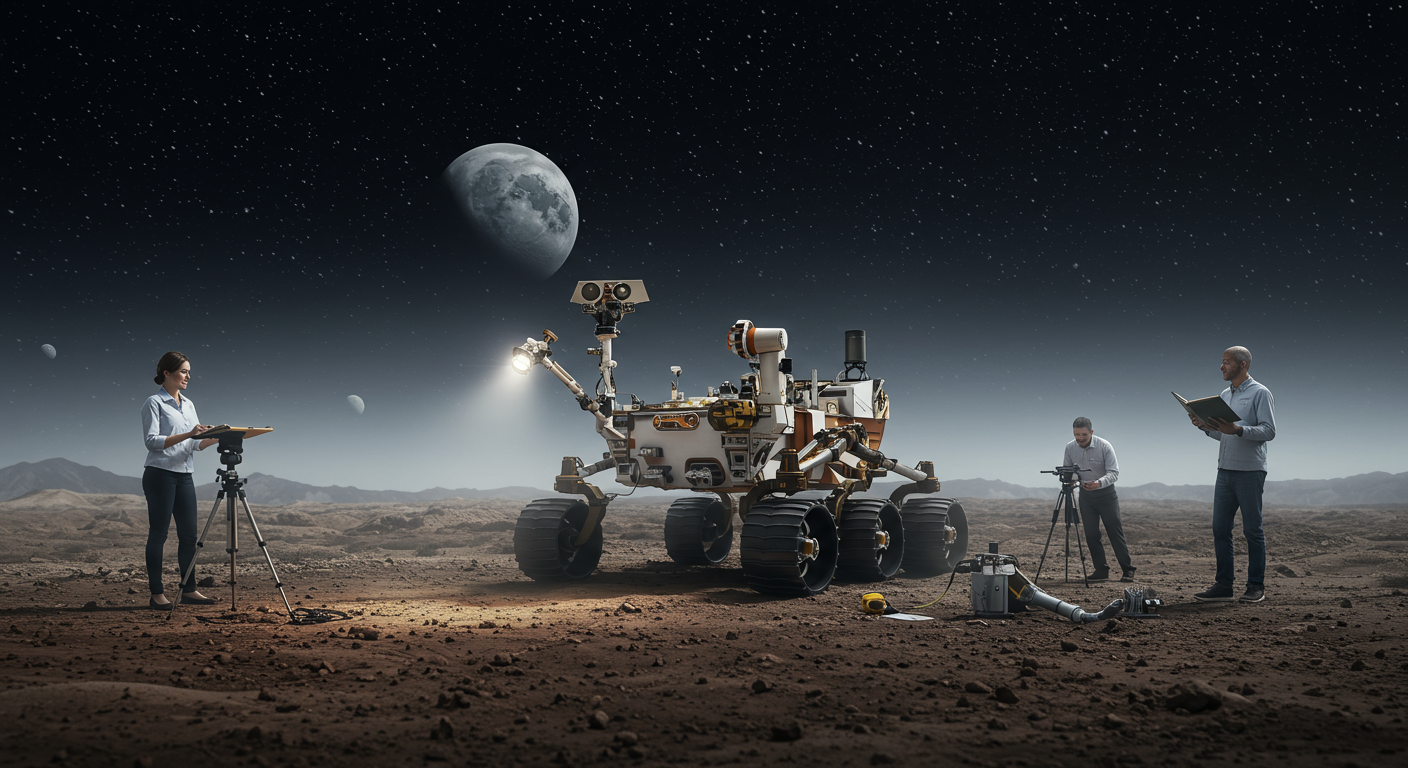
The vast emptiness of space has long challenged humanity's desire to explore beyond Earth's boundaries. Today, advanced robotics are transforming what's possible in deep-space exploration, enabling missions that would be impossible or prohibitively dangerous for human crews. These sophisticated machines serve as our mechanical ambassadors, venturing into hostile environments millions of miles from home to unlock the secrets of our solar system and beyond.
The Robotic Revolution in Deep Space
Modern space robotics represent a quantum leap from the simple mechanical systems of early space missions. Today's robotic explorers combine cutting-edge technologies including artificial intelligence, advanced materials science, and precision engineering to operate autonomously in environments where a single communication with Earth can take up to 24 minutes each way.
The unique challenges of deep-space environments—extreme temperatures, radiation, dust storms, and unpredictable terrain—demand robotic systems that can think, adapt, and make critical decisions independently. These technological breakthroughs have enabled increasingly ambitious missions, from multi-year surface operations on Mars to precision asteroid sample collection.
Autonomous Navigation: Charting Unknown Territory
One of the most critical advances in space robotics is autonomous navigation. When a Mars rover encounters an unexpected obstacle or opportunity, it cannot wait 48 minutes for a round-trip communication with Earth mission control. Instead, modern rovers employ sophisticated autonomous systems that process real-time environmental data and make navigation decisions independently.
The evolution of Mars rover navigation demonstrates this technological progression dramatically. The National Aeronautics and Space Administration's first rover, Sojourner, could travel only a few meters per day and required constant Earth-based guidance. In contrast, the Perseverance rover can autonomously navigate hundreds of meters daily using advanced computer vision and machine learning algorithms that recognize safe paths and identify scientific targets of interest.
These systems utilize multiple sensors, cameras, and LIDAR technology to create detailed 3D maps of surrounding terrain. Machine learning algorithms continuously improve path-planning capabilities by learning from each navigation decision, gradually becoming more efficient at identifying optimal routes while avoiding hazards.
Precision Robotics: Sample Collection and Scientific Operations
Beyond mobility, space robots excel at delicate scientific operations that require precision and reliability far from any repair facility. Robotic arms and manipulator systems now perform incredibly sophisticated tasks, from drilling into asteroid surfaces to caching samples for eventual return to Earth.
NASA's Perseverance rover demonstrates this capability through its advanced sample collection system, which can drill precise cores from Martian rocks, analyze their composition, and store promising samples in sealed containers. Similarly, the OSIRIS-REx mission successfully used robotic systems to collect samples from asteroid Bennu, requiring split-second timing and millimeter precision while both spacecraft and asteroid traveled through space at tremendous velocities.
These robotic systems also deploy and operate complex scientific instruments, extending far beyond simple sample collection. They conduct chemical analyses, measure atmospheric conditions, and even operate sophisticated laboratories millions of miles from Earth, all while adapting to unexpected conditions and equipment variations.
AI-Driven Decision Making: Smart Systems for Complex Missions
Artificial intelligence has become the brain behind modern space robotics, enabling machines to make complex decisions in unpredictable environments. These AI systems process data from multiple sensors simultaneously, identifying scientifically interesting targets, optimizing mission objectives, and responding to equipment malfunctions without human intervention.
Modern space robots employ machine learning algorithms that continuously improve their performance throughout their missions. They learn to recognize geological features of scientific interest, optimize power consumption based on environmental conditions, and even predict potential system failures before they occur.
Fault detection and recovery systems represent another crucial AI application. When equipment malfunctions occur—an inevitable reality in harsh space environments—AI systems diagnose problems, attempt repairs using available resources, and reconfigure mission parameters to continue operations with reduced capabilities.
Mission Enablers: Extending Human Reach
Robotic systems enable deep-space missions that would be impossible with human crews due to distance, duration, cost, and risk factors. While a crewed mission to Mars would require massive life support systems and face significant radiation exposure risks, robotic missions can operate for years or even decades with minimal ongoing support.
These mechanical explorers also serve as advance scouts for future human missions, identifying landing sites, characterizing environmental hazards, and even beginning infrastructure development. Robotic systems can establish supply caches, test life support technologies, and create detailed maps that will prove invaluable for eventual human exploration.
The cost advantages are equally compelling. Robotic missions cost a fraction of equivalent crewed missions while often providing superior scientific returns due to their ability to operate continuously in harsh conditions that would require extensive protective measures for human crews.
Leading Players and Future Innovations
NASA continues to lead space robotics innovation through programs like the Mars Exploration Rover missions and the upcoming Artemis lunar exploration initiative. The agency's Jet Propulsion Laboratory has pioneered many of the autonomous navigation and precision manipulation technologies now standard in space robotics.
The European Space Agency has contributed significant advances in robotic arm technology and automated rendezvous systems, particularly through missions like Rosetta's comet landing and the ongoing development of robotic servicing capabilities for satellites and space stations.
Private companies are increasingly important players in space robotics. SpaceX's Dragon capsule employs sophisticated robotic systems for automated space station docking, while companies like Intuitive Machines and Astrobotic are developing robotic lunar landers that will carry scientific payloads to the Moon's surface.
The Future of Robotic Deep-Space Exploration
Emerging technologies promise to further revolutionize space robotics capabilities. Advanced AI systems will enable more sophisticated scientific decision-making, while improved power systems will extend mission durations and capabilities. New materials and manufacturing techniques will create more resilient robots capable of operating in even more extreme environments.
Upcoming missions will push robotic exploration to new frontiers, including Europa and Enceladus—icy moons that may harbor subsurface oceans. These missions will require robots capable of drilling through kilometers of ice and operating sophisticated submersible systems in alien seas.
The long-term vision includes fleets of autonomous robotic explorers working together across the solar system, sharing data and coordinating their activities to maximize scientific returns. These systems will lay the groundwork for human expansion into deep space while continuing to push the boundaries of what's possible through robotic exploration.
As we stand on the threshold of a new era in space exploration, advanced robotics will continue serving as humanity's mechanical ambassadors, extending our reach into the cosmos and unlocking the mysteries of worlds beyond our own.