How Advanced Robotics Are Enabling Deep-Space Exploration
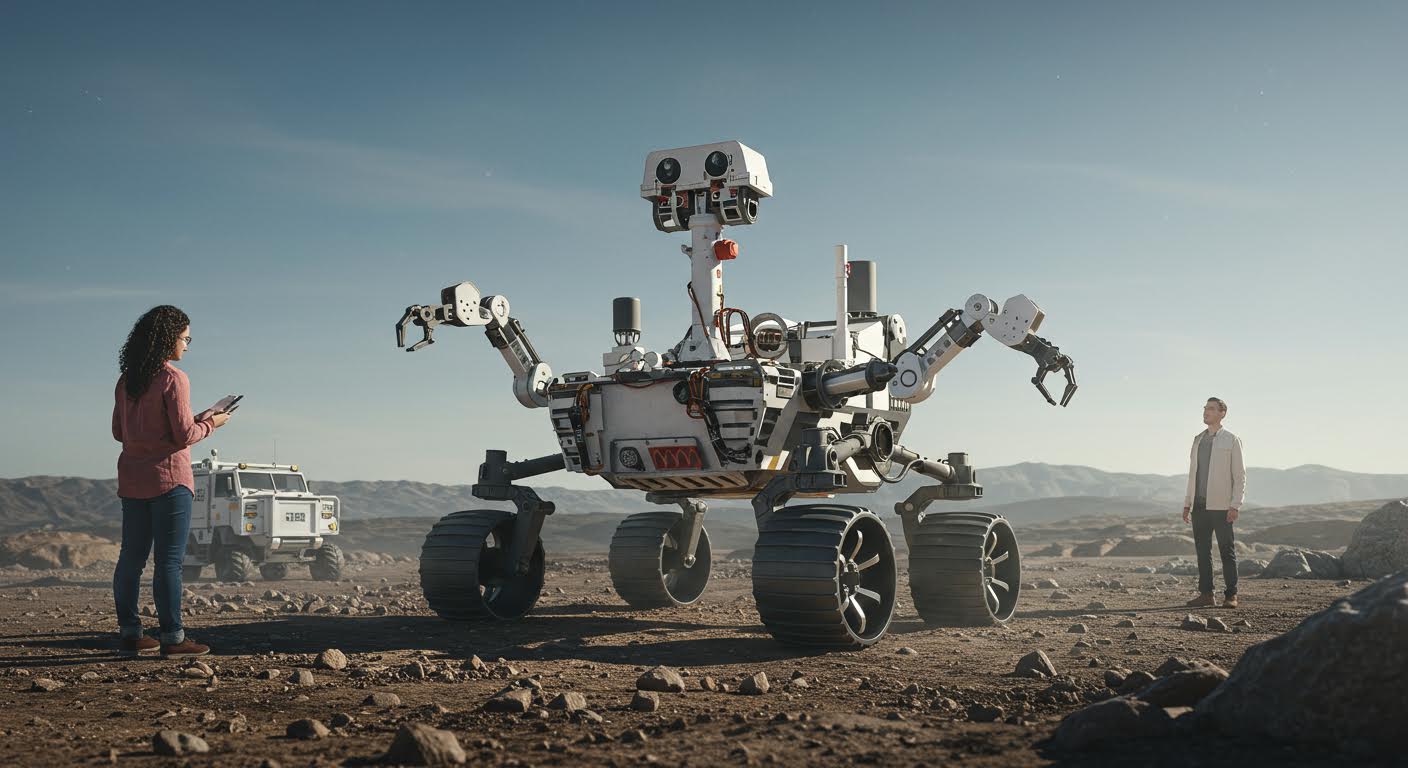
The vast expanses of deep space present challenges that push the limits of human endurance and technology. Communication delays measured in minutes or hours, extreme temperatures, deadly radiation, and sheer distances make robotic exploration not just preferable but essential for advancing our understanding of the cosmos. Today's space robots have evolved far beyond simple mechanical predecessors, becoming sophisticated autonomous explorers capable of making critical decisions millions of miles from Earth.
This transformation represents one of the most significant technological achievements of our time, combining cutting-edge robotics, artificial intelligence, and space engineering to create machines that can think, adapt, and explore on humanity's behalf.
Autonomous Navigation: Navigating the Unknown
One of the greatest challenges in deep-space robotics is the communication delay between Earth and distant spacecraft. When the National Aeronautics and Space Administration's Perseverance rover explores Mars, commands from mission control take between 4 and 24 minutes to reach the red planet, depending on orbital positions. This delay makes real-time control impossible, forcing rovers to navigate autonomously through treacherous terrain.
Modern Mars rovers like Perseverance and Curiosity employ sophisticated computer vision systems and terrain analysis algorithms to navigate safely. These systems continuously analyze the surrounding environment, identifying obstacles, safe paths, and scientifically interesting targets. The rovers use stereo cameras to create detailed 3D maps of their surroundings, while advanced algorithms calculate the safest and most efficient routes to their destinations.
During critical mission moments, autonomous decision-making has proven invaluable. When Curiosity encountered unexpected terrain features or when Perseverance needed to select landing sites for its helicopter companion Ingenuity, these systems made split-second decisions that preserved mission objectives and equipment safety. Future missions to asteroids and icy moons will require even more sophisticated navigation systems, capable of operating in low-gravity environments with minimal lighting and complex surface features.
Advanced Manipulation: Robotic Hands in Space
The evolution of robotic arms and manipulation systems represents another crucial advancement in space robotics. Early space missions relied on simple mechanical grabbers, but today's systems perform delicate scientific operations with precision that rivals human dexterity.
Mars rovers demonstrate this evolution dramatically. Perseverance's robotic arm can drill into Martian rocks, collect samples, and seal them in sterile containers for future retrieval missions. The system must operate reliably in extreme temperature variations, from -80°C to 20°C, while contending with dust storms and radiation exposure that would quickly disable Earth-based electronics.
The European Space Agency has achieved remarkable successes in robotic manipulation, from satellite servicing missions to complex sample collection operations. These systems must perform tasks that were once thought impossible without human intervention, from threading cables to conducting microscopic analysis of extraterrestrial materials.
Operating delicate instruments in space environments presents unique challenges. Components must be designed to function across extreme temperature ranges, resist radiation damage, and maintain precision despite harsh conditions. Advanced materials and redundant systems ensure that critical manipulation tasks can continue even when individual components fail.
AI-Powered Decision Making: Thinking Without Ground Control
Artificial intelligence has become the brain that enables truly autonomous space exploration. Modern space robots use machine learning algorithms to reduce their dependency on Earth-based mission control, making intelligent decisions about everything from navigation routes to scientific priorities.
These AI systems excel at real-time environmental adaptation and problem-solving. When unexpected situations arise—equipment malfunctions, terrain obstacles, or scientific opportunities—the robots can evaluate options and respond immediately rather than waiting hours for instructions from Earth.
Several mission examples demonstrate how AI has prevented failures through autonomous responses. When dust storms on Mars reduced solar power to critical levels, AI systems automatically prioritized essential functions and hibernated non-critical systems. When rovers encountered mechanical issues, diagnostic AI identified problems and implemented workarounds that kept missions operational.
Predictive algorithms now play crucial roles in mission planning, analyzing vast datasets to optimize exploration strategies and anticipate potential challenges. These systems can identify scientifically valuable targets, predict weather patterns, and optimize resource usage across multi-year missions.
Next-Generation Technologies: Swarms and Specialized Systems
The future of robotic space exploration lies in coordination and specialization. Scientists and engineers are developing swarm technologies that deploy multiple smaller robots working together to accomplish complex objectives. These distributed systems could map entire planetary surfaces, establish communication networks, or construct infrastructure for future human missions.
Specialized robots are being designed for specific environments and missions. Future missions to Europa and Enceladus will require robots capable of drilling through kilometers of ice, while asteroid exploration demands systems that can operate in near-zero gravity conditions. Each environment presents unique challenges that require tailored robotic solutions.
Construction and habitat preparation represent emerging frontiers for space robotics. Advanced systems could prepare landing sites, assemble structures, and establish life support systems before human crews arrive. These capabilities would dramatically reduce the risks and costs of human space exploration.
Coordinating multiple robotic systems presents significant integration challenges. Systems must communicate effectively, avoid conflicts, and maintain mission coherence even when individual units fail or become isolated. Advanced networking and coordination algorithms are being developed to address these challenges.
Future Implications: Pushing the Boundaries of Exploration
The timeline for next-generation robotic missions extends across the coming decades, with ambitious plans for exploration of the outer planets and their moons. These missions will search for signs of life in the subsurface oceans of Europa and Enceladus, explore the methane lakes of Titan, and investigate the mysterious geology of distant worlds.
Advanced robotics will serve as pathfinders for eventual human deep-space missions. By establishing infrastructure, conducting detailed environmental surveys, and proving life support technologies, robotic missions reduce the risks and uncertainties that human explorers would face.
The potential for robotic missions to discover signs of extraterrestrial life represents perhaps the most exciting possibility. Advanced analytical capabilities, combined with autonomous decision-making, enable robots to recognize and investigate biological signatures that might be missed by pre-programmed searches.
The economic and scientific impact of these technologies extends far beyond space exploration. Advances in autonomous robotics, AI decision-making, and extreme environment engineering find applications in deep-sea exploration, disaster response, manufacturing, and countless other fields. Each breakthrough in space robotics creates new possibilities for addressing challenges here on Earth.
As we stand on the threshold of a new era in space exploration, advanced robotics represent our most powerful tools for understanding the cosmos. These sophisticated machines serve as our eyes, hands, and minds in the vast darkness of space, bringing us closer to answering fundamental questions about our place in the universe.