How Advanced Robotics Are Enabling Deep-Space Exploration
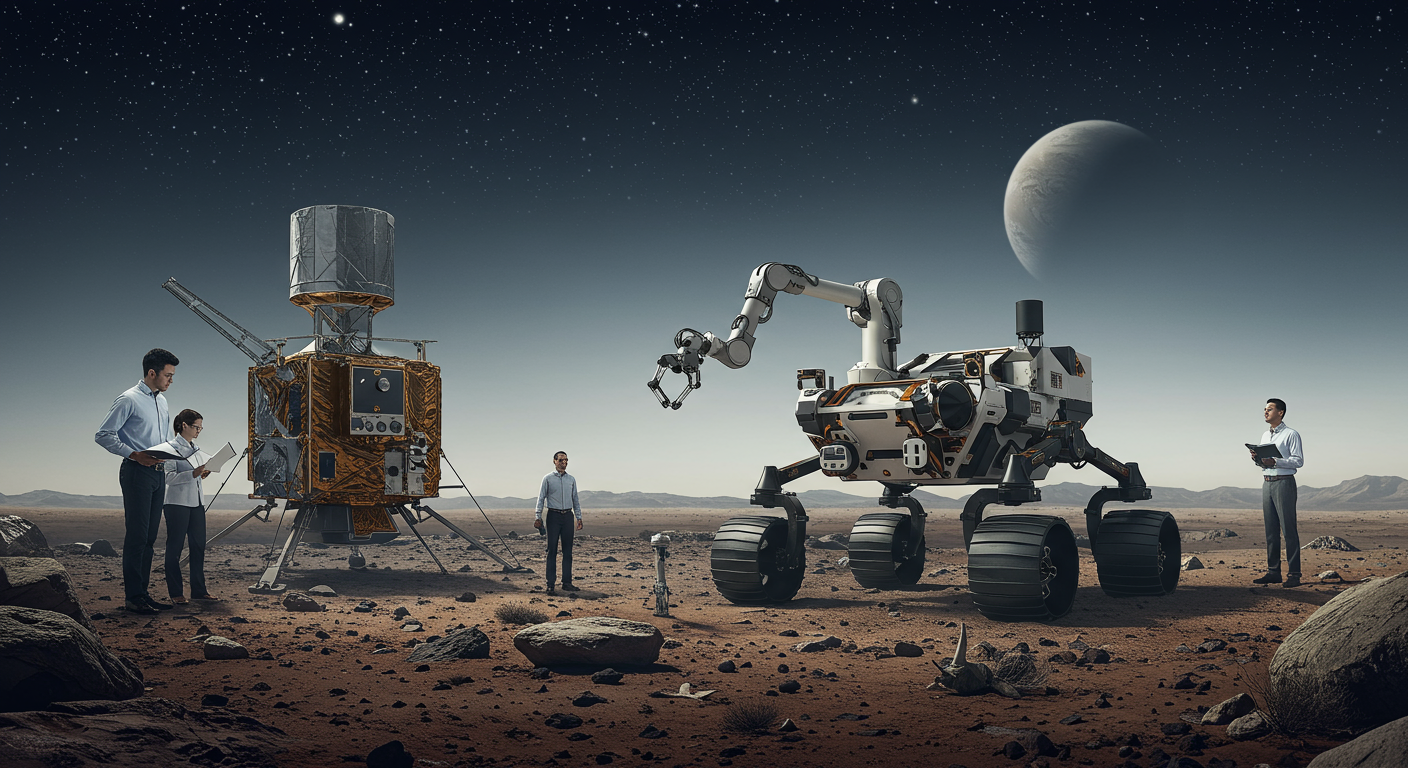
Advanced robotics has become one of the most important tools in modern space exploration. As missions push farther from Earth, robots allow scientists and engineers to study environments that are too distant, dangerous, or logistically difficult for people to reach directly. NASA, the Jet Propulsion Laboratory, and the European Space Agency describe robotics as a core part of how exploration works across planetary surfaces, in orbit, and in future mission architectures connected to human exploration.
Why deep-space exploration depends on robotics
Deep space is unforgiving. Extreme temperatures, radiation exposure, rugged terrain, and vast distances make many destinations unsuitable for direct human presence, especially over long periods. Even when human missions are part of long-term plans, robotic systems usually arrive first and often carry out much of the early scientific and operational work.
Robotics is best understood not as a replacement for astronauts, but as an extension of human capability. Robots can go where humans cannot yet go, remain active for extended periods, and perform tightly defined tasks with precision. That makes them essential for gathering knowledge, testing technologies, and reducing risk before more complex missions are attempted.
Deep-space robots are more than just rovers
When people think of space robots, they often picture wheeled rovers crossing Mars. But deep-space robotics includes a much broader ecosystem. It spans planetary rovers, stationary landers, robotic arms, autonomous navigation systems, inspection robots, and spacecraft technologies designed for servicing, docking, or handling equipment in orbit.
Each of these systems is built for a different environment and mission profile. A rover may be optimized for mobility across rocky terrain. A lander may focus on stable science operations at one location. A robotic arm may specialize in sample handling, drilling support, or instrument placement. Orbital robotic systems, meanwhile, can support inspection, maintenance, and spacecraft operations where direct intervention is not possible.
Taken together, deep-space robotics covers surface exploration, orbital tasks, and mission-support functions that help spacecraft and scientific payloads operate more effectively far from Earth.
Core jobs robots perform beyond Earth
One of the most visible robotic functions is mobility. On planetary surfaces, robots must navigate uncertain terrain that may include sand, rock fields, slopes, and hidden hazards. This requires systems that can assess conditions, plan routes, and keep moving while protecting delicate instruments.
Robots also perform sensing and scientific observation. They carry cameras, environmental sensors, and specialized instruments that gather data about atmosphere, geology, temperature, radiation, and surface composition. These observations help researchers reconstruct the history and present conditions of other worlds.
Manipulation is another major role. Robotic arms and related systems can position instruments, drill into rock or soil, move components, and assist with sample collection and handling. In more complex mission concepts, robotic systems may also help inspect structures, support assembly tasks, and maintain equipment used in long-duration exploration.
As missions become more ambitious, robotics is also expanding into support roles for future off-world infrastructure. That includes inspection, equipment positioning, and operational assistance in environments where human labor is limited or impossible.
Why autonomy matters in deep space
Autonomy is crucial because deep-space robots usually cannot be driven in real time like remote-controlled vehicles on Earth. Signals take time to travel across space, and that delay makes joystick-style control impractical for many tasks. A robot operating on another world often needs to make local decisions within carefully designed mission rules.
There are different levels of autonomy. Teleoperation means humans direct the robot closely, though often with delays. Semi-autonomous systems can carry out parts of a task on their own after receiving instructions. Higher-autonomy systems can identify hazards, adjust routes, manage some operations, and continue scientific work with less step-by-step intervention.
That onboard decision-making improves both safety and efficiency. A robotic explorer that can detect obstacles, choose a safer path, or prioritize an instrument sequence can make better use of limited mission time. Even so, these systems operate within strict engineering constraints. In deep space, autonomy is not about unlimited machine independence; it is about giving robots enough intelligence to function reliably when Earth is too far away for instant control.
How robotics expands scientific discovery
Robots broaden scientific access. They can reach places humans cannot easily visit and remain active in harsh environments for months or years. That persistence allows missions to collect long-term observations and revisit sites repeatedly, which is often essential for meaningful scientific analysis.
These machines gather high-resolution images, environmental measurements, and geological clues that help scientists understand planetary processes. They can examine surface materials, probe beneath the ground, and in some cases collect or prepare samples for future study. Robotic systems also increase the value of onboard instruments by placing them precisely, repeating observations methodically, and operating under conditions that would be difficult for human crews to manage directly.
In that sense, robotics does more than carry scientific tools. It enables those tools to be used with consistency, reach, and precision across environments that would otherwise remain largely inaccessible.
Robots as precursors to human missions
Robotic missions often serve as pathfinders for future human exploration. Before astronauts can safely travel to a destination, agencies need detailed information about terrain, hazards, atmospheric conditions, and landing challenges. Robots provide much of that groundwork.
They help map surfaces, test entry and landing technologies, and characterize local conditions that could affect future crews and equipment. By doing this ahead of time, robotic missions reduce uncertainty and help mission planners make better decisions about where and how people might eventually operate.
This link between robotic and human exploration is becoming more central to agency planning. Rather than existing as separate efforts, robotic systems are increasingly treated as foundational partners in the broader architecture of exploration beyond Earth.
Examples of advanced robotics shaping current and future missions
NASA and the Jet Propulsion Laboratory have highlighted robotic technologies that support autonomous navigation, surface mobility, and scientific operations on planetary missions. These examples show how robotic explorers can move through challenging environments while continuing to collect data and support mission goals over long durations.
The European Space Agency has similarly emphasized automation and robotics as critical technologies for space engineering and future exploration. That includes systems designed to improve spacecraft operations, reduce risk, and expand what missions can accomplish without constant human intervention.
Across agencies, the common pattern is clear: advanced robotics is being used to handle navigation, manipulation, inspection, and science support in ways that make missions more capable and more resilient. Individual missions may differ, but together they show how robotics has become a practical foundation for exploration.
What deep-space robotics still struggles with
Despite major advances, deep-space robotics remains constrained by the realities of spaceflight. Power is limited, hardware must survive radiation and temperature extremes, and mechanical systems have to function reliably in dust, vacuum, or uneven terrain. A small failure can become mission-threatening when repair is impossible.
Software reliability is equally important. More capable autonomy can improve mission performance, but it also demands extensive validation and testing. Engineers must ensure robotic systems behave predictably under uncertain conditions because recovering from mistakes is far harder millions of miles from Earth.
There is always a tradeoff between ambition and dependability. A robot that can do more may also become more complex, and that complexity must be balanced against the need for long-term reliability in environments where second chances are rare.
The future of robotic exploration beyond Earth
The next generation of deep-space robotics is likely to be defined by better autonomy, more capable manipulation, and systems that can work together across different mission roles. Future missions may rely on combinations of orbiting spacecraft, surface robots, and support technologies that share data and coordinate activity more efficiently than today’s systems.
As these tools improve, robotics will remain central to both standalone science missions and exploration efforts tied to eventual human presence beyond Earth. The pattern already visible in current programs suggests that many of the most important discoveries in deep space will continue to come from increasingly capable robotic partners.