How Advanced Materials Are Making Spacecraft Stronger and Lighter
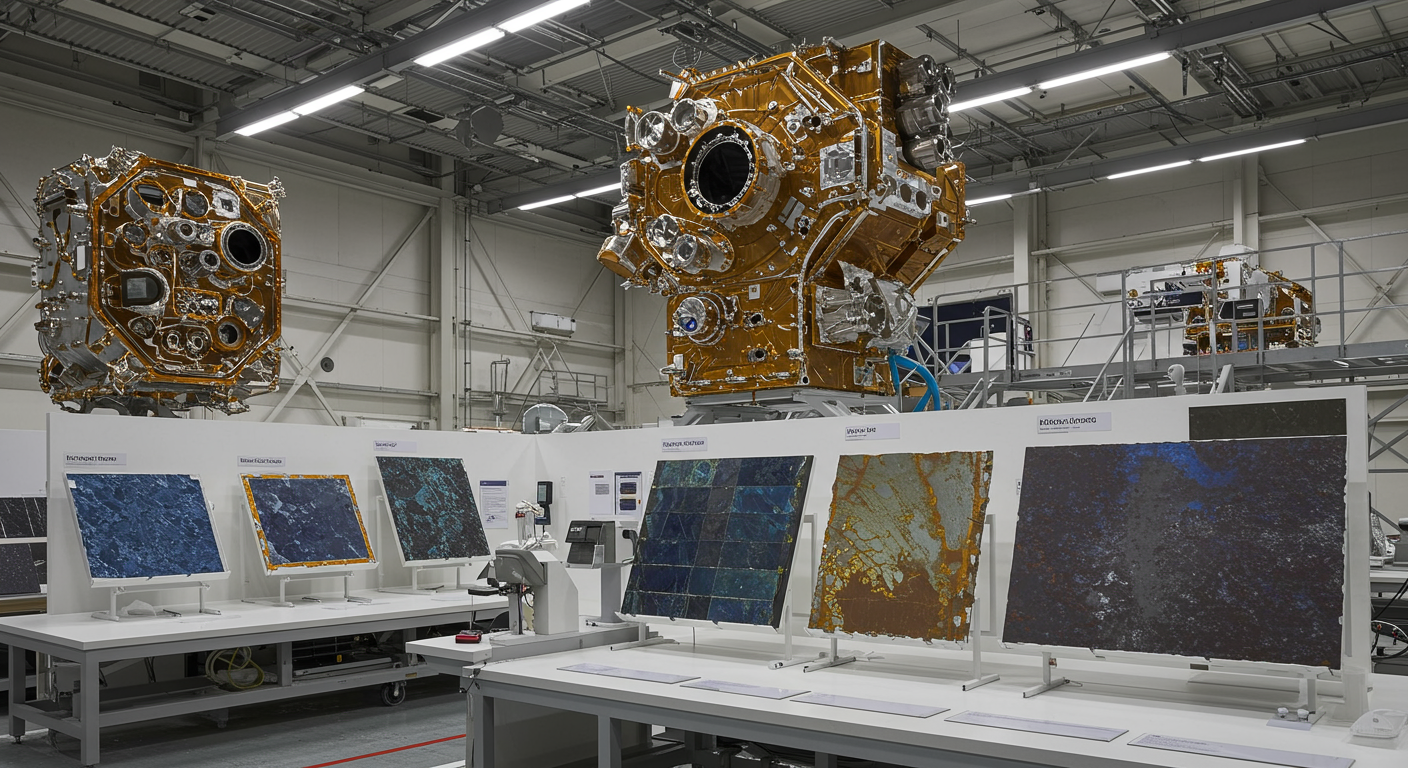
The aerospace industry is experiencing a materials revolution that's fundamentally changing how spacecraft are built. Advanced materials enable engineers to create structures that are simultaneously stronger and lighter than ever before, opening new possibilities for space exploration while dramatically reducing costs.
The Materials Revolution in Modern Spacecraft Design
Traditional spacecraft relied heavily on aluminum frameworks and steel components—materials that served the industry well for decades but carried significant weight penalties. Today's advanced alternatives prioritize the critical strength-to-weight ratio that determines mission success in space applications.
The shift toward advanced materials isn't just about incremental improvements. It's enabling entirely new mission profiles. Lighter spacecraft can carry more payload, travel farther, or launch on smaller rockets, fundamentally changing the economics of space access.
Carbon Fiber Composites: The New Structural Backbone
Carbon fiber composites with advanced polymer matrices are rapidly replacing traditional aluminum frameworks in spacecraft construction. These materials offer exceptional strength while weighing significantly less than their metallic predecessors.
Current spacecraft programs are already implementing these composites extensively. The manufacturing process has evolved to address early production challenges, with automated fiber placement and advanced curing techniques now enabling large-scale production of complex structural components.
The real breakthrough lies in the composite manufacturing processes themselves, which can now create structures with tailored properties—strong in specific directions where forces are highest, while remaining lightweight overall.
Ceramic Matrix Composites: Surviving Extreme Heat
For spacecraft components that must endure extreme temperatures, ceramic matrix composites represent a major advancement. These materials excel in the intense heat environment of atmospheric entry vehicles and engine components.
The superior thermal properties of these composites allow spacecraft to withstand higher temperatures while maintaining structural integrity. Engine applications particularly benefit from this heat resistance, enabling more efficient propulsion systems that operate at higher temperatures.
Development and testing of ceramic matrix composites follows rigorous protocols established by NASA and the European Space Agency, with extensive validation required before implementation in critical spacecraft systems.
Revolutionary Manufacturing: 3D Printing and Additive Techniques
Additive manufacturing enables the creation of complex geometries that would be impossible with traditional manufacturing methods. Specialized alloys designed specifically for 3D printing processes are opening new possibilities in spacecraft component design.
The technology allows for internal structures and cooling channels that optimize both strength and weight distribution. These complex internal geometries can be designed to direct forces exactly where they're needed while minimizing material use.
Beyond design flexibility, 3D printing offers substantial cost and time savings in both prototyping and production phases. Companies like SpaceX have leveraged these capabilities to rapidly iterate and customize spacecraft components, significantly reducing development timelines.
Innovative Structural Solutions: Foams and Lattices
Metallic foams and lattice structures represent some of the most innovative approaches to spacecraft structural design. These materials achieve remarkable weight reduction while maintaining necessary strength characteristics.
Lattice designs use sophisticated computer modeling to optimize the placement of material only where structural loads require it. Research published by the American Institute of Aeronautics and Astronautics shows this approach can reduce component weight by up to 70% compared to solid alternatives while maintaining equivalent strength.
Testing and validation of these unconventional structural approaches requires new methodologies, as traditional testing protocols weren't designed for materials with such complex internal geometries.
Next-Generation Smart Materials
The frontier of spacecraft materials includes self-healing substances that can repair minor damage automatically, extending mission durability without requiring human intervention or spare parts.
Multi-functional materials are being developed that combine structural support with other roles such as radiation shielding, thermal management, or electrical conductivity. This integration reduces the total number of components required while improving overall system reliability.
Integration of smart materials presents unique challenges, particularly in ensuring their performance remains consistent over the multi-year timeframes typical of space missions.
Industry Impact and Economic Benefits
The economic impact of advanced materials extends far beyond the materials themselves. Lighter payloads directly translate to reduced launch costs, with every kilogram saved potentially worth thousands of dollars in launch expenses.
Commercial space companies are at the forefront of implementing these materials in operational spacecraft. Private companies often have more flexibility to adopt new technologies quickly compared to traditional government programs.
Market projections tracked by Aviation Week indicate continued strong investment in advanced materials research, driven by the growing commercial space sector and increasing demand for cost-effective space access.