How Advanced Materials Are Making Spacecraft Stronger and Lighter
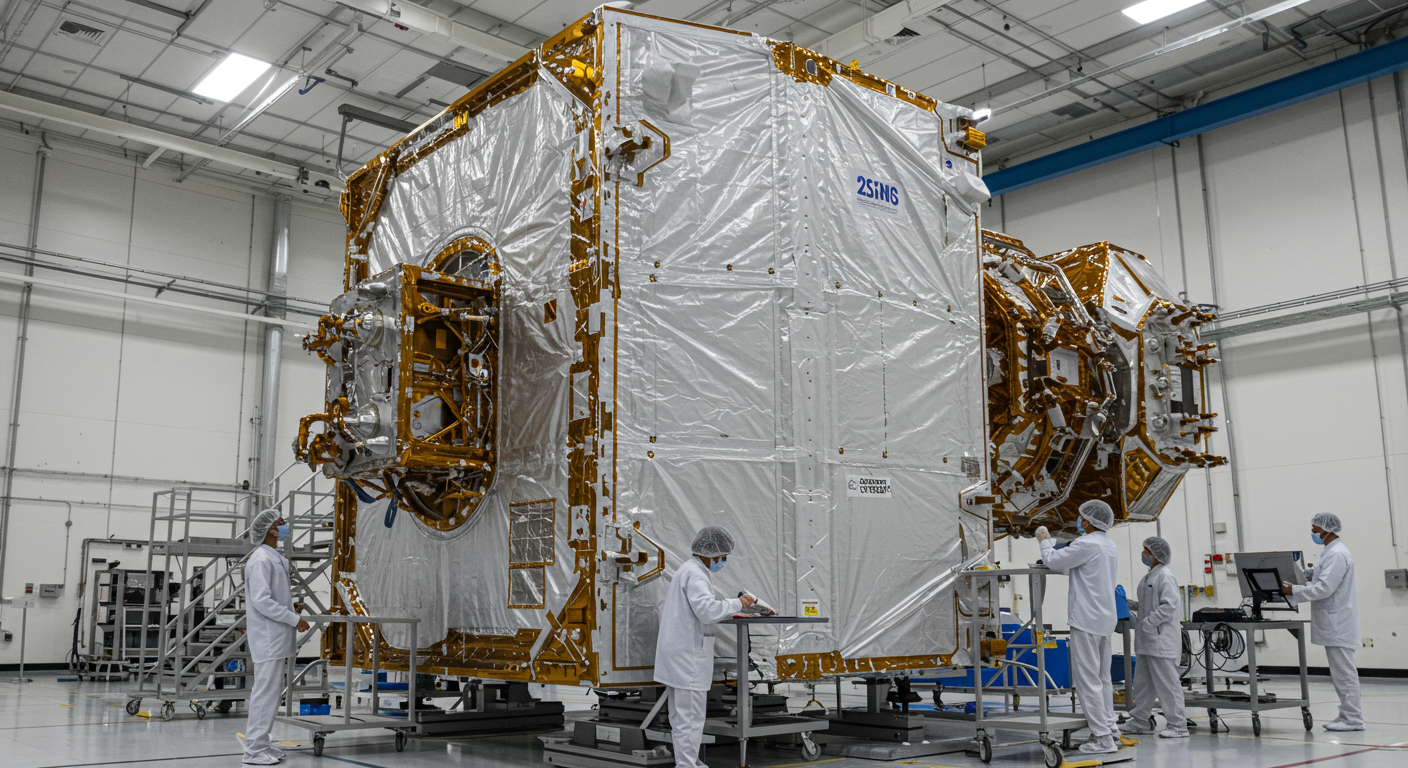
The space industry is experiencing a materials revolution. As missions grow more ambitious and launch costs remain astronomical, engineers are developing advanced materials that deliver unprecedented strength while weighing dramatically less than traditional options. These innovations are fundamentally reshaping spacecraft construction, from small satellites to interplanetary rovers.
The Weight Problem: Why Every Gram Matters in Space
In spaceflight, weight is the ultimate constraint. Launch costs can exceed $10,000 per kilogram to reach orbit, making every gram of spacecraft mass a significant expense. When planning missions to Mars or deploying satellite constellations, these costs multiply rapidly.
Traditional spacecraft materials like aluminum and steel have served the industry well, but they're reaching their performance limits. Engineers now need materials that withstand space's harsh environment while remaining as light as possible, maximizing capacity for scientific instruments, fuel, and other critical payloads.
This weight constraint influences everything from mission design to scientific capabilities. Lighter spacecraft structures mean more room for instruments, longer mission durations, or access to previously unreachable destinations.
Carbon Fiber Composites: The New Backbone of Spacecraft
Carbon fiber composites represent one of the most significant advances in spacecraft materials. These materials offer strength-to-weight ratios that far exceed traditional metals, making them ideal for structural components requiring both durability and minimal weight.
SpaceX has pioneered composite overwrapped pressure vessels in their Falcon 9 rockets. These tanks store pressurized gases at much lower weights than traditional metal alternatives, contributing to improved rocket reusability and performance.
Manufacturing processes for these composites have evolved significantly. Automated fiber placement and advanced curing techniques enable engineers to create complex shapes impossible with traditional materials, while maintaining consistent quality and strength properties.
However, challenges persist. Carbon fiber composites require expensive production processes and specialized manufacturing facilities. Quality control is critical, as structural defects can lead to catastrophic failures.
Advanced Ceramics: Surviving Extreme Heat
When spacecraft encounter extreme temperatures, advanced ceramics provide unmatched protection. Ceramic matrix composites can withstand temperatures exceeding 2000°C while maintaining structural integrity.
These materials are essential for heat shields on reentry vehicles and rocket engine components where traditional materials would melt. The National Aeronautics and Space Administration has invested heavily in ultra-high temperature ceramics research, developing materials that protect spacecraft during high-speed atmospheric entry.
Applications extend beyond heat protection. Advanced ceramics are used in propulsion systems where they must endure extreme heat and corrosive chemical environments. Their thermal shock resistance makes them ideal for components experiencing rapid temperature changes during operations.
Metallic Foams and Lattice Structures: Rethinking Solid Materials
Traditional solid metal structures are giving way to innovative hollow designs that provide equivalent strength at a fraction of the weight. Metallic foams and lattice structures represent a fundamental shift in structural design approaches.
These materials use complex internal geometries to distribute loads efficiently while minimizing material usage. 3D printing technology has enabled intricate internal structures impossible to manufacture using conventional methods.
The European Space Agency has conducted extensive experiments with titanium lattice structures, demonstrating their potential for spacecraft frames and support systems. These materials also offer excellent impact resistance and energy absorption properties, crucial for protecting sensitive equipment during launch and operation.
Nanomaterials and Smart Materials: The Future of Adaptive Spacecraft
Next-generation spacecraft materials go beyond static properties to include adaptive and self-healing capabilities. Nanomaterials like graphene and carbon nanotubes offer unique electrical and mechanical properties enabling innovative spacecraft designs.
Self-healing materials could revolutionize long-duration missions by automatically repairing minor damage from micrometeorites or thermal cycling. Shape-memory alloys are already used in deployable structures that change configuration in space without complex mechanical systems.
Graphene's exceptional electrical conductivity and strength make it valuable for both structural and electrical applications. However, integrating these nanomaterials into larger structures while maintaining their unique properties remains a significant engineering challenge.
Testing these materials in space environments presents unique difficulties. Ground-based testing can simulate many space conditions, but long-term radiation and vacuum exposure effects are still being studied.
Manufacturing Revolution: 3D Printing and Advanced Fabrication
Additive manufacturing is transforming spacecraft component design and construction. 3D printing allows engineers to create parts with complex internal structures and integrated functionality impossible with traditional manufacturing methods.
This technology enables rapid prototyping and customization, reducing development time and costs. Engineers can iterate designs quickly and create parts optimized for specific mission requirements without traditional manufacturing's tooling costs.
The ultimate goal is in-space manufacturing, where spacecraft could produce replacement parts or construct new structures during long-duration missions. While still in early development, this capability could revolutionize space exploration approaches.
Quality control remains challenging with additive manufacturing. Ensuring consistent material properties and detecting internal defects requires advanced inspection techniques and process monitoring.
Real-World Impact: Current Missions Using Advanced Materials
Advanced materials are already proving their worth in current space missions. The James Webb Space Telescope relies on a carbon fiber mirror structure that provides necessary stability for unprecedented imaging capabilities while minimizing weight.
NASA's Mars Perseverance rover uses advanced heat shield materials that enabled successful Martian surface landing. These materials withstood extreme atmospheric entry heat while protecting the rover's delicate systems.
Commercial satellite manufacturers increasingly adopt advanced composites to reduce launch costs and improve performance. Companies like OneWeb and Starlink use lightweight materials to deploy large satellite constellations more economically.
Future lunar and Mars exploration vehicles will rely even more heavily on advanced materials. Harsh environments and extended mission durations demand materials that perform reliably under extreme conditions while minimizing the mass penalty of robust construction.
The materials revolution in spacecraft design is just beginning. As technologies mature and manufacturing processes improve, we can expect dramatic improvements in spacecraft performance and mission capabilities. The combination of strength, lightness, and smart functionality these materials provide is enabling previously impossible space missions, opening new frontiers in space exploration and utilization.