How Advanced Materials Are Making Spacecraft Stronger and Lighter
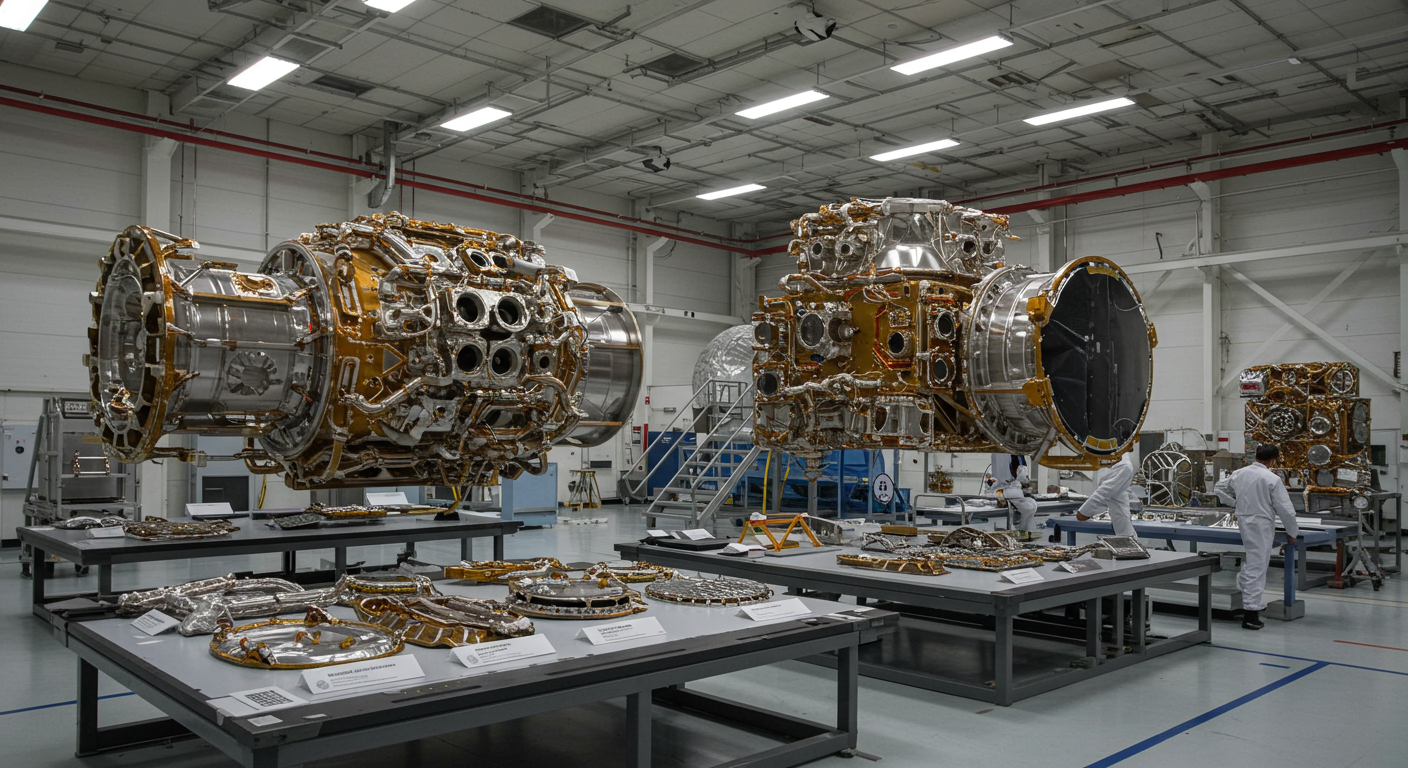
The race to explore space has always faced one fundamental challenge: every gram matters. With launch costs exceeding $10,000 per kilogram to low Earth orbit, weight reduction has become the holy grail of spacecraft design. Today, a materials revolution is reshaping aerospace engineering, with advanced composites and nanomaterials offering unprecedented combinations of strength, lightness, and functionality.
From Mars rovers to deep space probes, modern spacecraft increasingly rely on materials that would have seemed like science fiction just decades ago. These innovations aren't just improving performance—they're making previously impossible missions economically viable and opening new frontiers for human and robotic exploration.
Carbon-Based Superstructures: CNTs and Graphene Composites
Carbon nanotube composites represent one of the most promising developments in spacecraft construction. These materials offer tensile strength up to 100 times greater than steel while weighing significantly less than the aluminum alloys traditionally used in aerospace applications. The honeycomb-like structure of carbon nanotubes provides exceptional stiffness and thermal conductivity, making them ideal for spacecraft frames and structural components.
NASA and private aerospace companies are increasingly incorporating CNT composites into satellite structures and spacecraft hulls. Recent manufacturing breakthroughs have addressed earlier challenges with consistent quality and scalability, with new production techniques enabling larger structural components with uniform properties throughout.
Graphene-reinforced composites add another dimension to carbon-based materials. By integrating graphene sheets into polymer matrices, engineers create materials that are lightweight and strong while remaining electrically conductive. This enables integrated sensor networks and electromagnetic shielding within the spacecraft structure itself.
Ultra-Light Thermal Protection: Advanced Aerogel Systems
Aerogels, sometimes called "frozen smoke" due to their translucent, ultra-low-density structure, have revolutionized thermal management in spacecraft. These materials provide superior insulation at a fraction of the weight of traditional thermal protection systems. Some aerogel formulations weigh as little as three times the density of air while withstanding temperatures exceeding 1,000°C.
Mars missions have particularly benefited from aerogel innovations. The Mars Pathfinder mission pioneered the use of silica aerogel for thermal insulation, and subsequent missions have employed increasingly sophisticated aerogel systems. Modern aerogel composites incorporate reinforcing fibers that dramatically improve durability while maintaining exceptional insulating properties.
Recent developments focus on creating aerogels that can withstand the mechanical stresses of launch and deployment while maintaining thermal properties throughout extended missions. New hybrid aerogel systems combine multiple materials to optimize both thermal performance and structural integrity.
Smart Materials: Shape-Memory Alloys and Adaptive Structures
Shape-memory alloys have opened new possibilities for spacecraft design by enabling structures that change shape in response to temperature variations. These materials can be compressed or folded during launch, then automatically deploy into their programmed configurations once in space, eliminating the need for complex deployment mechanisms.
Solar arrays and antenna systems increasingly rely on SMA-based deployment mechanisms. The James Webb Space Telescope utilized advanced shape-memory systems for its precise mirror deployment, demonstrating the reliability of these materials in critical applications. These systems reduce both weight and complexity while improving deployment reliability.
Self-healing materials represent the next frontier in smart spacecraft materials. Research is advancing on polymers and composites that can automatically repair small damage from micrometeorite impacts or thermal cycling, potentially extending mission lifespans significantly while reducing maintenance requirements for crewed missions.
Engineered Solutions: Metamaterials and Novel Applications
Metamaterials—artificially structured materials with properties not found in nature—enable entirely new approaches to spacecraft design. These materials can manipulate electromagnetic waves in unprecedented ways, leading to innovations in antenna design, radar systems, and even theoretical cloaking technologies.
For spacecraft applications, metamaterials offer unique advantages in radiation shielding. By engineering materials at the microscale, researchers can create lightweight shields that effectively deflect or absorb harmful cosmic radiation while adding minimal weight to the spacecraft. This capability proves particularly crucial for long-duration missions and eventual crewed missions to Mars.
Advanced antenna systems using metamaterial principles can achieve directional control and frequency tuning that would be impossible with conventional materials. This enables more sophisticated communication systems while reducing the size and weight of spacecraft communication arrays.
Manufacturing Revolution: 3D Printing and Complex Geometries
Additive manufacturing is revolutionizing both how spacecraft are built and how materials are optimized for specific applications. 3D printing enables the creation of complex internal structures that maximize strength while minimizing material usage—geometries that would be impossible to achieve through traditional manufacturing methods.
Rocket companies are increasingly using 3D printing for engine components, creating intricate cooling channels and lightweight structures that improve performance while reducing part counts and assembly time. Some manufacturers print entire engine assemblies as single components, eliminating potential failure points from joints and welds.
The prospect of in-space manufacturing adds another dimension to materials innovation. Research into printing with materials available in space—such as lunar regolith or asteroid materials—could enable construction of large structures without the constraints of Earth-based launch costs.
Nature-Inspired Innovation: Biomimetic Materials Research
Biological systems offer compelling models for spacecraft materials, having evolved efficient structures under resource constraints similar to those facing spacecraft designers. Researchers are studying everything from bird bone structure to spider silk properties to develop new aerospace materials.
Honeycomb structures inspired by beehives have long been used in aerospace, but newer biomimetic approaches examine more complex biological systems. Materials that mimic the hierarchical structure of wood or bone can provide exceptional strength-to-weight ratios while offering some self-repair capabilities.
Adaptive materials based on biological models could enable spacecraft that respond intelligently to environmental changes, adjusting their properties based on temperature, radiation levels, or mechanical stress without requiring external control systems.
Industry Impact and Future Missions
The convergence of advanced materials research across NASA, the European Space Agency, and private aerospace companies is accelerating innovation. Partnerships between space agencies and materials research institutions are yielding rapid progress in translating laboratory discoveries into flight-ready systems.
Upcoming missions to the Moon, Mars, and beyond will serve as testbeds for many of these advanced materials. The Artemis program plans to incorporate numerous materials innovations, from advanced composites in spacecraft structure to smart materials in life support systems.
The economic implications extend beyond space exploration. Many materials developed for spacecraft applications find their way into terrestrial industries, from automotive to construction, creating a cycle of innovation that benefits both space exploration and Earth-based technologies.
Looking ahead, the integration of artificial intelligence with materials design promises to accelerate discovery of new materials optimized for specific space environments. Machine learning algorithms can now predict material properties and suggest compositions that would take years to discover through traditional experimental approaches.
As we stand on the threshold of becoming a truly spacefaring civilization, these materials innovations aren't just making spacecraft better—they're making the impossible possible, enabling missions and capabilities that will define the next era of human exploration beyond Earth.