Google's $17 Billion Wyoming Data Center Bets on Fuel Cells and Carbon Capture — But Questions Remain
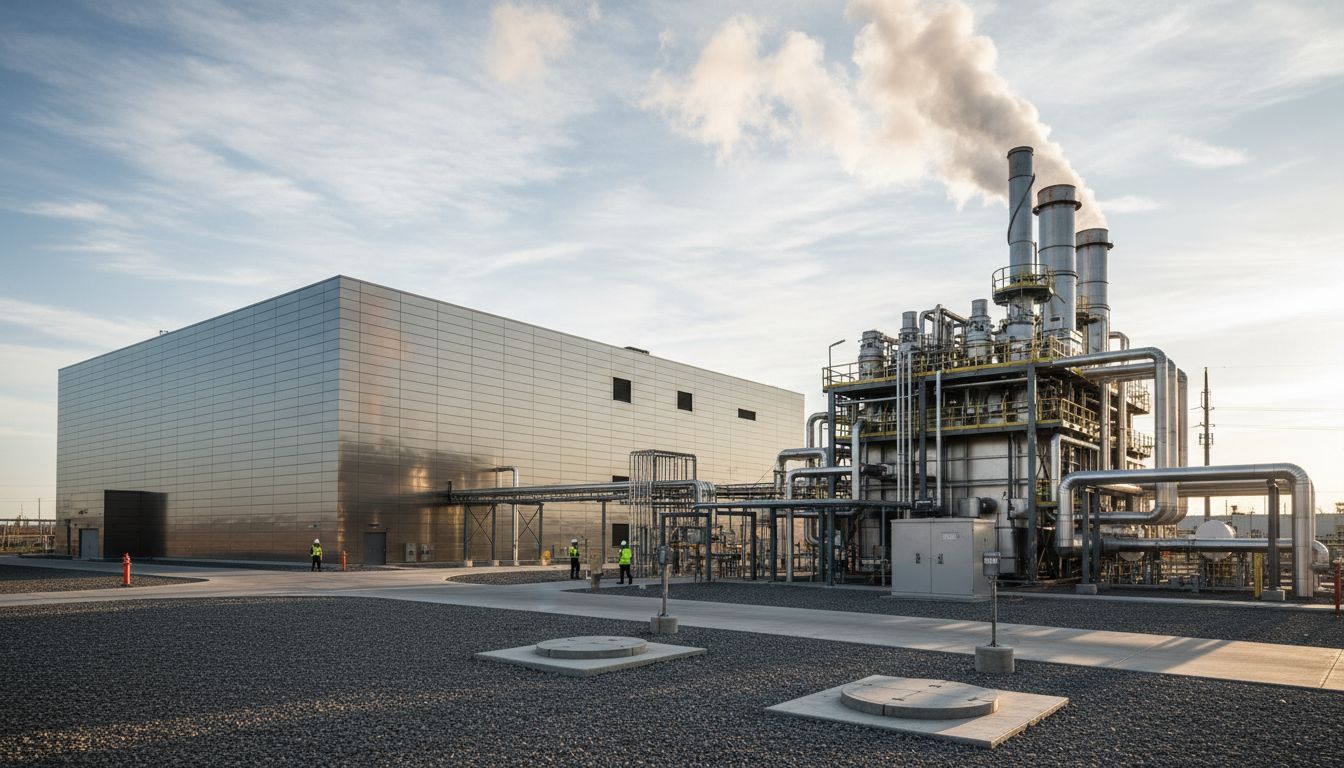
Google's $17 Billion Wyoming Data Center Bets on Fuel Cells and Carbon Capture — But Questions Remain
Google has announced a $17 billion investment to build its first data center in Wyoming, located near Cheyenne. The company has framed the project as an example of what it calls 'responsible growth,' pointing to job creation, infrastructure investment, and a power plan built around fuel cells and carbon capture rather than conventional combustion. The announcement positions Wyoming as the latest site in Google's broader national push to expand data center capacity to meet rising demand for cloud and AI computing.
As with most corporate infrastructure announcements, the figures and framing originate largely from Google itself. Many observers note that while the scale of the investment is notable, the specifics of its environmental claims deserve closer scrutiny before being taken at face value.
Inside the 702 MW Bloom Fuel-Cell Power Plant
At the center of the project is a 702-megawatt fuel cell plant developed in partnership with American Electric Power, or AEP, and Bloom Energy. Reporting citing AEP statements and POWER Magazine puts AEP's cost for the plant at roughly $4 billion, with a 20-year power purchase agreement reportedly in place. The plant is expected to be fully operational by the end of 2028.
Fuel cells generate electricity from natural gas through an electrochemical process rather than direct combustion, a distinction Google and its partners have emphasized in describing the project. The plant has been described, including by Google, as the largest deployment of its kind planned to date combining fuel cells with carbon capture. That characterization is a claim made by the companies involved rather than an independently verified industry ranking, so it is worth treating as a marketing framing as much as a technical fact.
The Carbon Capture Question: How Clean Is It Really?
Captured emissions from the plant are intended to be piped to Tallgrass Energy's Eastern Wyoming Sequestration Hub for underground storage. Google has stated that its contracted carbon-capture capacity across projects now approaches 1 gigawatt, including an earlier natural gas deal in Illinois announced in October 2025, suggesting this may be part of a repeatable strategy for the company.
However, a recurring consumer concern raised in independent coverage is the vagueness of Google's language around actual performance. The company has described the capture rate only as a 'large majority' of emissions, without providing a verified percentage. No regulatory or independently audited figures were available at the time of reporting to confirm exactly how much carbon dioxide the system will actually prevent from entering the atmosphere. It's also worth noting that despite the carbon capture framing, the plant still depends fundamentally on natural gas as its energy source, which some may view as in tension with a clean-energy narrative.
Air-Cooling and the Water Resource Debate
Google has pointed to air-cooling technology as a way to reduce the data center's water usage, a response to broader concerns about the strain large data centers can place on local water resources. This is a meaningful consideration in Wyoming, where water availability is a persistent regional issue.
Local trust around water issues has also been shaped by a separate incident unrelated to Google: in July, a Meta contractor's release of a rare bacterium led the city to halt certain data center water discharges. While this incident did not involve Google directly, it has contributed to heightened community sensitivity around how data center operators manage water resources in the area, and some residents have voiced concern about whether similar issues could arise as more facilities are built.
Economic Promises vs. Community Pushback
Google has projected hundreds of millions of dollars in property tax revenue for Laramie County and School District 1 over time, alongside job creation tied to construction and ongoing operations. These figures, like the project's other headline numbers, are self-reported projections rather than independently verified outcomes.
More than 200 residents reportedly attended a community meeting in Cheyenne to discuss the project, an indication that local sentiment is mixed rather than uniformly supportive. A recurring theme in community discussion is the question of long-term accountability — specifically, whether promised jobs, tax revenue, and community investments will materialize as described, and how those commitments will be tracked or enforced over the life of the project.
A National Pattern: Public Skepticism Toward Data Centers
Wyoming's experience is not occurring in isolation. Voters have reportedly rejected data center proposals in 40 of 41 recent local ballot measures nationwide, a pattern that suggests broader public wariness about the pace and impact of data center expansion, even as companies like Google continue to frame these projects in terms of economic opportunity and responsible development.
Taken together, the Wyoming project illustrates a tension that is likely to recur as AI and cloud infrastructure continue to expand: companies emphasizing investment, job creation, and environmental mitigation measures, while communities and independent observers raise questions about resource strain, unverified technical claims, and whether local benefits will match the scale of corporate promises.