General Fusion says LM26 passed a 1 keV plasma milestone
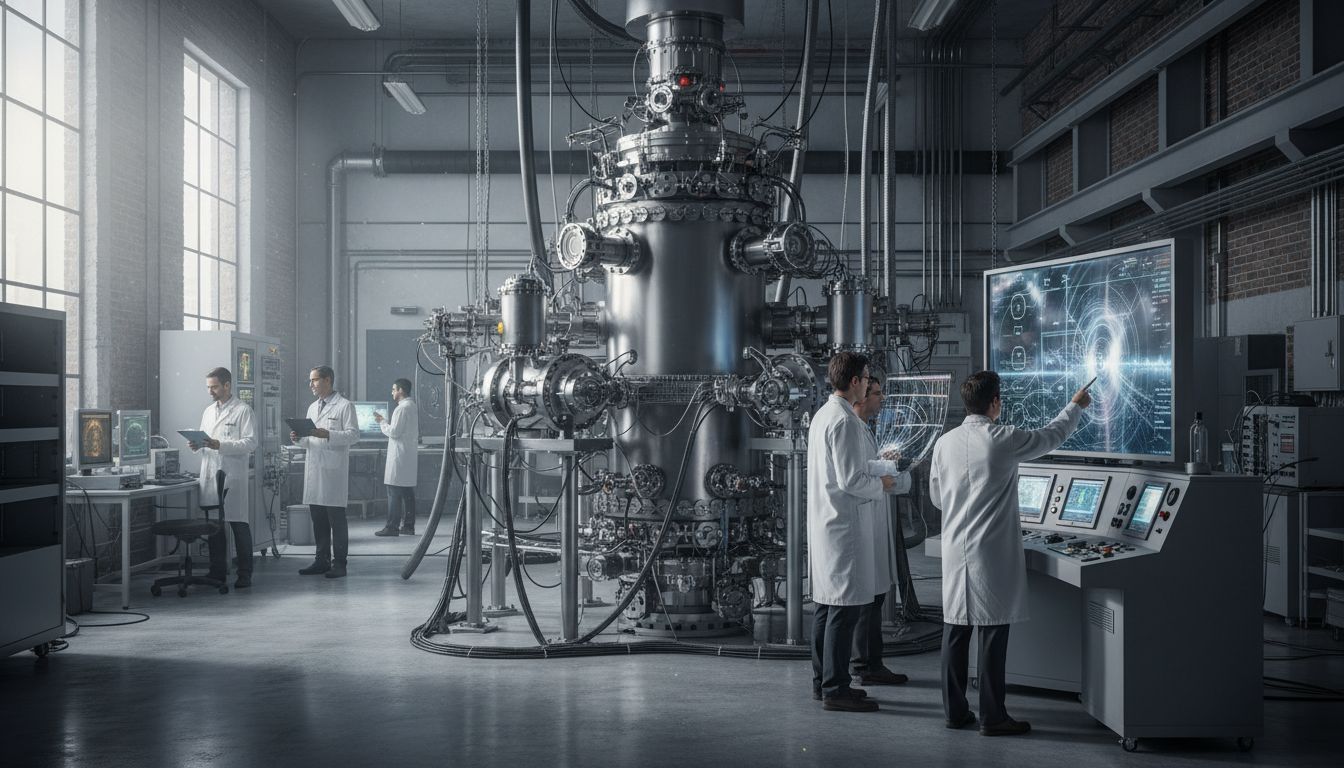
General Fusion says its LM26 machine has exceeded a 1 keV electron temperature, a threshold the company is presenting as an important step for its magnetized target fusion design. In practical terms, 1 keV corresponds to more than 11 million degrees Celsius, making it a meaningful plasma-heating result even if it is far from a commercial fusion breakthrough.
The company and some related coverage have described the result as a world-first for this particular type of fusion system. That claim warrants caution. The clearest takeaway is that General Fusion reports crossing 1 keV on LM26 using its own compression-based approach, not that commercial fusion power is suddenly within reach.
What the result actually measures
The reported milestone refers to electron temperature inside the plasma. That matters because hotter plasmas are one sign that a fusion system is moving in the right direction. But electron temperature alone does not demonstrate net energy gain, sustained reactor operation, or electricity delivered to the grid.
In other words, this is a physics and engineering milestone, not a demonstration of a finished power plant. As fusion researchers often note, progress depends on several factors at once, including confinement, compression, stability, repeatability, and overall system efficiency.
How LM26 is said to have reached the threshold
General Fusion is pursuing magnetized target fusion, an approach that differs from the better-known tokamak and laser-driven designs. Broadly, the concept is to create a magnetized plasma and then compress it to higher temperatures and densities.
What makes the LM26 result notable, according to General Fusion, the UK Atomic Energy Authority, and coverage from the American Nuclear Society, is that the temperature was reached using lower-speed mechanical compression rather than the superconducting-magnet or laser-based methods more often associated with headline fusion experiments. That is a narrower, more technical claim than saying fusion commercialization has been solved.
What evidence supports the claim
The main basis for the report is a technical paper describing compressional heating above 1 keV on the LM26 machine, along with company materials and coverage from the American Nuclear Society. The reported measurements cite Thomson scattering and AXUV diagnostics. General Fusion has also said the UK Atomic Energy Authority collaborated on the Thomson scattering work, which gives the diagnostics portion of the report more institutional support than a standalone marketing announcement would.
Even so, readers should be clear about the validation stage. The result appears in a paper and supporting documentation, but the broader significance of the milestone will depend on technical scrutiny, peer review, and whether outside experts interpret the comparison claims the same way the company does.
Why this is notable, but not a commercial breakthrough
Crossing 1 keV is still worth watching because fusion development advances through intermediate milestones like this one. If the measurements hold up, the result would suggest General Fusion is making tangible progress on a core question for its machine design: whether its compression approach can push plasma conditions into more relevant territory.
But the milestone does not mean General Fusion has demonstrated net electricity production, continuous operation, or an economically viable reactor. A recurring problem in fusion coverage is that laboratory achievements can sound much closer to grid-ready power than they really are. This result is better understood as evidence of progress on a specific technical challenge.
Where caution is warranted
Some of the strongest language around the announcement comes from company materials or from reports that rely heavily on them. Phrases such as world-first, practical, or commercially relevant should be treated as positioning unless they are independently confirmed in broader technical literature.
The same caution applies to long-range claims about pilot plants, timelines, or industry transformation. Those projections may eventually prove accurate, but this milestone by itself does not establish them.
What to watch next
The next questions are straightforward. Can General Fusion reproduce the result consistently? Can it push to higher temperatures, including the 10 keV range often associated with more advanced fusion targets? And can it improve the other parameters that matter just as much as temperature?
Those developments are likely to determine whether LM26 is remembered as an intriguing technical milestone or as part of a more durable shift in fusion engineering.