Can We Really Bring Extinct Species Back Using Genetic Technology?
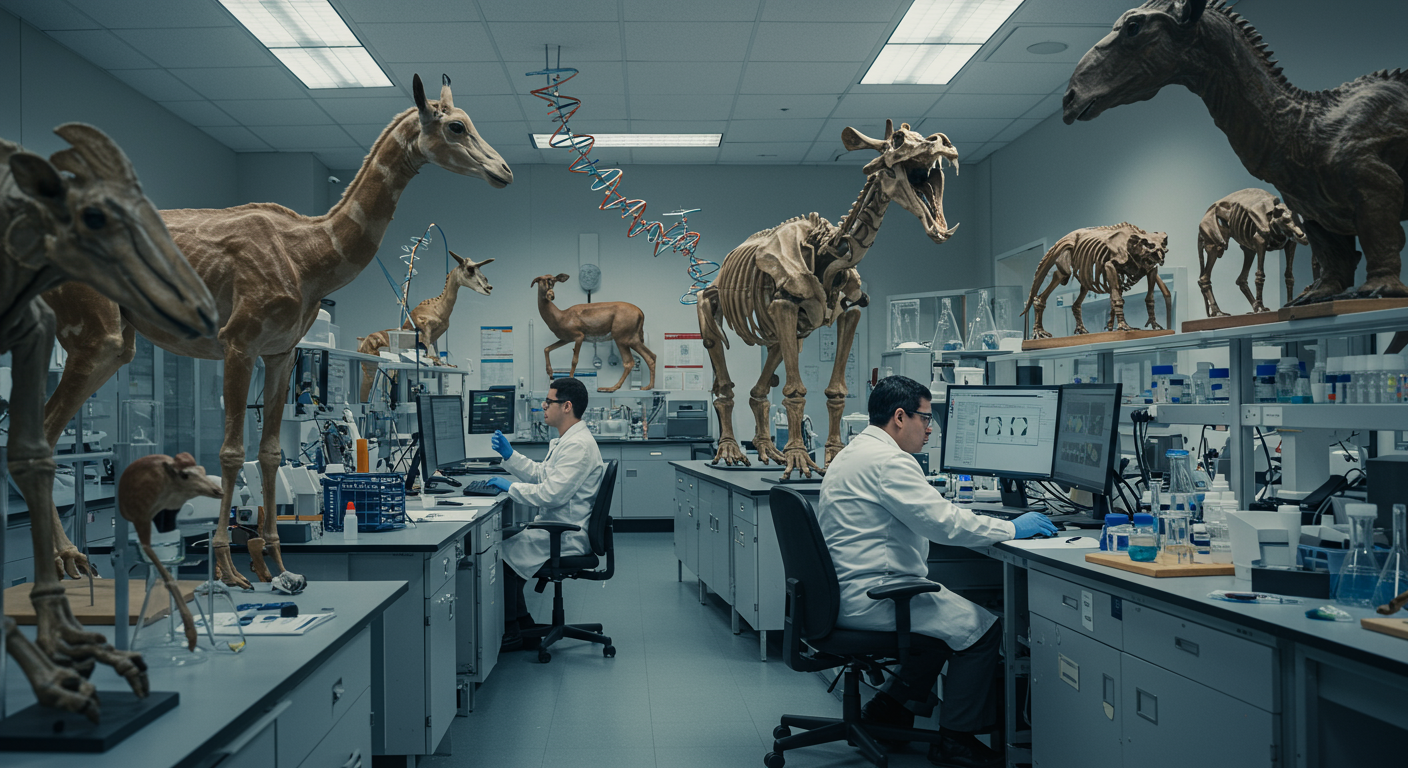
The short answer is no, at least not in the simple, literal way the phrase suggests. Genetic technology is making it more plausible to recover certain traits of extinct animals or create close biological stand-ins, but that is very different from fully restoring a species exactly as it once existed.
That distinction matters. When people talk about “bringing back” extinct species, they often imagine a complete reversal of extinction. In practice, the science is more limited, more species-specific, and far more dependent on living relatives, reproductive biology, and modern ecosystems than popular headlines sometimes imply.
What Scientists Mean by “De-Extinction”
De-extinction is not a single technique. It is a broad label for several biotechnologies aimed at recovering extinct traits, rebuilding genetic resemblance, or restoring some ecological role once filled by a lost species.
In realistic terms, the goal is often not to produce a perfect genetic duplicate of an extinct animal. Instead, researchers may try to create an organism that resembles it in important ways or functions like it within an ecosystem. That could mean editing genes in a living relative, cloning from preserved cells when available, or using selective breeding to recover ancestral traits.
So if the question is whether science can literally rewind history and recreate an extinct species exactly, the answer is usually no. If the question is whether biotechnology can approximate some extinct organisms under limited conditions, the answer is more plausibly yes.
Why Bringing a Species Back Is Harder Than It Sounds
One of the biggest obstacles is DNA itself. Genetic material from extinct organisms is often damaged, fragmented, and incomplete. Even when scientists can recover ancient DNA, they may still be dealing with missing sections, contamination, and uncertainty about how the pieces fit together.
But a readable genome is only part of the picture. Building an animal is not like printing a genome and pressing start. Development depends on gene regulation, embryonic growth, long-term trait expression, and learned behavior. Some of that information is not stored in DNA alone in an easily recoverable form.
There is also the ecological problem. Extinction usually means more than the loss of an organism. It can also mean the loss of habitat, food webs, migration routes, social structures, and learned survival behaviors. Even if something genetically similar could be created, it may no longer have a world that fits it.
The Main Technologies Behind De-Extinction
Several scientific tools fall under the de-extinction umbrella.
One is ancient DNA recovery combined with comparative genomics. Scientists can extract bits of genetic material from preserved remains, then compare them with the genomes of living relatives to infer what the extinct animal’s DNA may have looked like.
Another is gene editing. Using tools such as CRISPR-based methods, researchers may alter the genome of a living species to introduce selected traits associated with an extinct one. This approach is especially relevant when the extinct species has a close modern relative, as coverage from Nature and Science has noted.
Cloning is often mentioned in de-extinction discussions, but it has a narrower window of usefulness. It generally requires high-quality preserved cells with intact nuclei, which are extremely unlikely to exist for long-extinct animals. That makes cloning more plausible for very recently lost species than for Ice Age icons.
Selective breeding, sometimes called back-breeding in this context, is another route. Instead of directly reconstructing an extinct genome, breeders try to recover a bundle of ancestral-looking traits by selecting among living descendants or relatives over generations. This can produce resemblance, but not a true return of the original species.
Why Any “Returned” Animal Would Probably Be a Proxy
For most extinct species, scientists do not have a complete biological blueprint. They typically have partial DNA, informed estimates based on comparative analysis, and the genomes of living relatives. That means the end result would most likely be an engineered analogue rather than a perfect replica.
A proxy animal might carry some signature traits of the extinct species, perhaps in body form, coat, metabolism, or ecological function. But it would still be shaped by modern biotechnology, available host species, and the biology of surviving relatives. It would not be the exact same lineage restored unchanged.
This is the clearest way to answer the headline question. Genetic technology may eventually allow us to approximate certain extinct species in meaningful ways. It is much less likely to let us fully resurrect them as exact originals.
The Crucial Role of Living Relatives and Reproduction
Even if scientists can identify useful genes, they still need a way to turn edited cells into living animals. That usually requires close living relatives for eggs, embryos, gestation, birth, or rearing. In birds, it may involve manipulating reproductive cells in especially complex ways. In mammals, surrogate pregnancy can become a major bottleneck.
Compatibility matters at every stage. A close relative may still differ in body size, gestation requirements, immune interactions, developmental timing, or maternal behavior. These differences can make reproduction difficult even when genome editing is technically possible.
That is why de-extinction is not equally feasible across all species. Biology can remain the limiting factor long after the genetics become impressive.
Which Species Are More Plausible Candidates
The more realistic candidates tend to share a few features. They went extinct relatively recently, they left behind recoverable genetic material, and they have close living relatives that could serve as genetic templates or reproductive surrogates.
By contrast, species that vanished deep in the past are much harder targets. Their DNA is often too degraded, and suitable living relatives may be too distant or absent altogether. In those cases, the technical obstacles multiply quickly.
So the feasibility of de-extinction is not a universal yes-or-no matter. It depends heavily on the species involved, the quality of available biological material, and whether today’s ecosystems could support something like the organism being proposed.
What Current Projects Actually Show
Current de-extinction projects are best understood as demonstrations of partial feasibility rather than proof that extinction can be cleanly reversed. They show that researchers are making progress in trait engineering, assisted reproduction, genome comparison, and related conservation technologies.
Some companies and advocacy organizations, including Colossal and Revive & Restore, present ambitious goals for animals such as mammoths, thylacines, and other lost species. Those efforts have helped drive public interest and investment into the field. But claims about timelines, ecological impact, or how closely a future animal would match the extinct original should be treated as project goals, not settled facts.
Independent scientific coverage is generally more cautious. Reporting from Nature, Science, and the Smithsonian tends to support the idea that useful technologies are advancing while also emphasizing unresolved limits in genetics, reproduction, animal welfare, and ecosystem fit.
The Ecological and Ethical Debate
Even if de-extinction becomes more technically successful, the debate would not end there. A recreated or proxy animal would need a suitable habitat and a meaningful ecological role. In many cases, the environment it once occupied has changed dramatically or disappeared altogether.
There are also animal welfare concerns. Experimental reproduction can involve failed embryos, unsuccessful pregnancies, developmental abnormalities, and risks to surrogate animals. Those costs are not incidental; they are central to the ethical debate.
Another issue is opportunity cost. Conservation resources are limited. Critics argue that money and attention devoted to de-extinction might be better spent protecting species that are still alive and habitats that can still be saved. Supporters counter that some of the same tools could aid endangered species management, genetic rescue, and reproductive conservation more broadly, a point often highlighted by the National Human Genome Research Institute and conservation-focused groups.
Finally, there is the risk of unintended consequences. Introducing engineered animals into modern ecosystems could have effects that are difficult to predict, even if the original intention is ecological restoration.
So, Can We Really Bring Extinct Species Back?
Not in the clean, literal sense that popular imagination often suggests. For most species, extinction cannot simply be undone by reading old DNA and rebuilding the exact original organism.
What genetic technology may be able to do is more limited and, in some ways, more interesting: recover certain extinct traits, create organisms that resemble lost species, or restore part of an ecological function under carefully controlled conditions. That is a significant scientific possibility, but it is not the same as perfect resurrection.
De-extinction is best understood as advanced bioengineering with real promise and serious limits. It may produce proxies, approximations, or functional substitutes for some extinct animals. It is unlikely to offer a universal, straightforward way to bring the past back exactly as it was.