Can We Engineer Planets Using Future Technology?
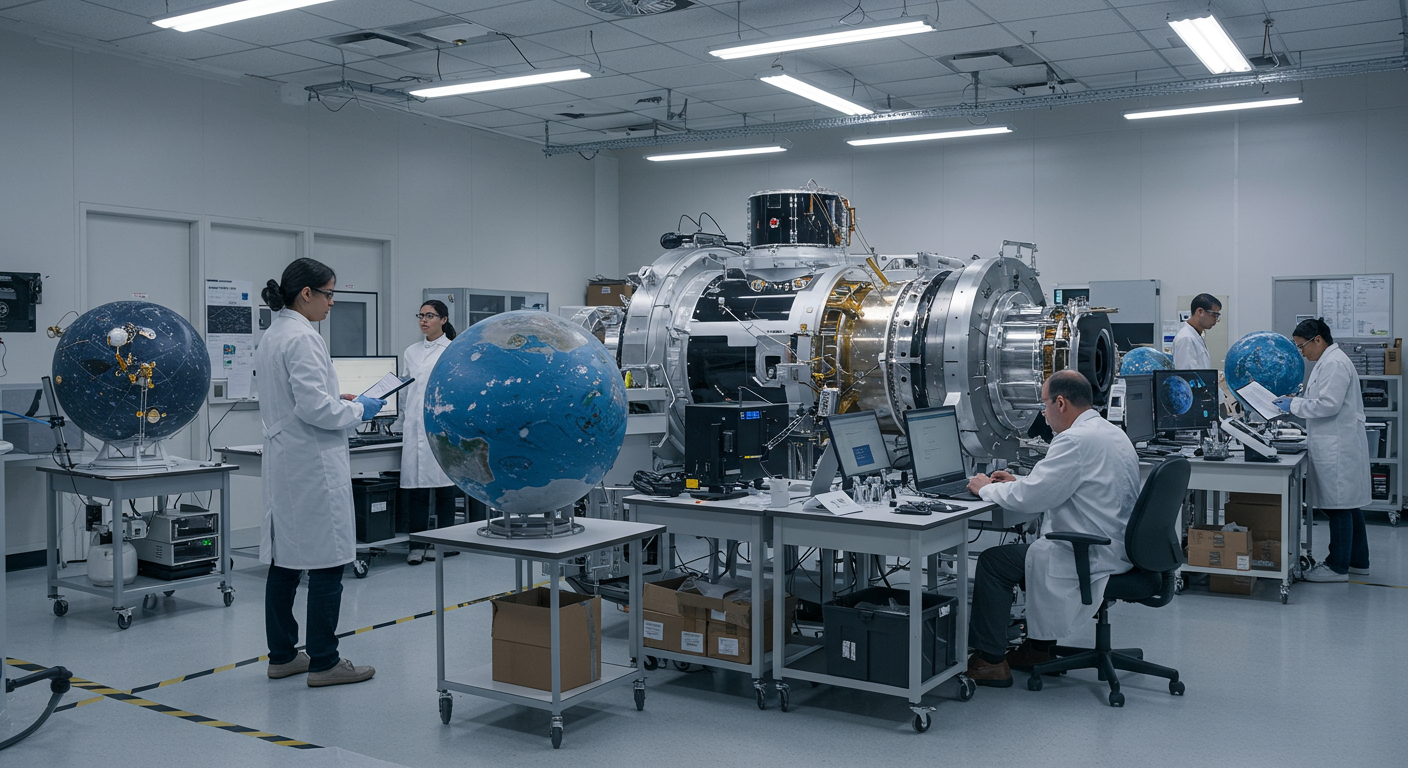
The concept of engineering entire planets for human habitation has long captured our imagination, but recent advances in space technology are bringing these ambitious ideas closer to scientific reality. As space agencies and private companies intensify their focus on Mars colonization, the question of whether we can truly transform alien worlds into Earth-like environments has evolved from science fiction to serious scientific inquiry.
The Science of Planetary Engineering: Current Understanding and Foundations
Planetary engineering, often called terraforming, encompasses the theoretical process of transforming a planet's environment to make it suitable for human life. Unlike simple colonization with enclosed habitats, planetary engineering involves modifying entire atmospheric, geological, and biological systems on a global scale.
Current NASA and European Space Agency research programs are laying the groundwork for these technologies through missions like the Mars Oxygen In-Situ Resource Utilization Experiment, which successfully generated oxygen on Mars in 2021. These foundational technologies demonstrate that we can begin manipulating planetary atmospheres, albeit on a very small scale.
For a planet to become habitable, it must meet several critical requirements: a breathable atmosphere with appropriate pressure and composition, temperatures that allow liquid water to exist, and protection from harmful cosmic radiation. Mars serves as the primary focus for planetary engineering research due to its relative proximity, existing water ice deposits, and 24-hour day cycle that closely matches Earth's.
Atmospheric Transformation Technologies
The most fundamental challenge in planetary engineering involves transforming thin, toxic atmospheres into breathable environments. NASA's MOXIE experiment on the Perseverance rover represents just the beginning of atmospheric processing technology, converting Martian carbon dioxide into oxygen at a rate of about 5 grams per hour.
Scaling this technology to planetary levels would require massive atmospheric processors capable of thickening Mars' atmosphere while introducing the right mixture of gases. Proposed methods include releasing greenhouse gases to trap solar heat, deploying enormous solar mirror arrays to warm the planet, and establishing nitrogen cycles essential for plant growth.
The challenge lies not just in the technology itself, but in the sheer scale required. Mars' atmosphere is roughly 100 times thinner than Earth's, meaning that atmospheric transformation would need to operate continuously for centuries while processing billions of tons of material.
Environmental Engineering Challenges
Beyond atmospheric modification, planetary engineering faces numerous environmental hurdles that require breakthrough technologies. Temperature regulation presents one of the most significant challenges, as Mars receives only about 43% of the solar energy that reaches Earth.
Perhaps even more challenging is the need to generate a planetary magnetic field. Mars lacks the strong magnetic field that protects Earth from deadly cosmic radiation, and without this protection, any atmosphere we create could be gradually stripped away by solar winds, just as happened to Mars' original atmosphere billions of years ago.
Water cycle establishment involves melting and redistributing polar ice caps while creating sustainable precipitation patterns. Additionally, Mars' soil contains toxic perchlorates that would need to be neutralized or removed before any agricultural systems could be established.
Alternative Approaches: Paraterraforming and Enclosed Habitats
Recognizing the immense challenges of full planetary transformation, many scientists advocate for paraterraforming as a more practical approach. This involves creating large enclosed or semi-enclosed habitable areas rather than transforming entire planets.
Dome-based paraterraforming could create Earth-like environments within manageable spaces, allowing for controlled atmospheres, temperature regulation, and protection from radiation. Underground habitat networks offer additional advantages, including natural protection from cosmic radiation and more stable temperatures.
Hybrid approaches that combine enclosed living spaces with limited atmospheric modification might offer the best balance between feasibility and scope. These systems could gradually expand over time, creating larger habitable zones as technology improves and resources become available.
Timeline Projections and Technological Requirements
Current scientific estimates for full planetary transformation range from centuries to millennia, depending on the scope and methods employed. Even the most optimistic projections suggest that meaningful atmospheric changes would take several hundred years to achieve.
The technological requirements for planetary engineering demand breakthrough advances in multiple fields. Fusion power systems would be essential for providing the massive energy requirements, while advanced robotics and potentially self-replicating systems would be needed to build and maintain planetary-scale infrastructure.
A phased implementation strategy would likely begin with small-scale atmospheric processing and habitat construction, gradually expanding to larger environmental modifications as technology matures. The resource requirements alone would dwarf any current space program, requiring sustained international cooperation and unprecedented financial commitments.
Ethical Implications and Governance Framework
The prospect of planetary engineering raises profound ethical questions that the scientific community is only beginning to address. Planetary protection protocols currently focus on preventing contamination of other worlds, but terraforming would involve deliberate and irreversible environmental changes on a massive scale.
International space law remains largely silent on territorial claims for engineered planets, creating potential conflicts over who would control and benefit from transformed worlds. The Outer Space Treaty of 1967 prohibits national appropriation of celestial bodies, but it's unclear how this applies to planets that have been artificially modified through enormous investments of resources and technology.
Perhaps most significantly, the possibility of existing microbial life on Mars or other worlds raises questions about our right to transform entire planets. Some argue that sterilizing worlds to make them suitable for humans would constitute an unprecedented act of environmental destruction, while others contend that spreading Earth life throughout the galaxy represents a moral imperative for our species' survival.
The democratic governance of such projects presents another challenge, as decisions about planetary engineering would affect all of humanity while likely being funded and controlled by only a few nations or organizations.
While full planetary engineering remains centuries away, the technologies being developed today are laying the foundation for humanity's greatest environmental project. Whether we choose to transform other worlds or adapt ourselves to live within them, the question of engineering planets will likely define much of our species' future relationship with the cosmos.