Can We Engineer Planets Using Future Technology?
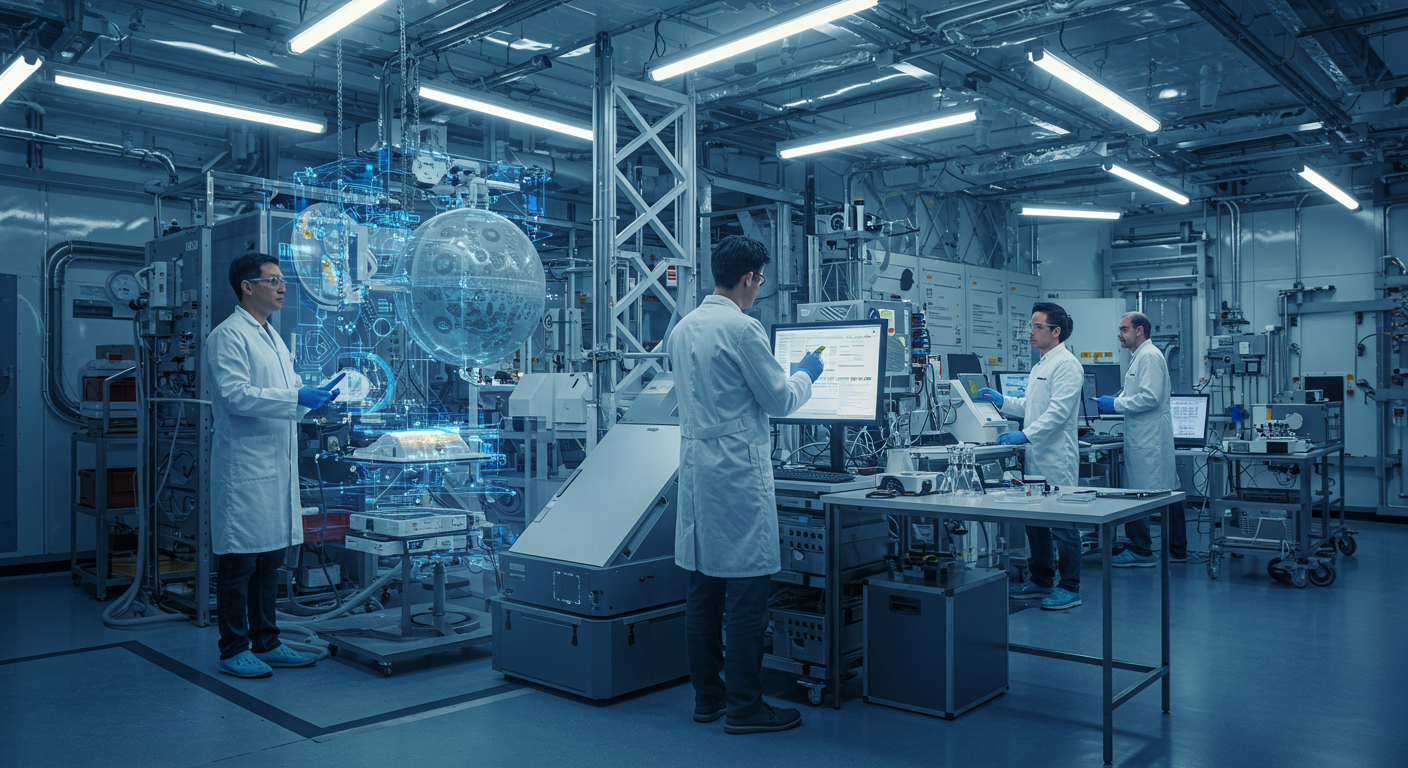
The prospect of transforming entire planets into Earth-like worlds has captivated human imagination for decades. As space exploration advances and our understanding of planetary systems deepens, the question of whether we can engineer habitable planets becomes increasingly relevant to humanity's long-term survival beyond Earth.
What Is Planetary Engineering?
Planetary engineering, commonly known as terraforming, refers to the theoretical process of transforming a planet's environment to make it suitable for Earth-based life. The goal is creating stable, breathable atmospheres, appropriate temperatures, and sustainable ecosystems that could support human civilization without enclosed habitats or life support systems.
This ambitious concept represents one of the most challenging interdisciplinary problems in science, requiring breakthroughs in astrobiology, atmospheric science, climate engineering, and space technology. Unlike traditional space colonization that focuses on protected environments within hostile worlds, planetary engineering aims to fundamentally alter entire planetary systems.
Why Mars Is the Primary Target
Among planets and moons in our solar system, Mars emerges as the most viable candidate for terraforming efforts. The Red Planet offers several key advantages that make it more accessible to engineering than other celestial bodies.
Mars maintains a 24.6-hour day cycle remarkably similar to Earth's, along with seasonal patterns caused by its axial tilt. The planet already possesses a thin atmosphere composed primarily of carbon dioxide, providing a foundation for atmospheric manipulation. Evidence of ancient water activity and current subsurface ice deposits suggests the necessary raw materials exist for creating a water cycle.
Other potential targets like Venus present extreme challenges with surface temperatures exceeding 460°C and crushing atmospheric pressure. Jupiter's moons Europa and Enceladus, while harboring subsurface oceans, would require fundamentally different approaches focused on their unique ice-covered environments.
Atmospheric Engineering Technologies
Transforming Mars' thin atmosphere represents the most critical challenge in planetary engineering. Current atmospheric pressure on Mars is less than 1% of Earth's, requiring massive increases in atmospheric density to support human life.
Proposed methods include releasing greenhouse gases to trap solar radiation and gradually warm the planet. This could involve manufacturing super-greenhouse gases or releasing carbon dioxide from polar ice caps and subsurface reservoirs. Some theoretical approaches suggest using orbital mirror systems to focus additional solar radiation onto specific regions, creating localized warming effects that could trigger broader atmospheric changes.
Advanced atmospheric processors could potentially convert existing atmospheric components into more suitable mixtures. These systems would need to operate on planetary scales, requiring unprecedented technological capabilities and energy sources far beyond current human capacity.
Synthetic Biology and Ecosystem Creation
Biological approaches to planetary engineering offer potentially self-sustaining solutions through engineered organisms designed for alien environments. Synthetic biology could create specialized microorganisms capable of thriving in Martian conditions while producing oxygen and converting regolith into fertile soil.
Bioengineered plants adapted for low atmospheric pressure, reduced gravity, and different light conditions could establish the foundation for planetary ecosystems. These organisms would need to survive and actively transform their environment through photosynthesis and soil creation.
Creating stable food webs and ecological balance on an engineered planet would require careful design of interconnected biological systems. Gene editing technologies could potentially adapt Earth species for alien environments, though this raises complex questions about ecological preservation and unintended consequences.
Timeline and Technological Challenges
Current technology falls dramatically short of the capabilities required for planetary-scale engineering. The energy requirements alone would dwarf humanity's current total energy production, potentially requiring fusion power, space-based solar arrays, or other advanced energy systems not yet fully developed.
Realistic timeline estimates for successful terraforming range from several centuries to millennia, assuming continued technological advancement and massive resource investment. Some scientists argue that incremental approaches focusing on creating enclosed habitable zones might be more achievable than full planetary transformation.
The logistical challenges of transporting equipment and materials for planetary-scale projects would require revolutionary advances in space transportation, potentially including space elevators, fusion propulsion, or asteroid mining operations to source materials locally.
Ethical and Scientific Considerations
Planetary engineering raises profound ethical questions about humanity's right to fundamentally alter entire worlds. According to the National Aeronautics and Space Administration's planetary protection protocols, preserving potential indigenous life forms takes priority, which could conflict with terraforming objectives if Mars harbors existing ecosystems.
The possibility of destroying unique planetary environments and potential alien life forms must be weighed against human expansion needs. Some researchers argue that alternative approaches, such as enclosed habitable cities or underground colonies, might achieve human settlement goals without requiring full planetary transformation.
International governance frameworks for planetary engineering remain undeveloped, raising questions about which nations or organizations would have authority over such massive undertakings. The global scale and multi-generational timelines involved would require unprecedented international cooperation and long-term planning.
While current technology cannot achieve planetary engineering, continued advances in atmospheric science, synthetic biology, and space technology may eventually make these ambitious concepts feasible. Whether humanity chooses to pursue full terraforming or alternative colonization approaches will depend on technological breakthroughs, resource availability, and evolving ethical frameworks for planetary stewardship.