Can Technology Really Overcome Earth’s Gravity Barrier?
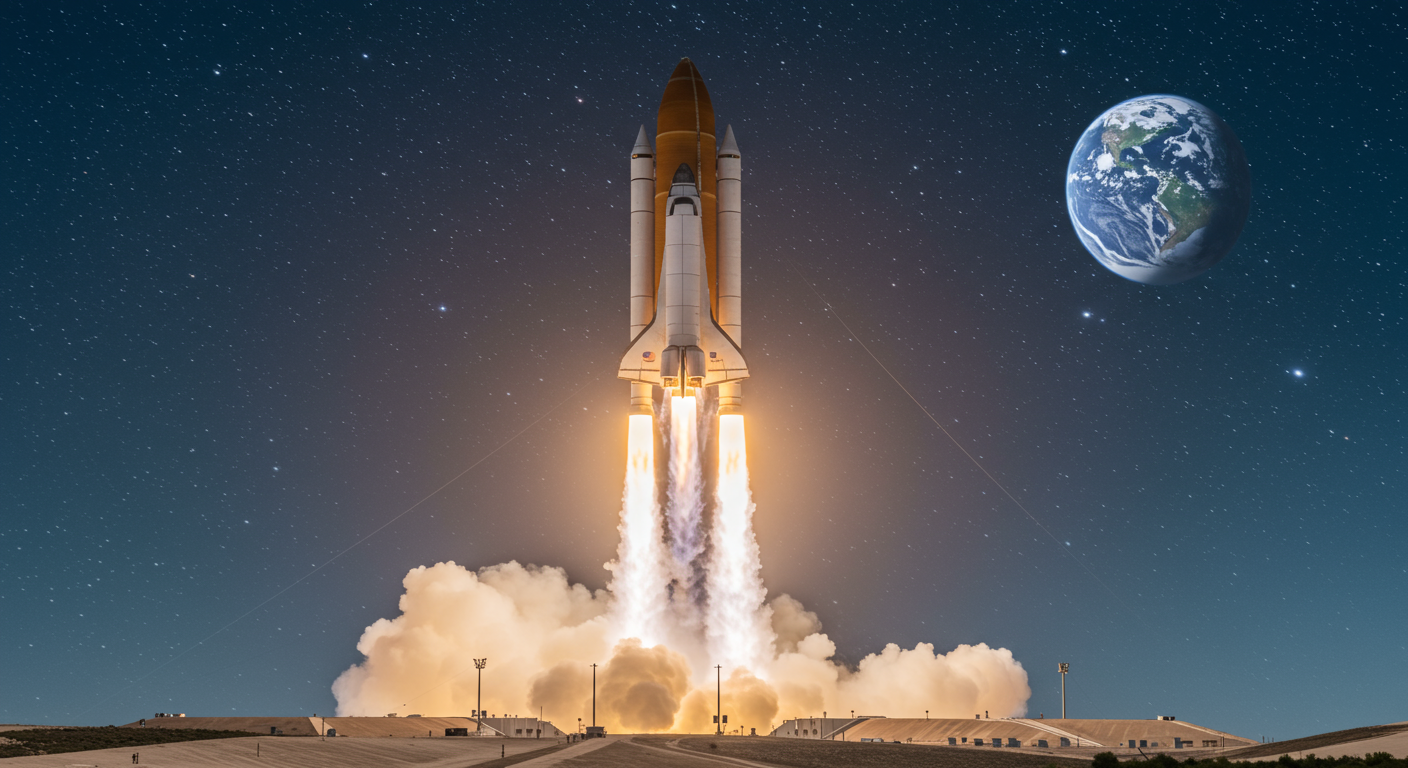
The idea of a “gravity barrier” makes it sound as if Earth is surrounded by an invisible wall that technology must somehow break through. In reality, gravity is not a switch engineers can turn off. What modern technology can do is overcome gravity’s effects under specific conditions by generating enough thrust, building enough speed, and using efficient vehicle design to reach space.
That makes this less a story about defeating gravity and more a story about working within physics. Spaceflight succeeds not because gravity disappears, but because rockets and spacecraft are designed to meet the enormous energy demands of climbing away from Earth, accelerating, and continuing onward.
What People Mean by the ‘Gravity Barrier’
When people talk about Earth’s gravity barrier, they usually mean the immense challenge of lifting mass away from the planet. Earth’s gravitational pull is constant, and every kilogram sent upward requires energy to resist that pull. But gravity is only part of the challenge.
Launch systems must also push through atmospheric drag, carry the fuel needed for the journey, and survive extreme structural stresses during ascent. In that sense, the “barrier” is really a mix of physics and engineering constraints. It is difficult, expensive, and technically demanding, but it is not an impenetrable wall.
Escape Velocity Explained Simply
A central concept here is escape velocity, the speed an object would need to break free from Earth’s gravitational pull without additional propulsion. According to Britannica, for Earth that benchmark is about 11.2 kilometers per second, or roughly 25,000 miles per hour.
That figure can be misleading if taken too literally. Spacecraft do not need to leap off the launch pad and instantly reach escape velocity in a single dramatic moment. Instead, rockets accelerate over time, and mission planners use propulsion, trajectory, and staging to build the needed energy step by step.
Why Rockets Don’t Just ‘Beat Gravity’ All at Once
Rockets do not overcome gravity in a single burst. They do it through sustained thrust. As long as a rocket pushes upward with enough force, it can keep climbing while gaining altitude and speed. The process is gradual, not instantaneous.
This is why launch profiles matter so much. Engineers try to minimize wasted energy from what are often called gravity losses, which happen when a vehicle spends too much time fighting Earth’s pull without gaining enough forward speed. As NASA and the European Space Agency explain in their launch and engineering materials, a successful ascent depends on carefully balancing thrust, fuel use, vehicle mass, and trajectory.
In other words, getting to space is not about crossing one magical threshold. It is about maintaining controlled acceleration long enough to reach the right conditions for orbit or beyond.
Reaching Orbit Is Not the Same as Leaving Earth
One of the biggest misconceptions about spaceflight is that an object in orbit has somehow escaped gravity. It has not. In low Earth orbit, gravity is still very strong. Astronauts and satellites are not beyond Earth’s pull; they are constantly falling toward Earth.
What keeps them from hitting the ground is sideways speed. An orbiting spacecraft moves forward so fast that as it falls, the curve of Earth drops away beneath it. That is why orbit is often described as continuous free fall.
This distinction matters. Reaching orbit means achieving the right combination of altitude and horizontal velocity to stay in motion around Earth. Escaping Earth entirely requires more energy and a different mission profile.
The Technologies That Make Spaceflight Possible
The main tool for overcoming Earth’s gravitational challenge is propulsion. Rocket engines produce thrust by expelling mass at high speed, pushing the vehicle in the opposite direction. This basic principle has powered everything from early launch vehicles to modern heavy-lift systems.
Staging is another major breakthrough. By dropping empty fuel tanks and spent rocket sections during flight, launch vehicles shed dead weight and improve performance. ScienceDirect’s engineering overview of launch vehicles notes that this is one of the key reasons multistage rockets are practical for reaching orbit.
Mass reduction also plays a major role. Lighter materials, better structural design, and more efficient onboard systems reduce the energy needed to lift a spacecraft. Fuel efficiency, engine performance, and smarter launch planning all improve the chances of reaching orbit or going farther.
Modern space technology has made access to space more reliable than it was in the early decades of rocketry. NASA, the European Space Agency, and industry reporting from Space.com all point to reusable systems, improved guidance software, and advances in launch engineering as meaningful steps forward. But these improvements do not erase gravity. They simply help engineers manage its demands more effectively.
So, Can Technology Really Overcome Earth’s Gravity Barrier?
Yes, but only in the practical engineering sense. Technology can overcome the challenge posed by Earth’s gravity well by providing enough thrust, speed, and efficiency to place payloads in orbit or send spacecraft on trajectories beyond Earth. That is a real achievement, and humanity has demonstrated it many times.
At the same time, gravity itself is not being abolished, neutralized, or turned off. Every launch still operates under the same laws of physics. Spaceflight works because engineers have learned how to work within those laws using increasingly capable machines.
The clearest answer is this: technology does not defeat gravity itself, but it does allow us to move beyond Earth by overcoming gravity’s effects through energy, design, and precision.