Can Technology Really Overcome Earth's Gravity Barrier?
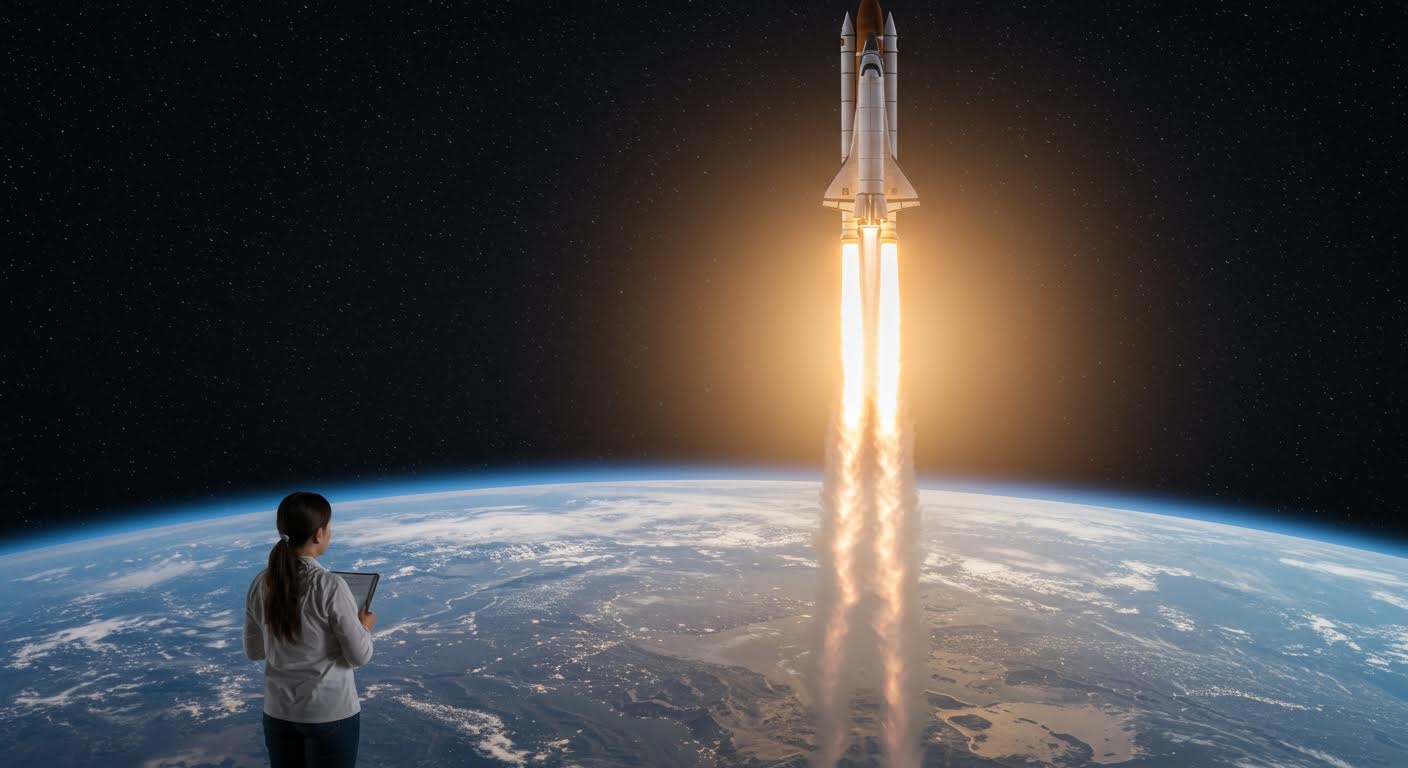
For decades, humanity has gazed at the stars while being anchored by an invisible force that has shaped every aspect of space exploration. Earth's gravity presents a fundamental barrier that no amount of wishful thinking can eliminate, yet technological innovation continues to find increasingly sophisticated ways to overcome this ancient constraint.
Understanding the Gravity Challenge
The physics are unforgiving: any object seeking to permanently escape Earth's gravitational pull must reach a minimum velocity of 11.2 kilometers per second. This escape velocity represents more than just a number—it's a cosmic speed limit that has dictated the design of every rocket, spacecraft, and space mission in human history.
The energy requirements to achieve this velocity are enormous. Unlike other engineering challenges where incremental improvements can gradually reduce barriers, gravity operates according to immutable physical laws. There are no shortcuts, no clever workarounds that can reduce the fundamental energy needed to break free from Earth's gravitational well.
Throughout most of human history, this barrier seemed insurmountable. The dream of space travel remained confined to science fiction until the mid-20th century, when rocket technology finally matured enough to challenge gravity's dominance.
Current Technological Solutions
Today's space industry has proven that gravity can indeed be conquered, though not without significant cost and complexity. Chemical rocket propulsion remains the gold standard for achieving escape velocity, using controlled explosions to generate the massive thrust needed for orbital insertion and beyond.
The National Aeronautics and Space Administration's Space Launch System represents the pinnacle of traditional rocket engineering, capable of delivering unprecedented payloads to deep space destinations. This massive vehicle demonstrates how incremental improvements in materials, engine efficiency, and structural design can gradually push the boundaries of what's possible within the constraints of chemical propulsion.
SpaceX's Falcon Heavy has revolutionized the economics of gravity-beating technology through reusable rocket systems. By recovering and refurbishing rocket boosters, the company has dramatically reduced the cost per kilogram of payload delivery to orbit. This innovation doesn't change the fundamental physics of escape velocity, but it makes the economic barrier far more manageable.
Modern rocket systems have achieved remarkable efficiency improvements compared to their predecessors. Better fuel mixtures, more precise engine control, and advanced materials have squeezed additional performance from chemical propulsion systems that seemed to be approaching theoretical limits just decades ago.
Advanced Propulsion Technologies on the Horizon
While chemical rockets have proven their effectiveness, emerging propulsion technologies promise to make gravity-beating more efficient and practical for long-duration missions. Ion drive systems, already deployed on several space missions, offer extraordinary fuel efficiency by accelerating charged particles to extremely high velocities.
These electric propulsion systems cannot generate enough thrust to lift off from Earth's surface, but once in space, they can gradually build up the velocity needed for interplanetary travel using a fraction of the fuel required by chemical systems. This represents a fundamental shift in how we approach the gravity challenge—using time and efficiency rather than raw power.
Nuclear propulsion concepts under development could provide the best of both worlds: high thrust capabilities combined with superior fuel efficiency. Nuclear thermal rockets could theoretically double the efficiency of chemical systems while maintaining the thrust levels needed for practical mission timelines.
Even more ambitious concepts like fusion rockets remain in the theoretical stage, but they could eventually provide the kind of performance that would make gravity barriers almost negligible for routine space operations. However, realistic timelines for such breakthrough technologies extend decades into the future.
Beyond Raw Power: The Efficiency Revolution
The most promising near-term advances in overcoming gravity barriers focus on optimization rather than revolutionary new physics. Multi-stage rocket designs continue to evolve, with each generation achieving better mass ratios and fuel efficiency through advanced materials and manufacturing techniques.
Alternative launch methods represent potentially game-changing approaches to the gravity problem. Space elevators, while still beyond current material science capabilities, could theoretically reduce the energy cost of reaching orbit by orders of magnitude. Electromagnetic launch systems offer a more near-term possibility for reducing the fuel requirements of rocket-based systems.
In-space refueling and staging strategies are already changing how missions approach the gravity challenge. By establishing fuel depots in orbit or at Lagrange points, spacecraft can effectively reset their fuel state after escaping Earth's gravity, opening up mission profiles that would be impossible with single-launch architectures.
The economic sustainability of gravity-beating technology may ultimately prove more important than raw performance capabilities. As launch costs continue to decrease and reliability improves, routine access to space becomes feasible for a broader range of applications and organizations.
The Verdict: Technology's Current and Future Potential
Current technology has definitively solved the gravity problem from a technical standpoint. We routinely place satellites in orbit, send missions to other planets, and maintain a permanent human presence in space. In this sense, technology has already overcome Earth's gravity barrier.
However, significant challenges remain in making space access truly routine and affordable. Current systems still require massive infrastructure, careful planning, and substantial financial resources for each mission. The goal of making space access as routine as commercial aviation remains elusive.
Future breakthrough technologies could fundamentally alter this equation. Advanced propulsion systems, new materials, and innovative launch architectures may eventually reduce the gravity barrier to a minor inconvenience rather than a major engineering challenge.
A realistic assessment suggests that within the next two to three decades, a combination of incremental improvements and emerging technologies will make gravity barriers significantly less constraining for space exploration and commercialization, though true routine access comparable to terrestrial transportation may still require breakthrough innovations that remain on the horizon.