Can Artificial Gravity Be Created in Space Stations?
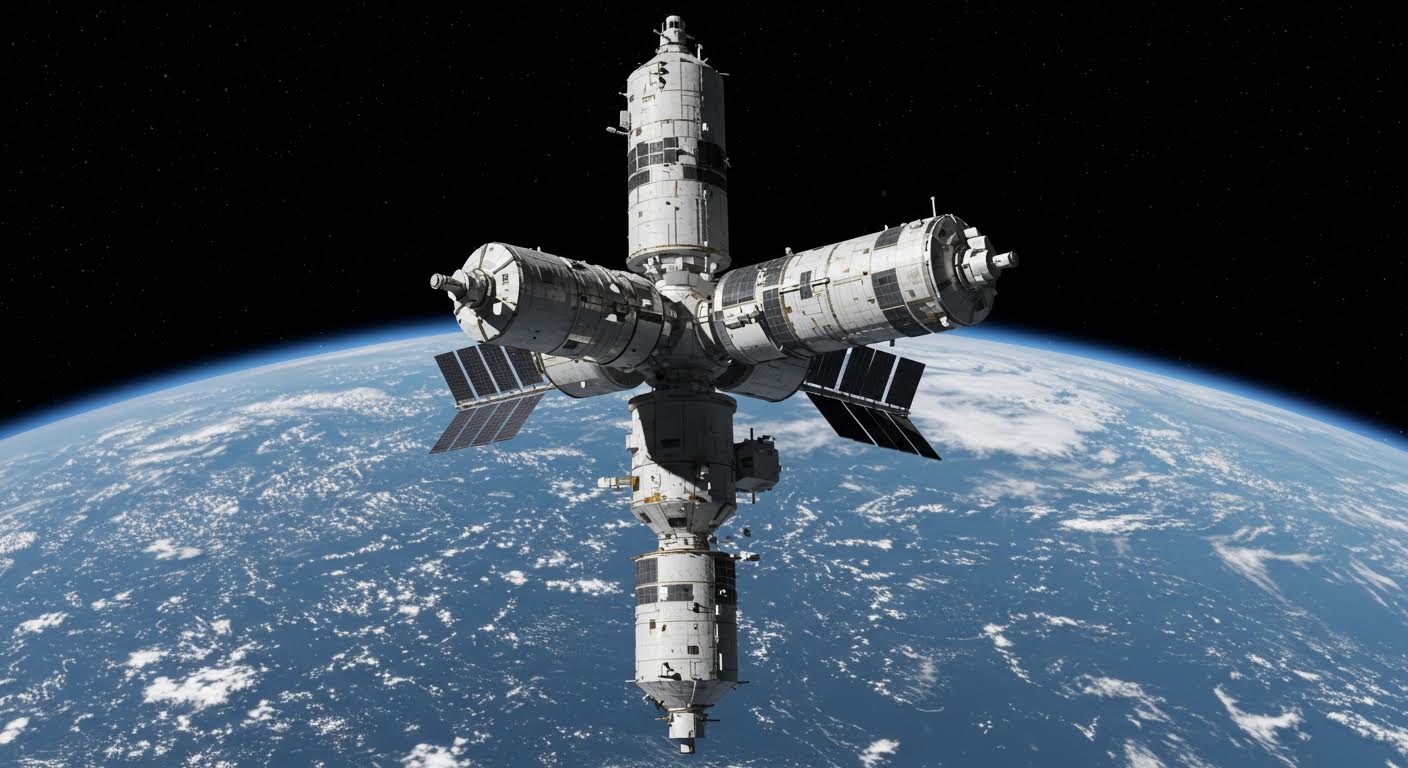
As humanity prepares for long-duration missions to Mars and establishes permanent presence in space, one critical challenge emerges: how to counteract the debilitating effects of prolonged weightlessness. The answer may lie in creating artificial gravity through rotating space stations—a concept that transforms science fiction into engineering reality.
The Physics Behind Artificial Gravity
Artificial gravity in space relies on a fundamental principle of physics: rotational motion creates centrifugal force that can simulate the familiar pull of Earth's gravity. When a spacecraft spins around its central axis, objects and people inside experience an outward force that mimics gravitational acceleration.
The strength of this simulated gravity depends on two key factors: rotation speed and the radius of the spinning structure. A larger radius requires slower rotation to achieve the same gravitational effect, while smaller structures must spin faster. This relationship follows the equation a = ω²r, where acceleration equals the square of angular velocity multiplied by radius.
While researchers have proposed other methods like magnetic fields or continuous linear acceleration, they remain impractical due to energy requirements and technical limitations. Rotation emerges as the most viable approach for creating sustained artificial gravity in space.
Engineering Challenges of Rotating Space Stations
Building a rotating space station presents unprecedented engineering challenges. The structure must be large enough to house crew and equipment while maintaining structural integrity under constant rotational stress. Current designs typically feature wheel-like configurations or paired modules connected by cables or rigid arms.
Docking with a spinning station requires sophisticated automated systems or stationary hub sections that don't rotate. These connection points must transfer crew and cargo between the rotating and non-rotating sections seamlessly. Power generation becomes complex, as solar panels and other systems must accommodate the rotational motion while maintaining optimal orientation.
The cost and complexity of rotating stations far exceed traditional designs like the International Space Station. However, for missions lasting months or years, the health benefits may justify the additional investment and engineering challenges.
The Human Factor: Balancing Gravity and Comfort
Creating artificial gravity involves more than just spinning a spacecraft. The rotation rate must be carefully calibrated to prevent motion sickness and disorientation among crew members. Research suggests optimal rotation rates between 1-2 revolutions per minute—slow enough to avoid triggering vestibular system problems.
Coriolis effects present another challenge, causing moving objects to appear to curve in their flight path. This phenomenon can affect crew coordination and requires extensive training to overcome. In smaller rotating systems, crew members may experience uncomfortable gradient effects, where their head and feet experience noticeably different gravitational forces.
Adaptation periods vary among individuals, with some crew members requiring weeks to adjust to the rotating environment. Training programs must prepare astronauts for these unique conditions before deployment to artificial gravity stations.
Health Benefits and Mission Applications
The health advantages of artificial gravity could revolutionize long-duration spaceflight. Current missions to the International Space Station require astronauts to exercise several hours daily to combat bone loss and muscle atrophy caused by weightlessness. Artificial gravity could eliminate these issues while improving cardiovascular health and overall crew performance.
For Mars missions lasting 6-9 months each way, artificial gravity becomes critical for crew health and mission success. Astronauts arriving at Mars with Earth-normal bone density and muscle mass would be better equipped to handle planetary exploration tasks and emergency situations.
Permanent space habitats and orbital colonies represent the ultimate application for artificial gravity technology. These installations could support families and civilian populations, making space truly habitable for extended periods.
Current Research and Future Prospects
The National Aeronautics and Space Administration and the European Space Agency actively research artificial gravity concepts through ground-based simulations and theoretical studies. Current programs focus on optimal design parameters, crew adaptation protocols, and technology demonstrations for future implementation.
Several test missions are under consideration, including small-scale rotating modules attached to existing stations or deployed as standalone experiments. These prototypes would validate design concepts and gather crucial data on human adaptation to artificial gravity environments.
Implementation timelines suggest artificial gravity stations could become reality within the next 20-30 years, coinciding with planned Mars exploration programs. Private space companies are also exploring alternative approaches, including tethered systems and modular rotating platforms that could be assembled in orbit.
The question is no longer whether artificial gravity can be created in space stations, but rather when and how these revolutionary habitats will transform human presence beyond Earth. As engineering challenges are gradually overcome, rotating space stations may become the standard for long-duration missions and permanent space settlements.