Can Artificial Gravity Be Created in Space Stations?
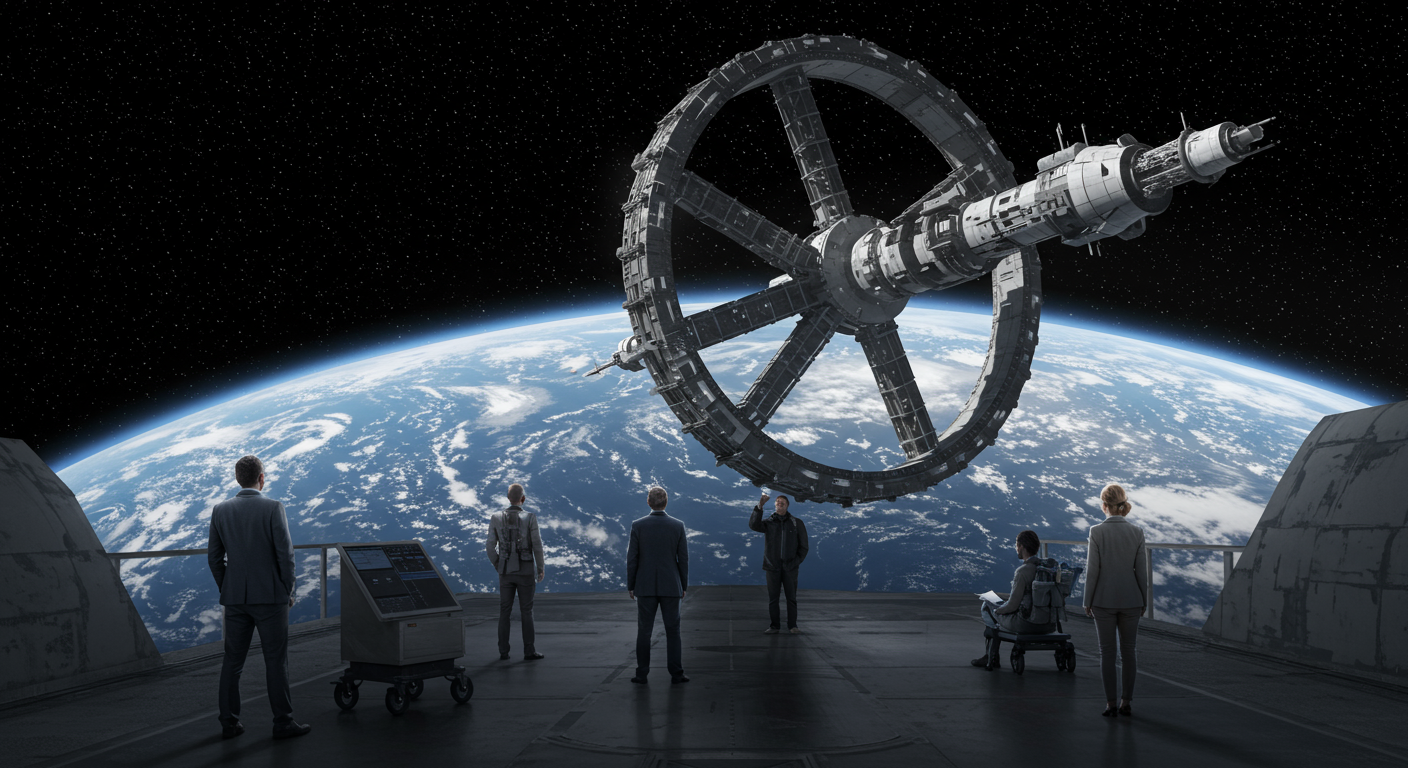
The question of creating artificial gravity in space stations has captivated scientists and engineers since the dawn of space exploration. While current orbital facilities like the International Space Station operate in microgravity, the physics of artificial gravity generation is well understood and technically achievable.
The Science Behind Artificial Gravity
Artificial gravity in space stations can be created through rotational motion, which generates centrifugal force that mimics the effects of natural gravity. When a spacecraft rotates around its central axis, objects and crew members inside experience an outward force that pushes them toward the outer walls of the station.
The mathematical relationship between rotation rate, radius, and artificial gravity strength follows a precise formula. The acceleration experienced equals the square of the angular velocity multiplied by the radius of rotation. This means larger space stations can achieve Earth-like gravity at lower rotation rates, while smaller stations require faster spinning to generate the same gravitational effect.
This simulated gravity differs from natural planetary gravity in that it results from acceleration rather than mass attraction. However, for practical purposes, crew members would experience familiar sensations of weight and orientation that closely resemble conditions on Earth.
Current Research and Space Agency Initiatives
The National Aeronautics and Space Administration has conducted extensive studies on rotating spacecraft designs, particularly for long-duration Mars missions where artificial gravity could prove essential for crew health. These research programs examine everything from structural requirements to human factors considerations for future deep space exploration vehicles.
The European Space Agency similarly maintains active artificial gravity research programs, developing experimental designs and conducting ground-based studies to understand the implications of rotating space habitats. Their work builds upon decades of theoretical foundations established during the early space program era.
Historical concepts for artificial gravity date back to early space exploration proposals, including designs by pioneers like Wernher von Braun. Modern engineering studies have refined these concepts using advanced materials and computational modeling to create more practical implementation strategies.
Engineering Challenges and Design Considerations
Creating a rotating space station presents significant structural complexity that requires advanced materials engineering. The spinning habitat must withstand continuous rotational stresses while maintaining structural integrity across all operational conditions.
Power requirements for maintaining continuous rotation demand sophisticated mechanical systems and backup mechanisms to ensure crew safety. Any failure in the rotation system could have catastrophic consequences, necessitating multiple redundant systems.
Determining optimal rotation rates involves balancing artificial gravity benefits against human comfort factors. Too rapid rotation can cause motion sickness and disorientation, while insufficient rotation fails to provide meaningful gravitational effects. Research suggests rotation rates between 2-4 revolutions per minute offer the best compromise.
Spacecraft radius requirements directly impact the feasibility and cost of artificial gravity systems. Larger radii enable comfortable rotation rates but require massive structures, while smaller radii demand faster rotation that may cause physiological problems. Additionally, crew members would experience gravity gradients, with different gravitational strengths at various levels within the station.
Why Current Space Stations Don't Use Artificial Gravity
The International Space Station and other current orbital facilities operate in microgravity primarily due to cost and complexity considerations. Building and launching a rotating space station requires significantly more resources than traditional designs, making microgravity stations more economically viable for current missions.
Operational challenges of docking and maintenance become exponentially more difficult with rotating structures. Visiting spacecraft must match the rotation of the station for safe docking, while external maintenance activities require specialized procedures to account for the rotational motion.
Engineers chose microgravity designs for current space stations because they offer simpler construction, lower costs, and easier operations, despite the known health impacts of long-term weightlessness on crew members.
Future Applications and Mission Requirements
Long-duration Mars missions represent the most compelling case for artificial gravity implementation. Journey times of six to nine months each way, plus extended surface stays, could result in serious bone density loss, muscle atrophy, and cardiovascular deconditioning without artificial gravity.
The health benefits for crew members on extended deep space exploration missions make artificial gravity increasingly necessary as humans venture farther from Earth. These physiological considerations may eventually override current cost and complexity concerns.
Proposed designs for next-generation space stations and interplanetary vessels increasingly incorporate rotating sections or entire rotating habitats. These concepts range from modest spinning modules attached to larger stations to massive wheel-shaped structures reminiscent of science fiction.
Timeline projections for implementing artificial gravity systems vary widely, but most experts anticipate rotating spacecraft becoming practical within the next 20-30 years as space exploration missions extend beyond Earth orbit. The critical factor will be whether the benefits justify the additional engineering complexity and costs.