Building Self-Sustaining Habitats on the Moon and Mars: The Race to Establish Permanent Off-World Settlements
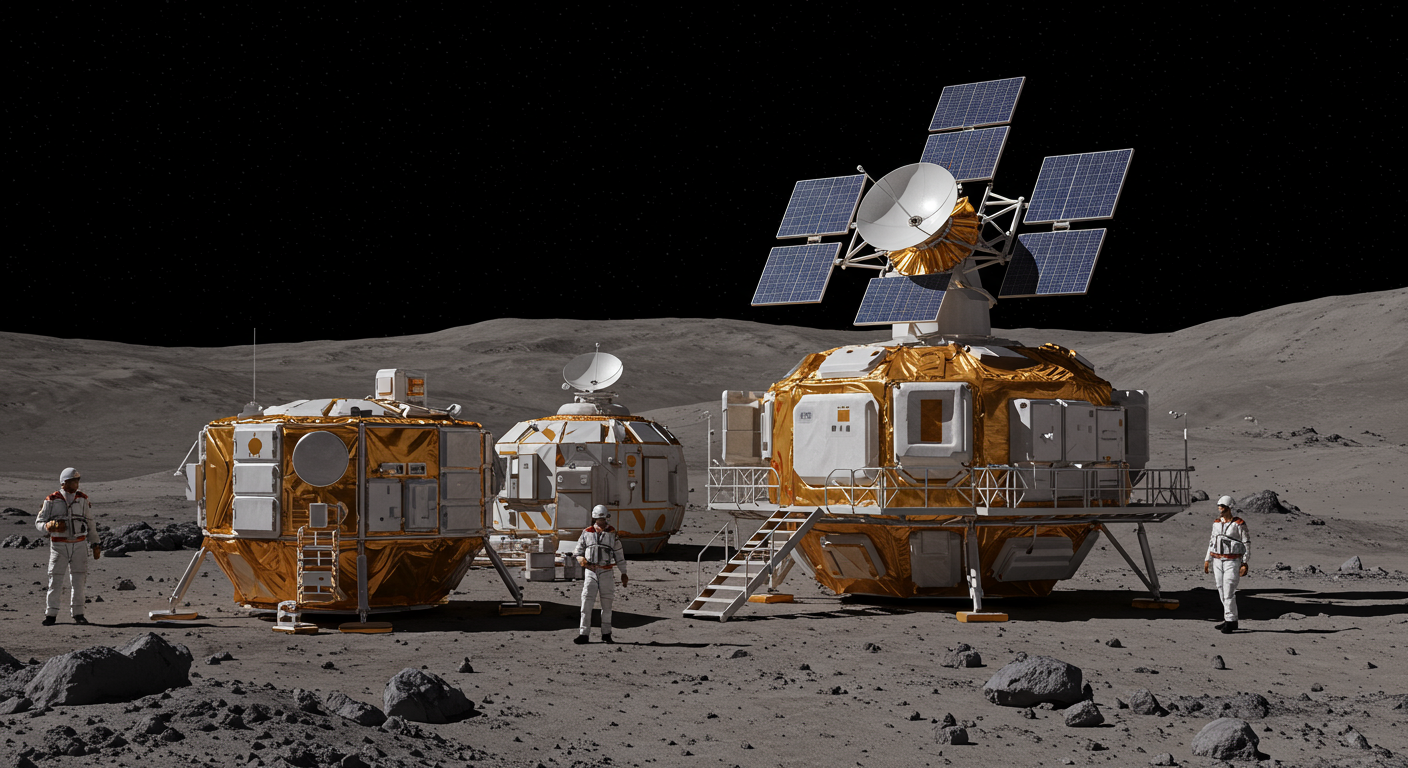
The dream of establishing permanent human settlements beyond Earth is rapidly shifting from science fiction to engineering reality. As space agencies and private companies accelerate their efforts to build self-sustaining habitats on the Moon and Mars, we stand at the threshold of becoming a truly multi-planetary species.
The Vision: Why Self-Sustaining Space Habitats Matter
Today's space exploration programs are driving unprecedented innovation in habitat development. NASA's Artemis program aims to establish a sustainable lunar presence by the late 2020s, serving as both a scientific outpost and a proving ground for Mars missions. Meanwhile, SpaceX's ambitious Mars colonization timeline envisions the first crewed missions to the Red Planet within this decade.
The economic and scientific benefits of permanent off-world settlements extend far beyond exploration. These habitats could serve as manufacturing centers for space-based industries, research stations for studying planetary formation, and backup locations for human civilization. Current projections suggest lunar habitats could become operational within 10-15 years, with Martian settlements following within 20-30 years.
Major Players and Their Approaches
The National Aeronautics and Space Administration's Artemis program represents the most comprehensive approach to lunar habitation, focusing on a Gateway station in lunar orbit and surface installations near the Moon's south pole. This strategy leverages international partnerships and emphasizes gradual capability building.
SpaceX's Mars Direct approach centers on the Starship infrastructure, designed to transport both crew and cargo in a single vehicle system. This methodology prioritizes rapid deployment and self-sufficiency from the earliest missions.
The European Space Agency's Moon Village concept promotes a collaborative international framework, envisioning a gradual buildup of lunar infrastructure through shared resources and expertise from multiple nations and organizations.
Private sector contributions are increasingly vital, with companies developing specialized technologies for everything from life support systems to construction robotics, creating a robust ecosystem of partnerships between government agencies and commercial entities.
Core Technologies for Habitat Construction
In-situ resource utilization (ISRU) represents perhaps the most critical technology for sustainable off-world habitation. This approach involves extracting and processing local materials—lunar regolith or Martian soil—into construction materials, dramatically reducing the need to transport building supplies from Earth.
3D printing and robotic construction methods are being developed to work with these processed materials, enabling the construction of habitat structures before human arrival. These systems must operate autonomously in harsh environments with extreme temperature variations and radiation exposure.
Radiation-resistant structural designs are essential, particularly for Mars missions where the thin atmosphere provides minimal protection from cosmic radiation. Habitats may need to be partially buried or constructed with specially formulated materials that provide adequate shielding.
Power generation and storage systems must function reliably in environments with limited solar energy and no atmospheric protection. Nuclear power sources, advanced battery systems, and concentrated solar arrays are all being evaluated for different scenarios.
Life Support and Environmental Systems
Closed-loop air and water recycling technologies form the backbone of habitat sustainability. These systems must achieve near-perfect efficiency, recycling carbon dioxide into oxygen and purifying all water sources with minimal waste.
Atmospheric processing presents different challenges for Mars versus lunar environments. Mars habitats may extract oxygen and water from the atmosphere and subsurface ice, while lunar facilities will depend more heavily on imported resources and extremely efficient recycling.
Waste management and resource recovery systems must transform human waste and organic materials back into useful resources, including fertilizer for food production and raw materials for manufacturing.
Emergency backup systems and redundancy planning are critical given the impossibility of rapid resupply or evacuation. Every critical system requires multiple independent backups and repair capabilities.
Food Production and Agriculture
Hydroponic and aeroponic growing systems are being adapted for space environments, allowing food production without soil while maximizing water and nutrient efficiency. These systems can operate in controlled environments with artificial lighting and precise atmospheric control.
The challenges of agriculture in low gravity remain largely unexplored, as plant growth, pollination, and harvest processes may all function differently in reduced gravity environments. Research aboard the International Space Station provides some insights, but long-term studies are still needed.
Protein sources and nutritional completeness require careful planning, as traditional livestock farming is impractical in space habitats. Alternative protein sources including insects, cultured meat, and plant-based proteins must provide complete nutrition for long-term health.
Soil creation from planetary materials involves processing local regolith and combining it with organic waste and specialized microorganisms to create growing medium for conventional agriculture, providing dietary variety and psychological benefits.
Human Factors and Social Dynamics
The psychological challenges of isolation and confinement in small, enclosed spaces for extended periods represent one of the most significant obstacles to successful space habitation. Research from Antarctic stations and submarine operations provides some guidance, but space habitats will face unique stressors.
Social structures for small, isolated communities must balance individual privacy with group cohesion, establishing governance systems, conflict resolution mechanisms, and social activities that maintain mental health and community stability.
Medical care and emergency response capabilities must handle everything from routine healthcare to major medical emergencies without the possibility of medical evacuation to Earth. This requires advanced diagnostic equipment, surgical capabilities, and comprehensive medical training for colonists.
Communication delays and Earth-independence become increasingly important as settlements mature. Mars communications face delays of up to 24 minutes each way, requiring habitats to operate independently during emergency situations and routine decision-making.
Current Progress and Future Milestones
Existing technology demonstrations and test facilities are proving key concepts for space habitation. NASA's HERA analog missions, the European Space Agency's Mars simulation programs, and private facilities like the Mars Desert Research Station are testing integrated systems and human factors.
Planned missions and habitat prototypes include the National Aeronautics and Space Administration's planned lunar surface habitats for Artemis, SpaceX's Mars mission architecture testing, and various international robotic missions that will test ISRU and construction technologies.
Remaining technical hurdles and research priorities focus on long-term system reliability, closed-loop efficiency, and human health in reduced gravity environments. Many technologies exist in prototype form but require extensive testing and refinement for operational deployment.
Current projections for first permanent settlements suggest lunar habitats could be established by the 2030s, with initial Mars settlements potentially following by the 2040s, though these timelines depend on continued technological progress and sustained funding commitments.
The development of self-sustaining space habitats represents humanity's next great leap, combining cutting-edge technology with pioneering spirit to establish our species beyond Earth. While significant challenges remain, the rapid pace of development across multiple programs suggests that permanent off-world settlements may become reality sooner than many expect.