Building Self-Sustaining Habitats on the Moon and Mars: The Future of Human Space Settlement
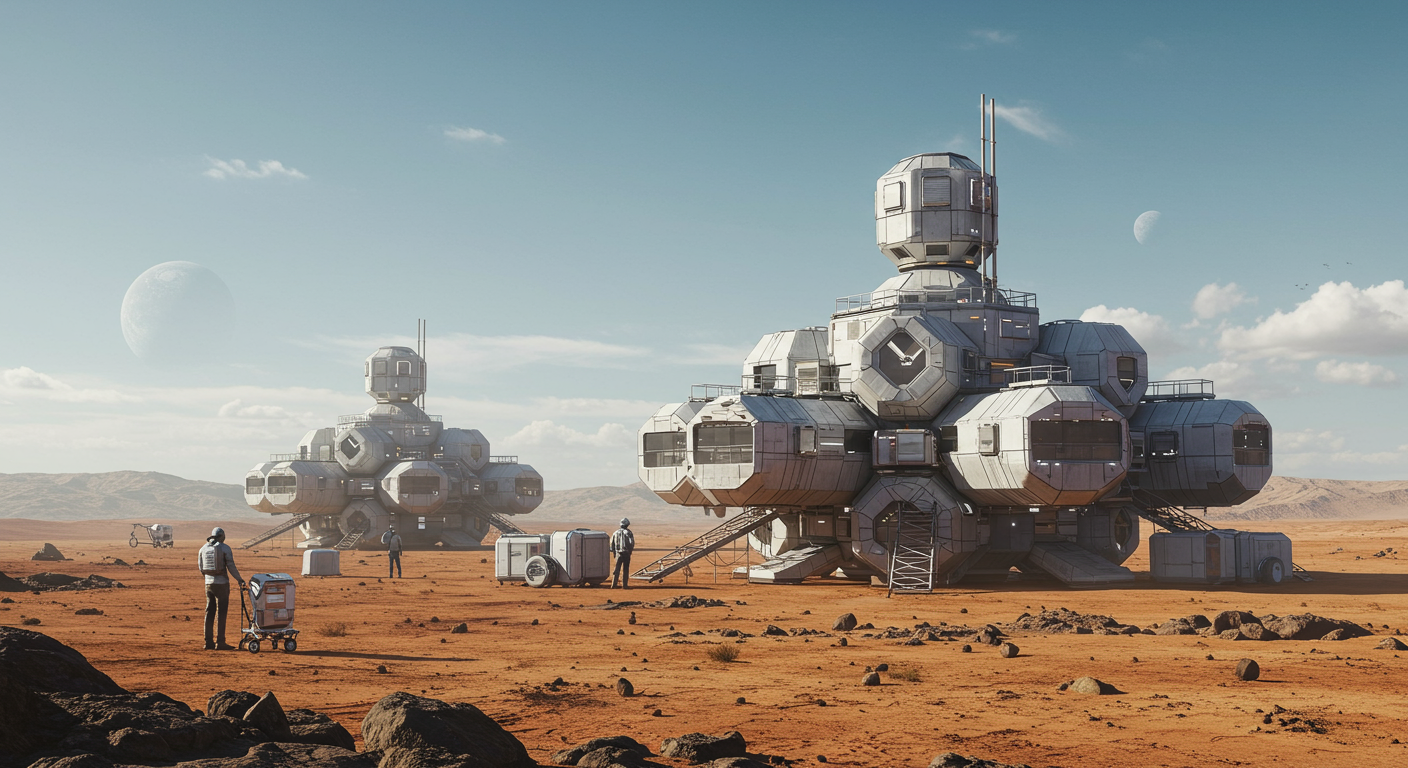
As humanity prepares to establish permanent settlements beyond Earth, creating truly self-sustaining habitats on the Moon and Mars represents one of the most ambitious engineering undertakings in human history. These extraterrestrial outposts must function independently for extended periods, recycling resources, generating power, and protecting inhabitants from hostile environments that would quickly prove fatal without sophisticated technological intervention.
The Challenge of Extraterrestrial Self-Sufficiency
A self-sustaining habitat in space must replicate Earth's life-supporting functions through artificial means. Unlike the International Space Station, which relies on regular resupply missions, lunar and Martian settlements must operate with minimal external support for months or years at a time. The Moon presents unique challenges including extreme temperature swings, two-week-long nights, and complete lack of atmosphere. Mars offers a thin atmosphere and seasonal dust storms, but also potential access to water ice and carbon dioxide for resource extraction.
Current development timelines reflect the urgency of this challenge. NASA targets the late 2020s for sustained lunar presence and the 2030s for initial Mars missions. These ambitious schedules drive rapid innovation in habitat technologies and life support systems.
Closed-Loop Life Support Systems
The foundation of any self-sustaining habitat lies in its ability to recycle air, water, and waste with minimal loss. Advanced carbon dioxide scrubbing technologies must continuously remove CO2 from the habitat atmosphere while recovering oxygen through electrolysis and chemical processes. The International Space Station's Environmental Control and Life Support System currently recovers about 93% of water from all sources, including humidity, urine, and other waste streams.
Water recovery systems for planetary habitats must achieve even higher efficiency rates, utilizing multi-stage filtration, distillation, and chemical treatment processes. Waste processing becomes particularly critical, as organic waste must be converted into nutrients for food production while inorganic materials are recycled or repurposed for habitat maintenance and expansion.
In-Situ Resource Utilization (ISRU)
The ability to extract and utilize local resources dramatically reduces dependence on Earth-based supplies. On the Moon, water ice deposits in permanently shadowed polar craters represent a crucial resource for drinking water, oxygen production, and hydrogen fuel generation. Lunar regolith can be processed to extract oxygen, while also serving as raw material for construction and radiation shielding.
Mars offers more diverse resource opportunities, with its atmosphere containing carbon dioxide that can be converted to oxygen and methane fuel. Subsurface water deposits provide another critical resource, while Martian soil contains minerals suitable for construction materials and potentially agricultural applications. The Mars Oxygen In-Situ Resource Utilization Experiment aboard NASA's Perseverance rover has already demonstrated successful oxygen extraction from the Martian atmosphere.
Environmental Protection and Habitat Structure
Protecting inhabitants from radiation, micrometeorites, and extreme temperatures requires sophisticated shielding and structural design. Lunar habitats face constant bombardment from cosmic radiation and solar particles due to the lack of magnetic field and atmosphere. Solutions include burying habitats under several meters of regolith, using water as radiation shielding, and developing advanced materials that can deflect harmful radiation.
Atmospheric pressure maintenance becomes critical for human survival, requiring robust airlocks, emergency backup systems, and rapid breach detection and repair capabilities. Structural designs must account for low gravity environments while withstanding the stresses of pressurization, thermal cycling, and potential seismic activity.
Energy Systems for Long-Term Operations
Reliable power generation presents unique challenges in extraterrestrial environments. Solar power systems on the Moon must survive two-week periods of darkness and extreme temperature variations, requiring advanced battery storage or alternative power sources. Mars receives less solar energy than Earth and experiences global dust storms that can block sunlight for weeks.
Nuclear power systems offer consistent energy output independent of environmental conditions, making them attractive for long-term settlements. Small modular reactors designed for space applications could provide baseload power, while solar arrays handle peak demand during optimal conditions. Advanced energy storage systems, including regenerative fuel cells and mechanical storage, help balance supply and demand across extended operational periods.
Current Missions and Future Plans
NASA's Artemis program represents the most immediate effort to establish sustainable lunar presence, with plans for a permanent base near the lunar south pole by the early 2030s. The program emphasizes international cooperation and commercial partnerships to develop habitat technologies and life support systems.
SpaceX's Mars colonization architecture envisions large-scale settlements supported by in-situ fuel production and cargo delivery systems. Their Starship vehicle is designed to transport both crew and substantial cargo loads necessary for habitat construction and maintenance.
The European Space Agency's Moon Village concept promotes international collaboration in developing lunar infrastructure, sharing costs and expertise across multiple space agencies and commercial partners. This approach could accelerate habitat development while distributing technical and financial risks.
Testing and Validation on Earth
Analog habitat simulations in extreme Earth environments provide crucial testing opportunities for technologies and procedures. Research stations in Antarctica, underwater laboratories, and purpose-built isolation facilities allow scientists to study long-duration missions, crew psychology, and system performance under controlled conditions.
The Mars Desert Research Station, HI-SEAS in Hawaii, and similar facilities conduct multi-month simulations that reveal challenges in crew dynamics, resource management, and equipment reliability. These studies inform habitat design decisions and operational procedures for actual space missions.
Timeline and Next Steps
Near-term milestones include deploying robotic systems for resource prospecting and initial infrastructure construction on the Moon within this decade. Human lunar habitats are expected to begin operations in the 2030s, serving as testing grounds for Mars-bound technologies.
Mars settlement sustainability remains a longer-term prospect, with initial crewed missions likely focusing on scientific research rather than permanent settlement. Technology gaps in radiation protection, psychological support for isolated crews, and reliable life support systems require continued research and development.
International cooperation offers the best path forward, combining resources and expertise from multiple nations and organizations. Success in building self-sustaining extraterrestrial habitats could establish humanity as a true spacefaring civilization, with permanent settlements beyond Earth serving as backups for human civilization and launching points for further exploration.