Building Self-Sustaining Habitats on the Moon and Mars: Engineering Humanity's Next Home
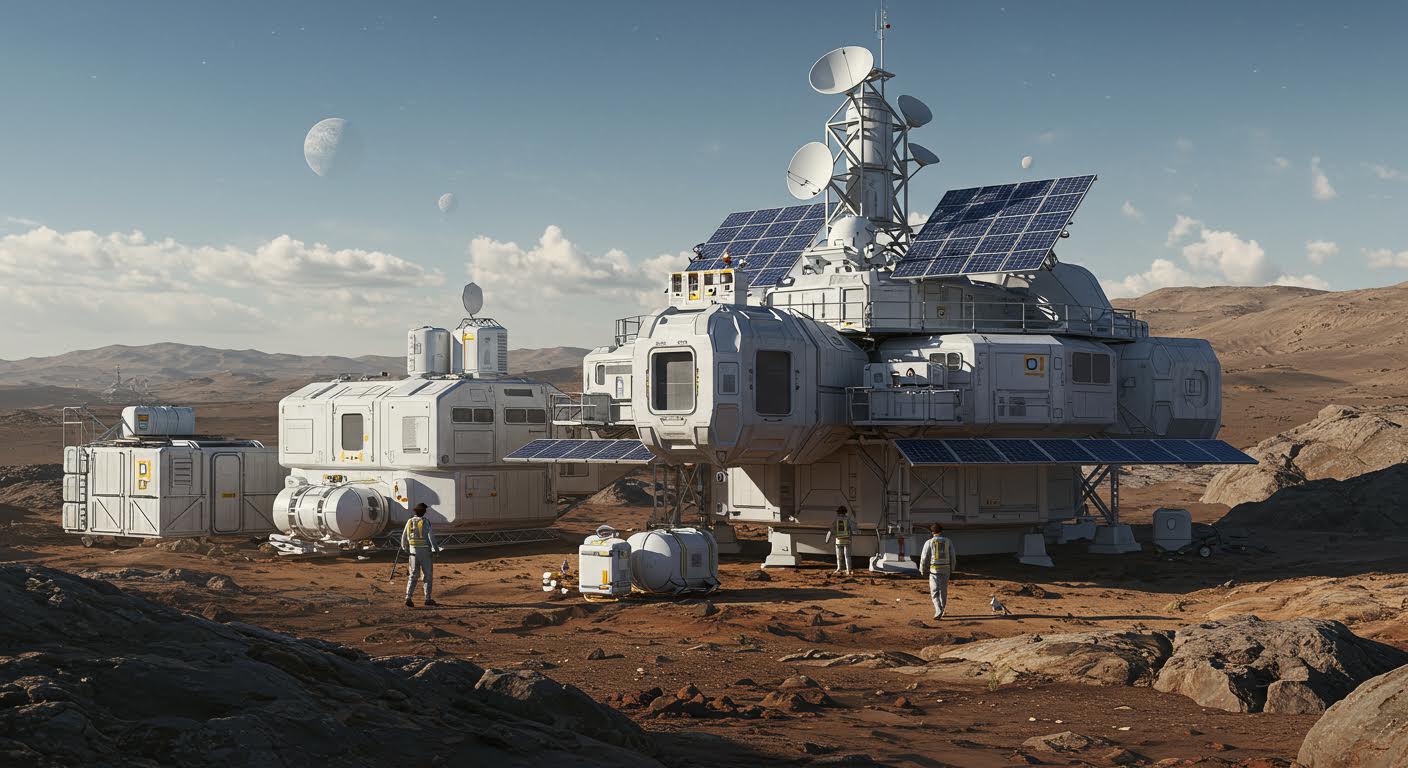
As humanity stands on the threshold of becoming a multi-planetary species, the challenge of building self-sustaining habitats on the Moon and Mars has evolved from science fiction dreams to concrete engineering problems. These extraterrestrial settlements will require revolutionary approaches to resource management, environmental protection, and human survival in the most hostile environments imaginable.
The Race to Build Extraterrestrial Homes
Three major space initiatives are driving the development of off-world habitats. NASA's Artemis program aims to establish a sustained human presence on the Moon as a stepping stone to Mars exploration. SpaceX's ambitious Mars colonization plans envision large-scale settlements powered by reusable rocket technology. Meanwhile, the European Space Agency's Moon Village concept proposes an international lunar base using modular, expandable structures.
The timeline for these ventures is aggressive yet realistic. Lunar habitats could become operational within the next decade, while Martian settlements may emerge in the 2040s. The strategic importance extends beyond exploration—these habitats serve as testbeds for technologies that could revolutionize sustainable living on Earth.
The fundamental challenges differ significantly between destinations. Lunar habitats must contend with extreme temperature swings, two-week-long nights, and minimal atmospheric protection. Martian settlements face dust storms, a thin CO2 atmosphere, and communication delays with Earth of up to 24 minutes.
Living Off the Land: In-Situ Resource Utilization
The key to sustainable extraterrestrial living lies in utilizing local resources rather than shipping everything from Earth. Water extraction represents the most critical capability—lunar ice deposits in polar craters and Martian subsurface reservoirs provide the foundation for both drinking water and fuel production.
Oxygen generation employs two primary methods: electrolysis of extracted water and processing of Martian CO2 through technologies like NASA's MOXIE experiment, which has successfully produced oxygen on the Red Planet. These systems must operate reliably for years with minimal maintenance.
Construction materials come from processed regolith—the loose rock and dust covering both worlds. Advanced techniques convert this raw material into concrete-like substances, metals for structural components, and even glass for transparent barriers. Current demonstrations show promising results, but scaling these processes to habitat-building levels remains a significant challenge.
Shielding Life from Space's Deadly Environment
Without Earth's protective magnetosphere and thick atmosphere, space radiation poses an immediate threat to human health. Cosmic rays and solar particle events can deliver lethal doses within months of exposure, making robust shielding essential for long-term habitation.
Underground construction offers the most effective protection, using excavated regolith as natural shielding. Robotic systems can dig into crater walls, lava tubes, or Martian hillsides before human arrival. These subterranean spaces maintain stable temperatures while blocking radiation.
Advanced materials research focuses on lightweight yet effective shielding compounds. Electromagnetic deflection systems, similar to Earth's magnetosphere, could protect larger surface installations. Water, stored in habitat walls, serves dual purposes as both radiation barrier and emergency supply.
Maintaining atmospheric pressure requires robust hull designs resistant to micrometeorite impacts. Multiple redundant barriers and self-sealing materials prevent catastrophic decompression that could prove fatal within minutes.
Closed-Loop Life Support: Nothing Goes to Waste
Self-sustaining habitats must recycle everything. Air revitalization systems continuously scrub CO2 while regenerating oxygen through electrolysis and plant photosynthesis. Multiple backup systems ensure breathable air even during equipment failures.
Water recovery achieves near-perfect efficiency by processing every drop from humidity condensation, urine, washing, and food preparation. Advanced filtration and purification systems must produce potable water that meets strict health standards while operating for years without resupply.
Waste becomes a valuable resource rather than a disposal problem. Human waste provides fertilizer for growing systems after careful processing. Organic materials undergo composting or biogas generation. Even exhaled breath contributes to plant growth in carefully balanced atmospheric cycles.
System redundancy prevents single points of failure that could endanger the entire crew. Multiple parallel systems, stockpiled spare parts, and crew training in repairs ensure continuous operation of life-critical equipment.
Growing Food in Alien Worlds
Sustainable nutrition requires on-site food production using hydroponic and aeroponic systems that eliminate the need for traditional soil. These soilless methods provide precise control over nutrients while conserving water through recirculation systems.
LED lighting arrays replace sunlight with optimized spectral output for maximum plant growth efficiency. Advanced control systems adjust intensity, spectrum, and photoperiod to accelerate crop cycles and increase yields in compact growing spaces.
Soil alternatives combine processed regolith with compost from organic waste and specialized growing media. Research continues into which Earth crops adapt best to these artificial environments and reduced gravity conditions.
Protein production explores innovative approaches including insect farming, algae cultivation, and cellular agriculture. These methods provide complete nutrition while requiring minimal resources compared to traditional livestock, which would be impractical in early settlements.
Power Systems for Perpetual Operation
Reliable energy generation drives every aspect of habitat operation. Solar panel arrays offer the most immediate solution, but dust accumulation and periodic storms require automated cleaning systems and protective storage capabilities.
Nuclear power provides consistent energy independent of weather or day-night cycles. Small modular fission reactors and radioisotope thermoelectric generators offer decades of maintenance-free operation, though they require careful radiation management and shielding.
Energy storage bridges gaps during lunar nights lasting two Earth weeks or Martian dust storms persisting for months. Advanced battery systems, mechanical storage, and hydrogen fuel cells provide multiple options for energy banking and distribution.
Integration of multiple power sources creates resilient energy networks capable of load balancing and emergency backup. Smart grid systems optimize energy flow while maintaining reserves for critical life support systems.
Building in Low Gravity: Construction Challenges
Reduced gravity fundamentally alters construction methods and structural requirements. Traditional building techniques must be redesigned for environments where materials behave differently and conventional foundations may be unnecessary or inadequate.
3D printing technology adapted for extraterrestrial materials enables automated construction before human arrival. Large-scale printers process regolith into structural components, reducing launch mass requirements and enabling complex geometries impossible with traditional methods.
Robotic assembly systems work continuously to construct habitats according to pre-programmed designs. These autonomous builders must operate in extreme temperatures while maintaining precision assembly of pressurized living spaces.
Inflatable habitat modules provide rapid deployment and compact storage during transport. These expandable structures offer immediate shelter while permanent facilities undergo construction, serving as temporary homes and backup accommodation.
Foundation systems adapted for low-gravity conditions may use deep anchoring, distributed loading, or underground integration. Seismic activity, thermal expansion, and soil mechanics in alien environments require new engineering approaches.
Keeping Humans Sane and Healthy
The psychological challenges of isolation in confined spaces with the same people for months or years require careful habitat design. Private quarters, common areas, and recreational spaces help maintain mental health and social cohesion among crew members.
Physical health deteriorates rapidly in reduced gravity as bones lose density and muscles atrophy. Specialized exercise equipment and resistance training systems must counter these effects while fitting within space-constrained habitats.
Communication delays with Earth create isolation that current astronauts never experience. Entertainment systems, virtual reality environments, and asynchronous communication tools help maintain connections with home while fostering independence in problem-solving.
Medical facilities must handle everything from routine healthcare to surgical emergencies without external assistance. Telemedicine, diagnostic equipment, pharmaceutical production, and crew medical training become critical for long-duration missions.
The Road Ahead: From Outposts to Cities
The evolution from research stations to permanent settlements requires economic sustainability beyond scientific research. Resource extraction for Earth markets, manufacturing in low gravity, and service industries for space travelers could provide economic foundations for growing communities.
Scaling challenges multiply as populations grow from dozens to hundreds or thousands of residents. Infrastructure, governance, education, and social systems must evolve alongside technological capabilities.
Current projections suggest the first truly self-sustaining lunar habitats within 15-20 years, with Martian settlements following within 30-40 years. These timelines depend on continued technological progress, international cooperation, and sustained funding commitments.
The long-term vision extends beyond mere survival to thriving multi-planetary civilization. These initial settlements serve as stepping stones to the outer solar system while providing backup locations for human civilization and advancing technologies that benefit life on Earth.