Artificial Intelligence Helping To Recover Bodies
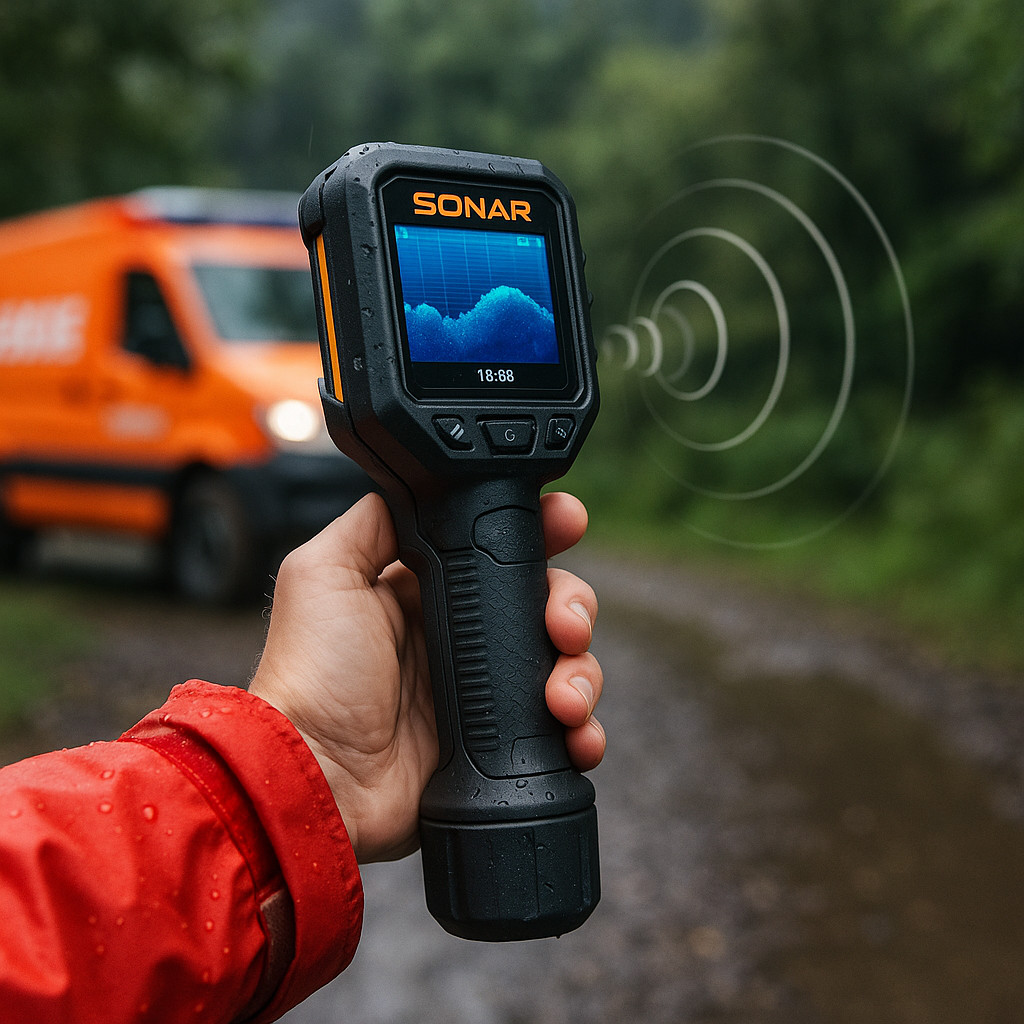 Texas Flood Rescue Leverages Hand-Held Sonar and AI to Find Victims
Texas Flood Rescue Leverages Hand-Held Sonar and AI to Find Victims
When the recent floods swept across Southeast Texas, first responders faced a familiar nightmare: vast swaths of murky, fast-moving water that could conceal stranded or injured residents. This time, however, rescue teams brought a powerful new tool to the water’s edge—specialized hand-held sonar combined with artificial intelligence—to locate and save flood victims faster than ever before.
The Challenge of Invisible Victims
Floodwaters often obscure more than just buildings and cars. Under murky, debris-filled conditions, sight alone can’t reveal people trapped in submerged homes, cars, or hidden depressions. Wading in without certainty is dangerous for both victims and rescuers.
Hand-Held Sonar: Seeing Beneath the Surface
Enter compact, waterproof sonar units about the size of a large flashlight. Operators sweep the device over flooded yards and submerged streets. The sonar pings penetrate turbid water, bouncing off objects—walls, vehicles, even human bodies—and returning echoes that build a real-time depth map.
- High Resolution: These newer units are capable of distinguishing objects just a few centimeters apart, letting teams pinpoint a person curled behind a couch or clinging to a car roof.
- Quick Deployment: Battery-powered and ruggedized, they can be launched from rescue boats, trucks, or even drones.
AI-Powered Detection: From Blips to Alerts
Raw sonar data can be overwhelming—hundreds of echoes create a wall of noise. That’s where AI steps in:
- Echo Classification: A neural network, trained on thousands of sonar scans, filters out inanimate echoes (tree limbs, rocks) and highlights human-shaped signatures.
- Automated Alerts: As soon as the AI flags a likely person, it sends an alert to the operator’s handheld tablet, displaying a pinpointed location and probability score.
- Mapping & Coordination: Multiple teams’ findings feed into a shared map, ensuring no area is overlooked and rescuers can converge on hotspots instantly.
Real-World Impact in Texas
During the last storm surge, Texas Task Force 1 deployed these devices across heavily flooded neighborhoods. In one dramatic midday operation:
- A stranded couple, trapped in attic floodwaters, were identified within minutes when their waving arms registered a “human echo” on sonar.
- In another sector, the AI-sonar combo detected a child’s small frame trapped beneath a collapsed porch overhang—an area divers had deemed too dangerous to search blindly.
Both rescues were carried out swiftly, with no additional risk to rescue personnel.
The Future of Flood Rescue
This marriage of sonar and AI is already reshaping how emergency services respond to water disasters. Next steps include:
- Autonomous Drones: Equipping unmanned surface vessels and aerial drones with sonar-AI stacks for fully remote sweeps.
- Predictive Modeling: Combining real-time detection with flood-flow simulations to predict where new victims might be swept.
- Community Kits: Distributing simpler versions of these devices to volunteer civilian teams, amplifying search capacity when professional resources are stretched thin.
Conclusion
As extreme weather events become more frequent, integrating advanced sensing and AI will be critical to saving lives in flood zones. Texas’s pioneering use of hand-held sonar with machine-learning analysis stands as a powerful example—and a hopeful sign that, even when water rises, technology keeps us seeing—and rescuing—those who need it most.