Apple’s Vision Pro Strategy Faces Questions as Meta Pushes AI Glasses
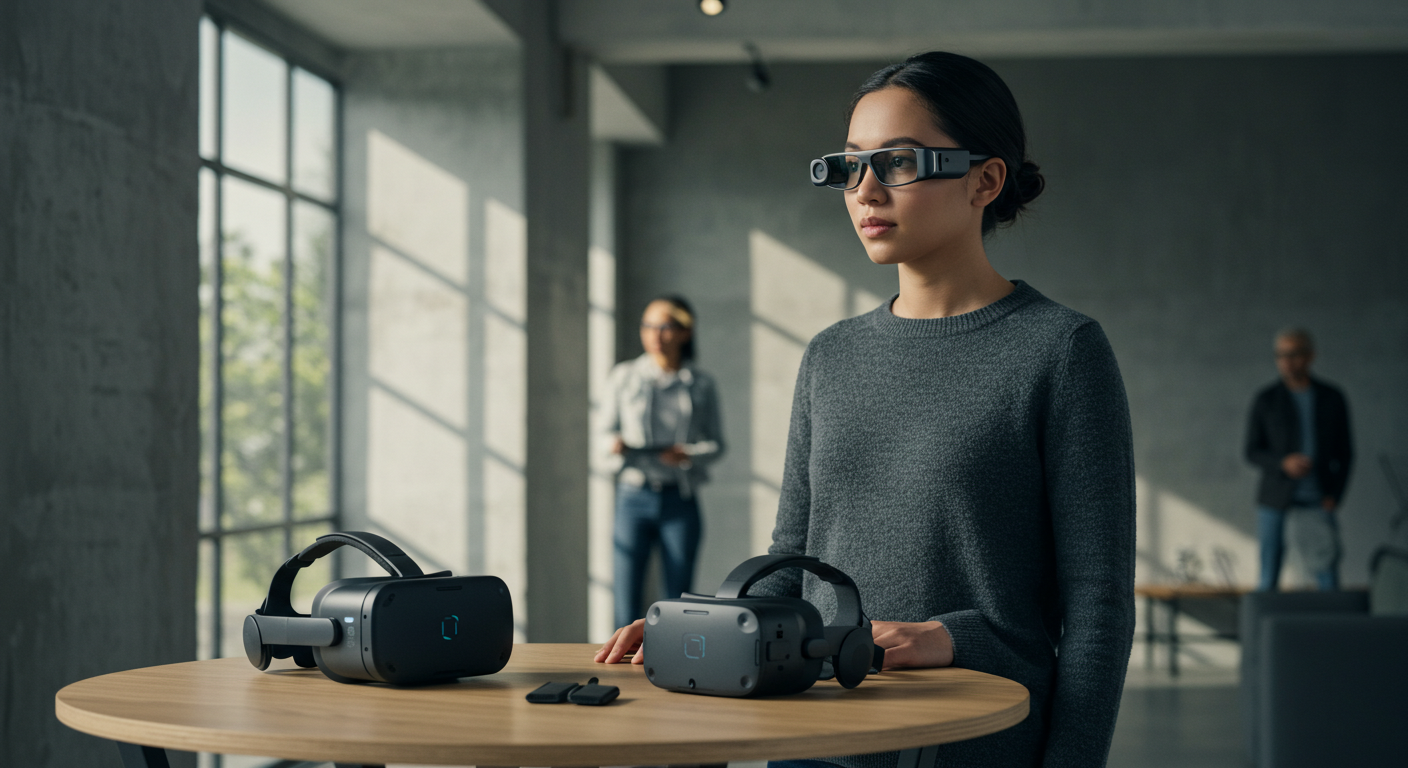
Wearable computing may be entering a new competitive phase, but the biggest claims in this story still require careful framing. Apple continues to position Vision Pro as its spatial-computing product, while Meta has publicly expanded its smart glasses efforts. Claims that Apple has scrapped every Vision Pro successor, or that Meta is racing toward 10 million pairs, should be treated as reported assertions from outside coverage rather than settled corporate fact unless the companies confirm them directly.
Why this reported shift matters
The contrast is striking. Apple remains associated with a premium mixed-reality headset designed to introduce its vision for spatial computing. Meta, by comparison, is pushing lighter, more everyday glasses as a more mainstream wearable. If reporting from Bloomberg, Reuters, and The Information is directionally accurate, the market may be splitting between high-end immersive hardware and mass-market AI eyewear.
That does not automatically create a clear winner and loser. But it does suggest the two companies may be optimizing for different timelines, price points, and ideas about what the next major computing platform should look like.
What is confirmed versus what is reported
Some points are straightforward. Apple’s official materials show that Vision Pro remains the company’s flagship spatial-computing device and a major expression of its mixed-reality ambitions. Meta, meanwhile, continues to market smart glasses publicly and discuss wearables as part of its broader consumer hardware and AI strategy.
What official product pages do not confirm are the strongest strategic claims now circulating around them. Statements that Apple has canceled successor devices, sharply scaled back headset plans, or pivoted away from Vision Pro belong in the category of reported developments unless backed by direct company comment. The same caution applies to any figure suggesting Meta has an internal goal of shipping 10 million pairs. Unless Meta formally publishes that number, it is better understood as a reported target or ambition, not a public commitment.
Apple’s Vision Pro roadmap under scrutiny
Reporting on Apple’s headset plans has fueled speculation that the company is reassessing how quickly and broadly it wants to expand the Vision line. Here, attribution matters. Different reports may refer to different successor concepts, timelines, or price tiers, so sweeping claims that Apple has abandoned the category altogether may overstate what is actually known.
Even if Apple is slowing, delaying, or reworking parts of its roadmap, that would not necessarily mean it is stepping away from spatial computing. It could instead reflect hard realities around pricing, demand, comfort, and the challenge of turning an ambitious first-generation headset into a product with wider consumer appeal.
That would not be unusual in hardware. A company can remain committed to a category while rethinking which version of the product makes the most sense to build next, and when.
Meta’s push for AI glasses at consumer scale
Meta’s strategy may be easier to explain to a mass audience: build wearable technology that looks more like ordinary glasses and supports everyday tasks such as taking photos, listening to audio, and accessing AI features. That approach is less dramatic than a full mixed-reality headset, but it may also be more socially acceptable and easier to use outside controlled settings.
If the widely discussed 10 million figure comes from external reporting, it should be understood as a reported internal goal or strategic ambition rather than a delivered result. Even without that exact number, the broader point remains: Meta is behaving like a company that believes smart glasses can become a consumer-scale category sooner than immersive headsets can.
That difference in posture matters. Meta’s glasses strategy emphasizes lower friction, more frequent use, and a price and form factor that fit more naturally into daily life.
Headsets versus glasses: two bets on the next computing platform
Headsets and glasses may fall under the same broad wearable umbrella, but they solve different problems. A mixed-reality headset can deliver deeper immersion, larger virtual workspaces, and richer visual experiences. The tradeoffs are bulk, battery constraints, higher prices, and a social barrier that keeps many use cases relatively narrow.
AI glasses make a different trade. They are less immersive, but potentially far more wearable. They can be lighter, easier to understand, and more compatible with everyday routines. That does not make them a replacement for high-end mixed reality. It makes them a more approachable on-ramp for consumers who are not ready to wear a headset for long periods.
The implications for developers differ as well. Headsets may attract creators interested in spatial interfaces and immersive apps, while glasses may favor simpler utility, voice interaction, camera-based features, and AI assistance layered onto ordinary life.
What this could mean for the broader market
If Apple is becoming more selective about its Vision roadmap while Meta accelerates glasses, investors and suppliers may increasingly treat these as separate markets rather than one unified race. Premium mixed reality could remain strategically important but commercially slower. AI glasses could become the higher-volume category first, even if they offer a less transformative technical experience in the near term.
That would affect more than Apple and Meta. Component makers, app developers, and rival hardware brands all need to decide where to place their bets: immersive displays, sensors, and premium experiences, or lighter wearable hardware built around convenience and AI access.
At the same time, one company’s reported pause does not settle the long-term future of spatial computing. Early platform shifts rarely move in a straight line. Categories often pass through overexcitement, correction, and refinement before they find durable scale.
What to watch next
The next clues will likely come from follow-up reporting, official statements, supply-chain signals, and future launch decisions. For Apple, the key question is whether it will iterate on Vision Pro over a longer horizon, introduce a cheaper or lighter approach later, or redirect attention toward another wearable form factor. For Meta, the question is whether smart glasses can move from an intriguing niche to a genuine consumer platform with repeatable demand.
Pricing, comfort, battery life, software support, and developer momentum will matter more than dramatic headlines. The wearable future may not belong entirely to headsets or entirely to glasses. It may instead emerge through a slower sorting process in which each form factor proves where it actually fits.