American Airlines Plans Starlink Wi-Fi Upgrade Across Its Mainline Fleet
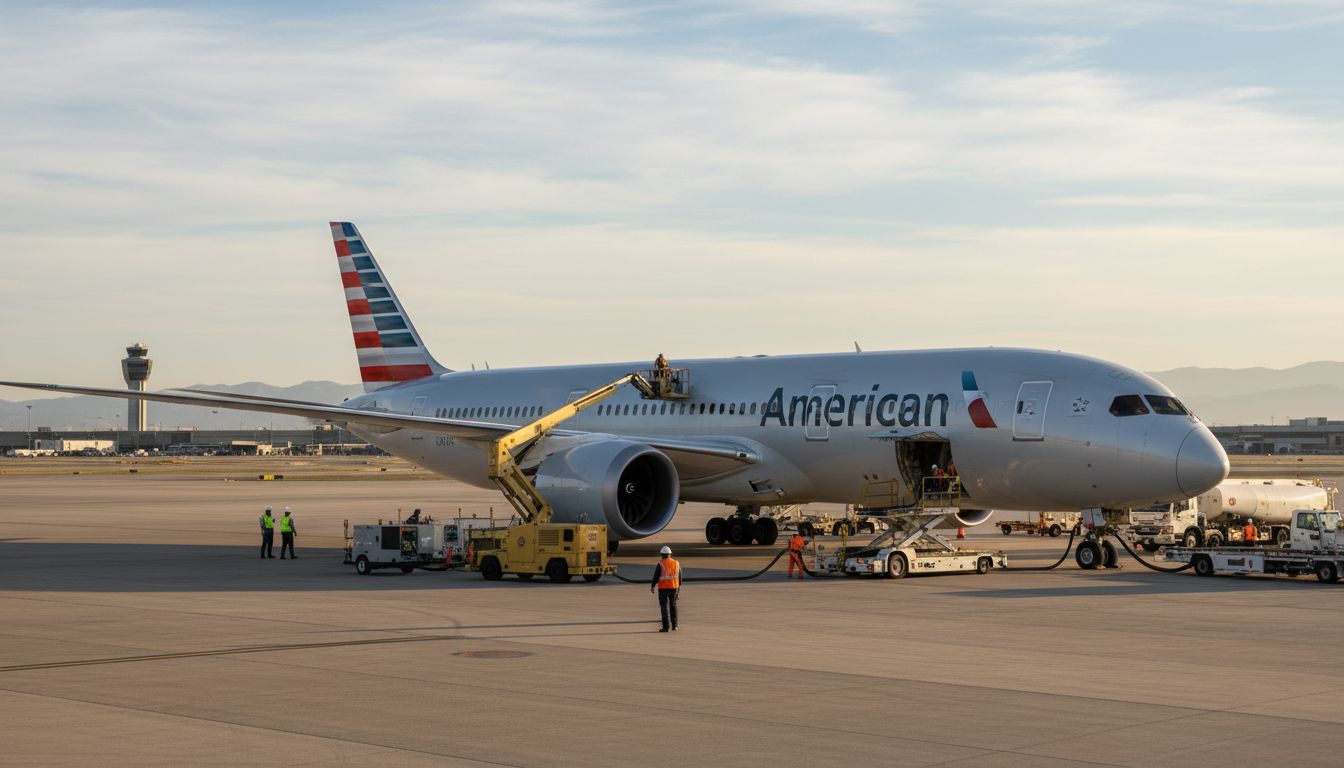
American Airlines says it plans to install Starlink Wi-Fi across its entire mainline fleet, expanding what had previously been described as a smaller rollout focused on more than 500 narrow-body aircraft. If the plan moves forward as outlined, the upgrade would cover more than 1,030 mainline jets and rank among the biggest inflight connectivity moves by a major U.S. carrier.
Reporting from Reuters and aviation trade outlets suggests this is a significant expansion rather than an entirely new initiative. Earlier coverage focused on a narrower deployment, while newer reports describe a fleetwide mainline strategy. In practical terms, that changes the story from a targeted equipment upgrade into a broad network overhaul affecting most of the airline’s core passenger operation.
What the rollout timeline appears to be
Many readers will focus on the 2027 headline, but the timeline deserves some caution. American has presented the plan with a defined start, yet large airline retrofit programs typically unfold in phases across aircraft types, maintenance windows, and operational priorities.
That means 2027 is better understood as a key milestone in the rollout, not necessarily the moment when every eligible aircraft will already be flying with the new system. Travelers should watch for more specific details on installation sequencing, certification progress, and which aircraft families are first in line.
What the “up to 1 Gbps” figure really means
The most eye-catching number attached to the announcement is speeds of up to 1 Gbps. That sounds dramatic, but it is best understood as a maximum system-capability figure, not a promise of what each passenger will experience from a seat.
In-flight internet performance depends on several variables, including aircraft hardware, satellite coverage, route geography, cabin demand, and how many people are online at the same time. Even if the underlying system can deliver very high throughput, real-world speeds will likely vary significantly from one flight to another.
So the more useful takeaway is not the peak number alone. It is that American appears to be betting on higher-capacity satellite connectivity that could better support streaming, work apps, messaging, and multiple connected devices across a full cabin.
Why this matters for inflight connectivity
A recurring consumer complaint about airline Wi-Fi is inconsistency. Some flights offer usable connections for basic browsing and messaging, while others struggle under heavier demand. A broad Starlink deployment could improve that consistency if installation quality and network performance hold up in everyday operations.
For passengers, the significance is less about a marketing-friendly speed claim and more about scale. Equipping the full mainline fleet would give American a chance to create a more uniform onboard internet experience across a large share of its domestic and longer-haul network.
That matters because traveler expectations have changed. Passengers increasingly expect to send messages without interruption, join work sessions, refresh cloud documents, and, in some cases, stream entertainment on their own devices. Airlines that can deliver a more dependable connection may gain an edge in customer satisfaction, especially among frequent flyers.
How this fits the broader airline Wi-Fi race
American’s move also appears to fit a broader competitive shift in aviation connectivity. More carriers have been exploring or adopting low-Earth-orbit satellite options, and Starlink has been drawing attention as airlines look for faster, more reliable alternatives to older inflight internet systems.
While comparisons across airlines can quickly become promotional, the broader trend is clear: connectivity is increasingly being treated as a core cabin product rather than a secondary add-on. In that sense, American’s expansion signals that onboard internet is becoming a more important part of the airline product itself.
What to watch next
The next important details are likely to be operational rather than headline-driven. Travelers and industry watchers should look for updates on which aircraft types are included first, whether any fleets are excluded, and how American defines “mainline” in practice relative to regional operations.
Pricing will matter too. American’s longer-term approach to whether the service is free, loyalty-linked, bundled, or sold in tiers could shape how meaningful the upgrade feels to customers.
And as with any connectivity announcement, the real test will come after installations begin. Early passenger reports, route-by-route performance, and consistency under heavy cabin use will say more about the experience than any peak-speed figure in a launch announcement.