AI Music Teaching Robots: The Future of Personalized Music Education
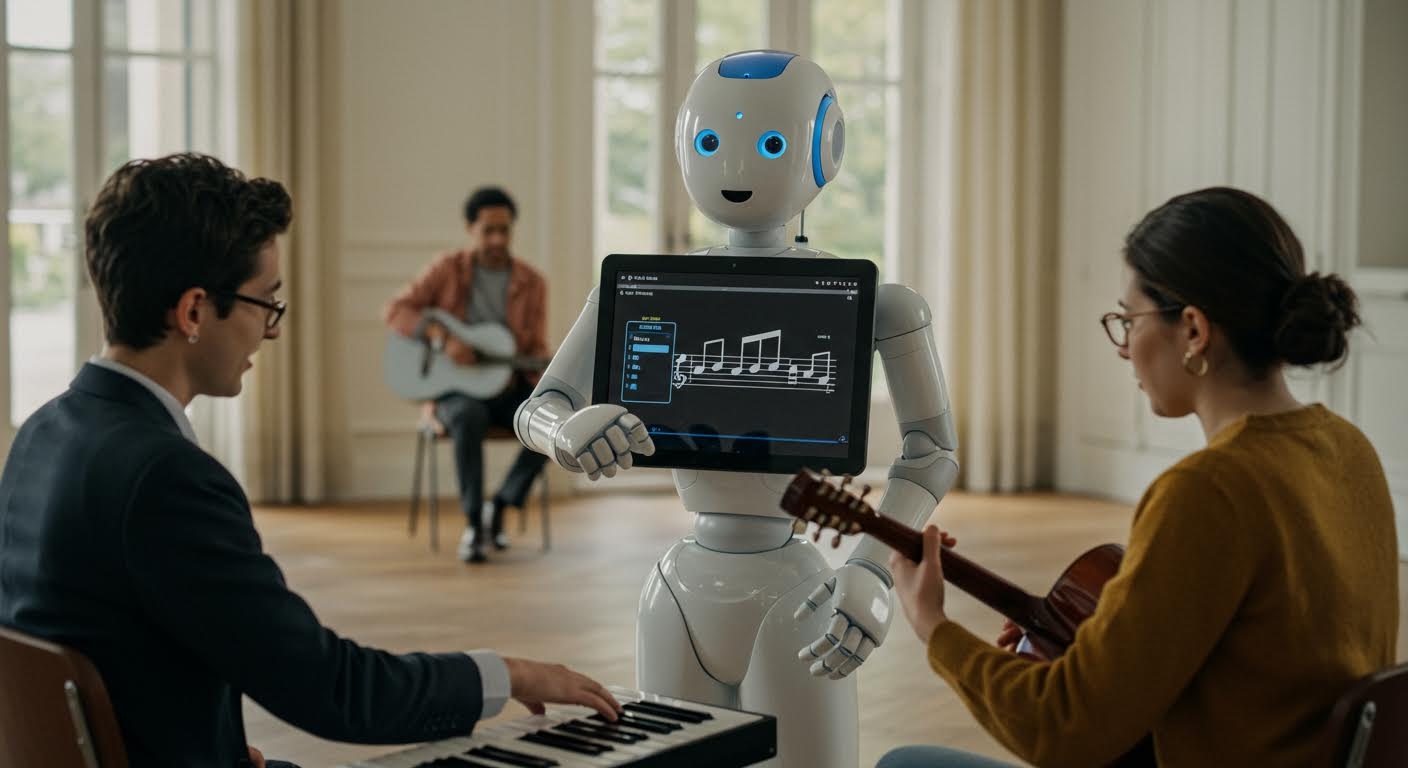
AI Music Teaching Robots: The Future of Personalized Music Education
The intersection of artificial intelligence, robotics, and music education has given birth to an innovative new category of learning tools: AI music teaching robots. These sophisticated systems combine machine learning algorithms with robotic interfaces to deliver personalized music instruction, fundamentally changing how students learn instruments and musical concepts.
At their core, AI music teaching robots represent the convergence of three rapidly advancing technologies. They harness artificial intelligence to understand and respond to individual learning patterns, employ robotics to create engaging physical or virtual interactions, and apply advanced audio processing to provide real-time musical feedback. This combination creates learning experiences that adapt to each student's pace, style, and skill level in ways traditional methods cannot match.
The growing interest in these systems reflects broader trends in educational technology, where personalization and accessibility are becoming paramount concerns. As schools and families seek more effective and affordable ways to provide quality music education, AI teaching robots are emerging as a compelling solution.
How AI Music Teaching Robots Work
The technical foundation of AI music teaching robots relies on sophisticated machine learning algorithms that analyze student performance and adapt instruction accordingly. These systems process audio input in real-time, comparing student performances against established musical standards and identifying areas for improvement.
Real-time audio analysis forms the backbone of these systems' effectiveness. Advanced signal processing algorithms can detect pitch accuracy, rhythm precision, timing variations, and even subtle technique errors that human ears might miss. This capability enables immediate, objective feedback that helps students correct mistakes as they occur rather than after extended practice sessions.
Adaptive learning pathways represent another crucial component. The AI continuously assesses student progress, identifying strengths and weaknesses to customize future lessons. If a student struggles with rhythm but excels at pitch accuracy, the system automatically adjusts to provide more rhythm-focused exercises while maintaining appropriate challenge levels in other areas.
The integration of physical robotics with digital platforms creates engaging, multi-modal learning experiences. Some systems feature humanoid robots that demonstrate proper posture and finger positioning, while others use tablet-based interfaces with robotic elements that respond to student actions through lights, sounds, and movement.
Key Features and Capabilities
Modern AI music teaching robots offer an impressive array of features designed to replicate and enhance traditional instruction methods. Pitch and rhythm accuracy detection capabilities have reached remarkable precision levels, often surpassing human instructors in identifying subtle intonation issues or timing inconsistencies.
Technique analysis extends beyond basic pitch and rhythm recognition. Advanced systems can evaluate bow pressure in string instruments, breath control in wind instruments, and finger positioning across various instrument types. This analysis enables corrective guidance that addresses fundamental technique issues before they become ingrained habits.
Natural language processing allows these robots to communicate complex musical concepts in accessible terms. Students can ask questions about music theory, request explanations of techniques, or seek clarification on assignments using natural speech, making the learning process more conversational and intuitive.
Gamification elements transform practice sessions into engaging experiences. Many systems incorporate point systems, achievement badges, and progress tracking that motivate students to maintain consistent practice schedules. Interactive learning experiences might include virtual ensembles where students play alongside AI-generated accompaniment or compete in skill-building challenges.
Multi-instrument support represents a significant advantage over human instructors who typically specialize in one or two instruments. A single AI system might offer instruction in piano, guitar, violin, drums, and vocals, providing families with comprehensive musical education resources.
Current Market Solutions and Examples
The AI music teaching robot market currently includes both consumer-focused home learning solutions and institutional products designed for schools and formal music programs. Consumer products typically emphasize ease of use, affordability, and family-friendly interfaces that make music learning accessible to beginners of all ages.
Home learning robots often take the form of compact devices that connect to tablets or computers, offering guided instruction for popular instruments like piano, guitar, and ukulele. According to industry reports, these systems typically cost between $200 and $800, making them competitive with short-term private lesson packages while offering unlimited access.
Institutional products target schools, music studios, and community programs with more sophisticated features and classroom management tools. These systems often include progress tracking for multiple students, curriculum integration capabilities, and administrative dashboards that help teachers monitor student development across large groups.
Several companies are developing innovative solutions in this space, though the market remains relatively young. Startups and established educational technology companies are exploring different approaches, from fully autonomous teaching robots to AI-enhanced software that augments traditional instruction methods.
Price ranges vary significantly based on target market and feature complexity. Basic consumer systems start around $150, while comprehensive institutional solutions can cost several thousand dollars. This pricing structure reflects the technology's current development stage, with costs expected to decrease as production scales increase.
Benefits and Advantages
AI music teaching robots offer several compelling advantages over traditional instruction methods. Perhaps most significantly, they provide 24/7 availability, allowing students to practice and receive feedback whenever motivation strikes or schedules permit. This flexibility eliminates common barriers to consistent practice and accommodates diverse learning preferences.
Personalized learning pace adaptation ensures that students never feel rushed or held back by group learning dynamics. Advanced students can accelerate through basics and tackle challenging pieces, while beginners receive patient, repeated instruction without fear of judgment or time pressure.
Objective performance assessment represents another major benefit. Human instructors, despite their expertise, may have unconscious biases or inconsistent evaluation standards. AI systems provide consistent, impartial feedback based solely on measurable performance criteria, helping students develop accurate self-assessment skills.
Cost-effectiveness makes quality music education accessible to more families. While initial system costs may seem substantial, they often prove economical compared to years of private lessons, especially for families with multiple children or students interested in learning several instruments.
The engaging format particularly appeals to digital-native students who grew up with interactive technology. These learners often respond well to gamified learning experiences and immediate digital feedback, making AI robot instruction feel natural and motivating.
Technical Challenges and Limitations
Despite impressive capabilities, AI music teaching robots face significant technical challenges that limit their current effectiveness. Audio recognition accuracy remains problematic in varied acoustic environments, where background noise, room acoustics, or multiple simultaneous sounds can confuse analysis algorithms.
Teaching musical expression and creativity presents perhaps the greatest challenge. While AI systems excel at identifying technical errors, they struggle to guide students in developing personal artistic interpretation, emotional expression, and creative improvisation skills that define advanced musicianship.
Natural language processing for nuanced instruction continues to evolve. Music education involves complex, abstract concepts that require sophisticated communication skills. Current AI systems may struggle to explain subtle musical ideas or adapt their communication style to individual student comprehension levels.
Hardware durability and maintenance requirements pose practical concerns, especially in institutional settings where systems experience heavy use. Robotic components, sensors, and connectivity systems must withstand repeated handling while maintaining calibration accuracy over extended periods.
Integration challenges with existing curricula create obstacles for institutional adoption. Schools often require systems that align with established learning standards, complement existing teaching methods, and integrate smoothly with current technology infrastructure.
Impact on Traditional Music Education
Rather than replacing human instructors entirely, AI music teaching robots are finding their most successful applications in complementary roles that enhance traditional education methods. Many music educators are discovering that these systems work best when integrated thoughtfully with human instruction rather than as standalone replacements.
Integration strategies for schools and music programs often involve using AI systems for individual practice sessions, basic skill development, and supplementary instruction that frees human teachers to focus on advanced concepts, ensemble work, and artistic development. This division of labor leverages each approach's strengths while minimizing weaknesses.
Teacher training and adaptation requirements are becoming important considerations as institutions adopt AI teaching systems. Educators must learn to work alongside AI tools, understanding their capabilities and limitations to create effective blended learning environments.
Early studies by educational technology researchers show mixed but promising results when comparing student engagement and learning outcomes. Students often demonstrate improved technical skills and practice consistency when using AI systems, though human instruction remains superior for developing musicality and performance confidence.
Future Outlook and Trends
The future of AI music teaching robots looks increasingly promising as advancing AI capabilities continue to improve accuracy and expand functionality. Machine learning algorithms are becoming more sophisticated at recognizing subtle musical nuances and providing more targeted feedback.
Expansion to more instruments and musical styles is accelerating as developers recognize market demand for comprehensive solutions. Future systems may offer instruction in traditional world music instruments, electronic music production, and vocal techniques with the same precision currently available for conventional instruments.
Integration with virtual and augmented reality technologies promises to create even more immersive learning experiences. Students might soon practice with virtual orchestras, receive holographic instruction demonstrations, or explore three-dimensional representations of musical concepts.
Collaborative and ensemble teaching capabilities represent an exciting frontier. Future AI systems may coordinate multiple students in virtual ensemble experiences, teaching not just individual skills but also the listening, timing, and communication skills essential for group performance.
Market analysts project significant expansion over the next decade. As technology costs decrease and capabilities improve, AI music teaching robots are likely to become standard tools in both educational institutions and home learning environments, fundamentally reshaping how music education is delivered and experienced.
The convergence of artificial intelligence and music education through robotic teaching systems represents more than just a technological advancement—it's a paradigm shift toward more accessible, personalized, and effective musical learning experiences that could democratize quality music education worldwide.