When, Not If: The Seismic Gap Off Ecuador's Coast — and What Actually Protects You
 Along Ecuador's northern coast, GPS stations record the land itself being slowly compressed — the visible signature of a locked plate boundary storing energy. The Nazca plate converges with South America relentlessly, and where the interface is stuck, strain accumulates year after year until it releases as an earthquake.
Seismologists who study the Ecuador–Colombia margin estimate that the earthquakes since 1906 — the ruptures of 1942, 1958, 1979, and the 2016 Pedernales event — have together released only about 35 percent of the strain accumulated since the great magnitude 8.8 earthquake. The remainder is still stored. That is what scientists mean by a seismic gap, and it is why they describe another great earthquake on this margin as a certainty over geological time. What no one can say is when: next year or next century.
**Can't we predict it?**
No — and it's worth being direct about this. Despite more than a century of effort, science cannot predict earthquakes: no reliable precursor signal has ever been found. What exists instead is early warning: networks of sensors that detect the fast-moving, weaker P-waves of an earthquake already underway and broadcast an alert before the slower, damaging S-waves arrive. Japan and Mexico operate the world's best-known systems. The warning is measured in seconds to a couple of minutes — enough to drop and cover, stop a train, or open firehouse doors; not enough to evacuate a city.
Ecuador's monitoring has improved substantially since 2016, but a mature public early-warning system like Mexico's is still aspirational. For coastal residents, the oldest warning system remains the most important one: if you are near the shore and feel strong shaking that lasts a long time, move to high ground immediately, without waiting for an official alert. The 1906 tsunami killed far more people than the shaking did.
**What actually protects you**
For those of us in Cuenca, the honest summary of this series is reassuring but not exempting. The city sits far from the locked coastal interface, and history — including 1906 itself — shows the great subduction earthquakes arriving here as strong but survivable shaking rather than destruction. The real risks are complacency and construction quality.
So: know how your building was built. Anchor tall furniture and water heaters. Keep a kit — water, medications, documents, flashlight, cash. Agree on a family reunion point and an out-of-area contact. These measures cost an afternoon and work for every earthquake, predicted or not.
That is the series. The plates will keep their own schedule; preparedness is the part that belongs to us.
*This article concludes CuencaLife's earthquake series with Marco. Strain estimates from published geodetic studies of the Ecuador–Colombia subduction margin.*
Along Ecuador's northern coast, GPS stations record the land itself being slowly compressed — the visible signature of a locked plate boundary storing energy. The Nazca plate converges with South America relentlessly, and where the interface is stuck, strain accumulates year after year until it releases as an earthquake.
Seismologists who study the Ecuador–Colombia margin estimate that the earthquakes since 1906 — the ruptures of 1942, 1958, 1979, and the 2016 Pedernales event — have together released only about 35 percent of the strain accumulated since the great magnitude 8.8 earthquake. The remainder is still stored. That is what scientists mean by a seismic gap, and it is why they describe another great earthquake on this margin as a certainty over geological time. What no one can say is when: next year or next century.
**Can't we predict it?**
No — and it's worth being direct about this. Despite more than a century of effort, science cannot predict earthquakes: no reliable precursor signal has ever been found. What exists instead is early warning: networks of sensors that detect the fast-moving, weaker P-waves of an earthquake already underway and broadcast an alert before the slower, damaging S-waves arrive. Japan and Mexico operate the world's best-known systems. The warning is measured in seconds to a couple of minutes — enough to drop and cover, stop a train, or open firehouse doors; not enough to evacuate a city.
Ecuador's monitoring has improved substantially since 2016, but a mature public early-warning system like Mexico's is still aspirational. For coastal residents, the oldest warning system remains the most important one: if you are near the shore and feel strong shaking that lasts a long time, move to high ground immediately, without waiting for an official alert. The 1906 tsunami killed far more people than the shaking did.
**What actually protects you**
For those of us in Cuenca, the honest summary of this series is reassuring but not exempting. The city sits far from the locked coastal interface, and history — including 1906 itself — shows the great subduction earthquakes arriving here as strong but survivable shaking rather than destruction. The real risks are complacency and construction quality.
So: know how your building was built. Anchor tall furniture and water heaters. Keep a kit — water, medications, documents, flashlight, cash. Agree on a family reunion point and an out-of-area contact. These measures cost an afternoon and work for every earthquake, predicted or not.
That is the series. The plates will keep their own schedule; preparedness is the part that belongs to us.
*This article concludes CuencaLife's earthquake series with Marco. Strain estimates from published geodetic studies of the Ecuador–Colombia subduction margin.*
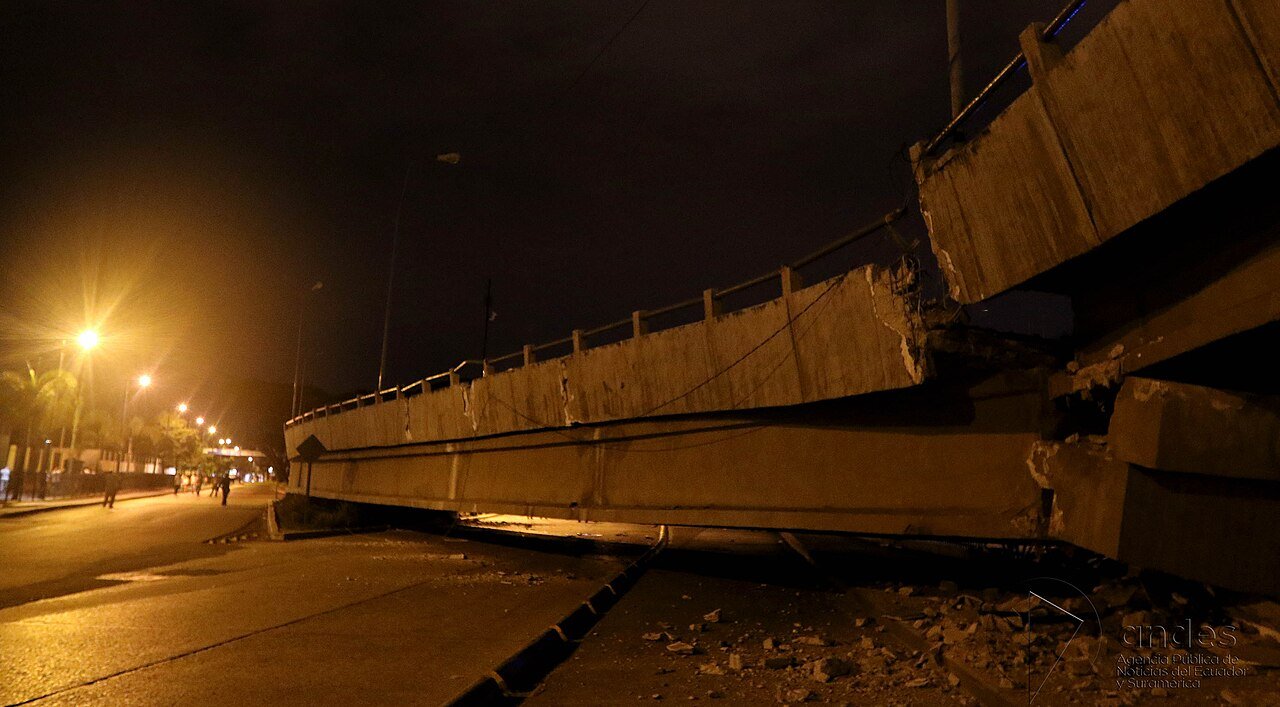
Header photo / Foto de portada: Photo: César Muñoz / Agencia de Noticias ANDES, CC BY-SA 2.0, via Wikimedia Commons