The Venezuela Doublet: Anatomy of June's Catastrophe Next Door
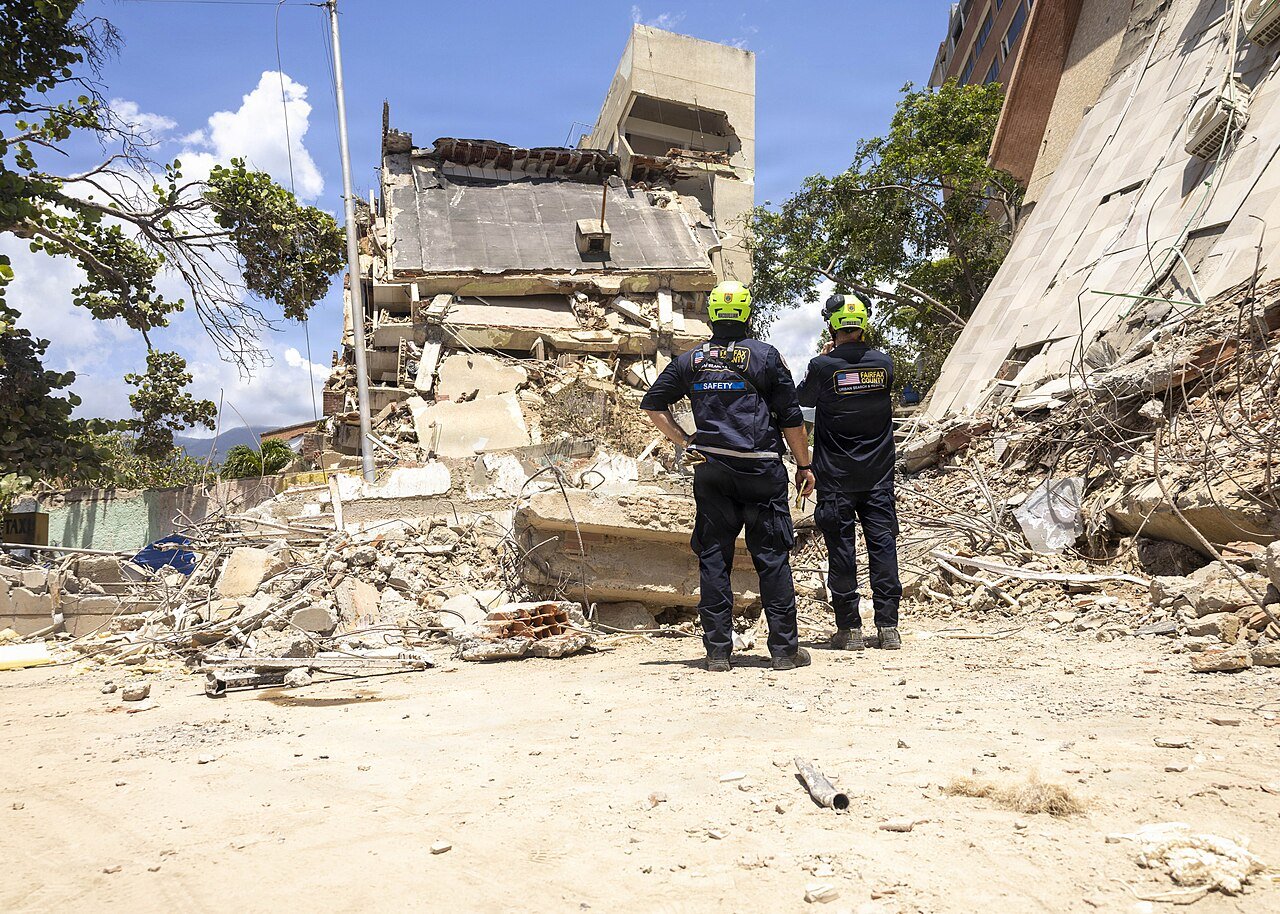 On June 24, 2026, two powerful earthquakes struck northern Venezuela within about thirty seconds of each other — magnitude 7.2 and 7.5, an event seismologists call an earthquake doublet. They were the strongest earthquakes to hit Venezuela since 1900.
The first quake was centered in Veroes Municipality in Yaracuy state, west of San Felipe. The second struck off the coast of La Guaira, near Catia La Mar, close to Caracas. Both were shallow — roughly 10 kilometers deep — which is why the destruction was so severe. Shallow earthquakes deliver their energy directly to the surface.
The human toll has been staggering. According to the most recent tallies, at least 6,300 people died and nearly 61,000 were hospitalized. Estimates of the missing have ranged from 18,000 to more than 50,000, with no firm official count — a spread that reflects how overwhelmed the response has been. Roughly 80 percent of buildings in La Guaira state collapsed or were severely damaged, and total damages have been estimated near $37 billion. Aid organizations described the response as inadequate to the scale of the disaster, and some reported that access for international rescue teams was restricted.
**Why this matters for Ecuador — and why it doesn't**
When Colombia's magnitude 7.4 earthquake struck in August, many asked whether the two events were connected. The answer from Colombia's National Seismological Network was unambiguous: no. The Venezuela doublet occurred on the Caribbean–South American plate boundary — a strike-slip system, similar in character to California's San Andreas. Colombia's quake, and Ecuador's seismic exposure, belong to the Nazca subduction zone on the Pacific side of the continent — an entirely different fault system.
That distinction matters for understanding our own risk. Ecuador's earthquakes come overwhelmingly from the Pacific subduction zone and from shallow crustal faults in the Andes — not from the Caribbean system that devastated Venezuela. The doublet is not a preview of an Ecuadorian event.
What it is, however, is a reminder of what shallow, powerful earthquakes do to unprepared buildings and communities — and of how quickly casualty figures climb when infrastructure fails. The figures above are still being revised as recovery continues; early numbers in disasters of this scale are always uncertain.
Our neighbors are still digging out. Several international organizations continue to operate donation and assistance programs for Venezuela relief — and the lessons for household preparedness here are the same ones we keep repeating: know your building, keep a kit, have a family plan.
*This article is part of CuencaLife's earthquake series with Marco. Figures reflect reporting available as of mid-August 2026 and may be revised.*
On June 24, 2026, two powerful earthquakes struck northern Venezuela within about thirty seconds of each other — magnitude 7.2 and 7.5, an event seismologists call an earthquake doublet. They were the strongest earthquakes to hit Venezuela since 1900.
The first quake was centered in Veroes Municipality in Yaracuy state, west of San Felipe. The second struck off the coast of La Guaira, near Catia La Mar, close to Caracas. Both were shallow — roughly 10 kilometers deep — which is why the destruction was so severe. Shallow earthquakes deliver their energy directly to the surface.
The human toll has been staggering. According to the most recent tallies, at least 6,300 people died and nearly 61,000 were hospitalized. Estimates of the missing have ranged from 18,000 to more than 50,000, with no firm official count — a spread that reflects how overwhelmed the response has been. Roughly 80 percent of buildings in La Guaira state collapsed or were severely damaged, and total damages have been estimated near $37 billion. Aid organizations described the response as inadequate to the scale of the disaster, and some reported that access for international rescue teams was restricted.
**Why this matters for Ecuador — and why it doesn't**
When Colombia's magnitude 7.4 earthquake struck in August, many asked whether the two events were connected. The answer from Colombia's National Seismological Network was unambiguous: no. The Venezuela doublet occurred on the Caribbean–South American plate boundary — a strike-slip system, similar in character to California's San Andreas. Colombia's quake, and Ecuador's seismic exposure, belong to the Nazca subduction zone on the Pacific side of the continent — an entirely different fault system.
That distinction matters for understanding our own risk. Ecuador's earthquakes come overwhelmingly from the Pacific subduction zone and from shallow crustal faults in the Andes — not from the Caribbean system that devastated Venezuela. The doublet is not a preview of an Ecuadorian event.
What it is, however, is a reminder of what shallow, powerful earthquakes do to unprepared buildings and communities — and of how quickly casualty figures climb when infrastructure fails. The figures above are still being revised as recovery continues; early numbers in disasters of this scale are always uncertain.
Our neighbors are still digging out. Several international organizations continue to operate donation and assistance programs for Venezuela relief — and the lessons for household preparedness here are the same ones we keep repeating: know your building, keep a kit, have a family plan.
*This article is part of CuencaLife's earthquake series with Marco. Figures reflect reporting available as of mid-August 2026 and may be revised.*
Header photo / Foto de portada: Photo: Gunnery Sgt. Kevin Rivas, U.S. Marine Corps, public domain, via Wikimedia Commons