Noboa Declares 60-Day State of Exception in Eight Provinces, Imposes Midnight Curfew in Four
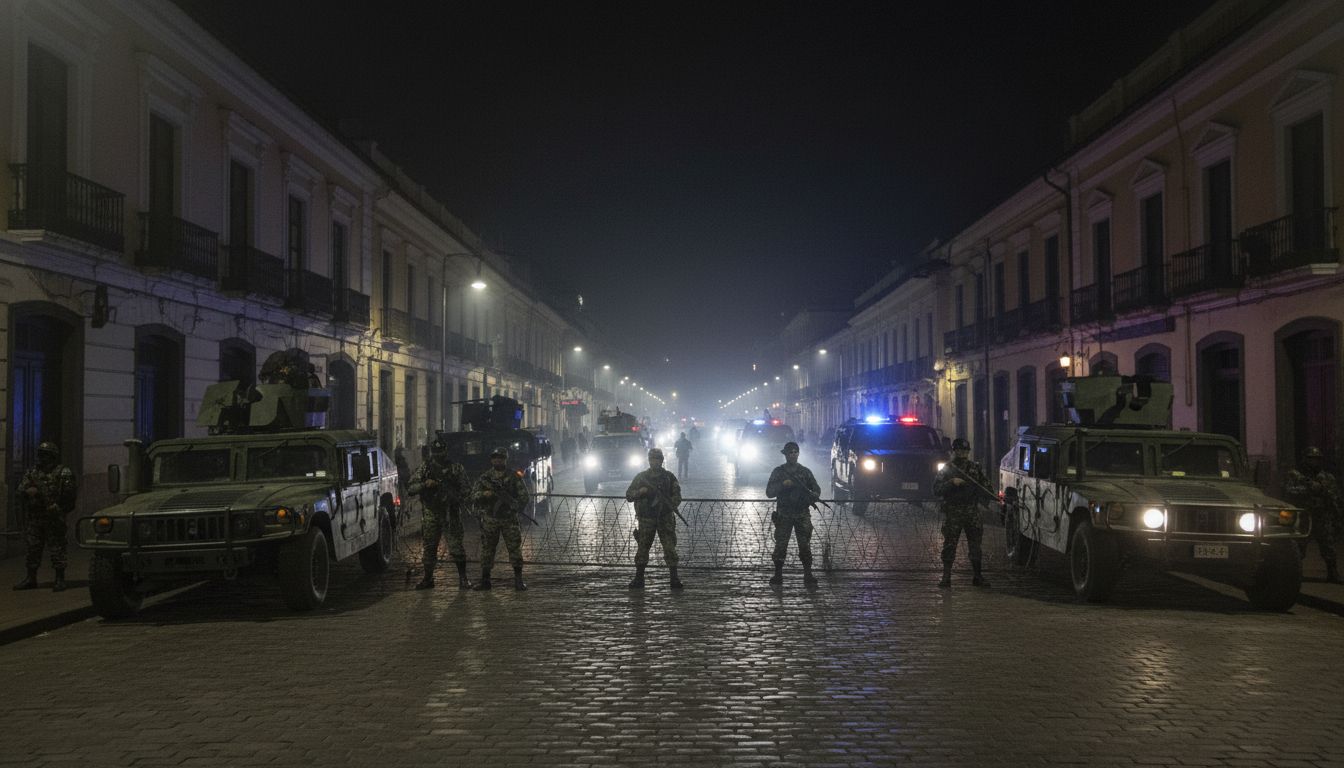
Ecuadorian President Daniel Noboa has signed a decree declaring a 60-day state of exception across eight provinces and three cantons, according to multiple Ecuadorian news outlets. Officials cite what is described as "grave internal commotion" linked to organized crime and narcotrafficking as justification for the measure. Alongside the broader decree, a more limited nighttime curfew has reportedly been imposed in four coastal provinces.
Many observers note that this marks a continuation of Ecuador's ongoing security posture in 2026, with reporting suggesting this could be the third curfew declared in the country this year. Officials frame the measures as part of a sustained effort against transnational criminal structures and illicit economies, though the reporting reviewed here draws heavily on official government sourcing.
Which Provinces and Cantons Are Affected
According to available reporting, the state of exception applies to eight provinces: Guayas, Pichincha, Manabí, Los Ríos, El Oro, Esmeraldas, Santa Elena, and Santo Domingo de los Tsáchilas. Three additional cantons—Camilo Ponce Enríquez, Las Naves, and La Maná—are also named in coverage of the decree.
A recurring point of emphasis across outlets is the distinction between provinces placed under the broader state of exception and the smaller subset subject to the nighttime curfew. This distinction appears to be a source of public confusion that several news reports have attempted to clarify.
Curfew Rules: Where, When, and Why It Differs From the State of Exception
Reporting indicates that a nighttime curfew, running from midnight to 5:00 a.m., has been established specifically in four coastal provinces: Guayas, Manabí, Los Ríos, and El Oro. Coverage suggests this curfew is scheduled to run from September 17 through September 30, 2026.
Notably, Pichincha—and by extension Quito—is described in multiple accounts as falling under the state of exception while being exempted from the curfew itself. Several outlets stress this point explicitly, apparently to prevent public misunderstanding about which restrictions apply where.
Suspended Rights and Expanded Security Powers
According to the sources reviewed, the decree suspends certain constitutional protections, including the inviolability of the home and the privacy of correspondence. Reporting indicates that the Armed Forces and National Police have been authorized to conduct raids and searches without a prior judicial order in cases where there are indications of criminal or terrorist activity.
A recurring concern among those examining this type of measure is the scope of expanded search powers and what safeguards, if any, accompany them. Some reporting also references authorization for mail interception under the decree, though this detail should be treated as a claim pending broader confirmation, since it stems from a limited set of sources.
Penalties and Exemptions Under the Curfew
Coverage indicates that curfew violators could face criminal penalties—reportedly one to three years in prison—under Ecuador's Penal Code (COIP). Certain categories of workers, including health personnel, security forces, and journalists, are said to be exempted from curfew restrictions, a structure apparently intended to limit disruption to essential services.
Context and Open Questions
Much of the available coverage relies heavily on official government sourcing, including the text of the decree itself and statements attributed to the Ministry of Interior. A recurring observation is that this seed reporting lacks independent verification, opposition commentary, or human-rights analysis within the articles reviewed.
Specific details—such as the decree's exact number, precise dates, and the full legal scope of suspended rights—should be treated as claims associated with initial reporting rather than fully confirmed facts. Broader questions remain about the trade-offs between security measures and civil liberties as Ecuador continues to navigate an extended period of heightened security decrees.