Mazar Reservoir Sits 17 Meters Above Critical Level as Ecuador's Early Dry Season Fuels Outage Warnings
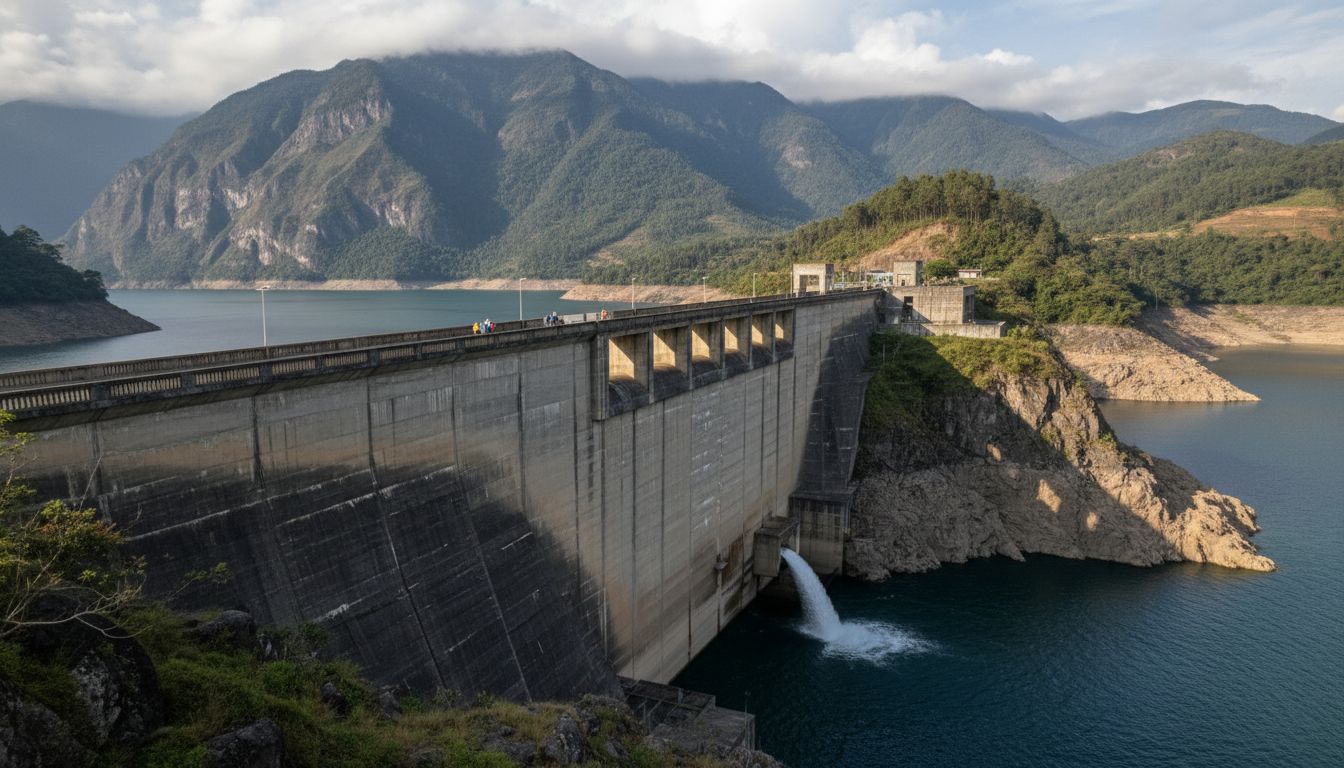
Mazar Reservoir Sits 17 Meters Above Critical Shutdown Level as Ecuador's Dry Season Intensifies
Ecuador's Mazar reservoir, the central regulating component of the Paute-Mazar hydroelectric complex, currently sits roughly 17 meters above the critical shutdown threshold of 2,115 meters above sea level (m s.n.m.). The figure has become a closely watched number in recent weeks, as officials and independent engineers track the reservoir's trajectory through an unusually early dry season.
The stakes are significant. Engineers have warned that if the reservoir's decline continues unchecked, Ecuador could face power cuts lasting up to seven hours a day, with worse-case scenarios reaching as long as twelve hours. Mazar is not a minor piece of infrastructure — the Paute-Mazar complex has an installed capacity of 1,757 megawatts and, at full operation, can supply up to 30% of national electricity demand. Its reservoir serves as the regulating buffer for the whole system, meaning its level has outsized influence on how much power the complex can reliably generate.
Why the Dry Season Arrived Early
According to Ecuador's Ministry of Environment and Energy, the 2026 estiaje, or dry season, began in September — earlier than the historical pattern, which typically runs from October through March. That early start matters because it compresses the window in which reservoir operators would normally expect stable or rising inflows, adding pressure earlier in the cycle than usual.
Mazar's reservoir operates within a defined technical range: a minimum level of 2,098 m s.n.m. and a maximum of 2,153 m s.n.m., with 2,115 m s.n.m. marked as the critical level at which operations become constrained. Engineering estimates cited in recent reporting suggest the reservoir has already lost roughly half of its useful volume this season, underscoring how quickly conditions can shift once the dry season takes hold.
Engineers Warn of Severe Outages, Government Pushes Back
The Consejo Consultivo de Ingenierías y Economía, an engineering and economic advisory group known as the CCIE, has projected a potential electricity deficit of up to 1,300 megawatts between October and March — a shortfall the group estimates at roughly 30% of national demand. Ecuador's government has offered a more conservative projection, estimating the deficit at between 1,000 and 1,200 megawatts.
These figures should be understood as attributed claims from named sources rather than a single verified consensus. The CCIE's warnings and the government's counter-estimates represent two separate assessments of the same unfolding situation, and reporting on the gap between them is still developing. Separately, data cited by engineers indicates that Mazar's generation draw rose sharply in August and September, with the reservoir discharging at roughly 380 megawatts continuously compared with a more typical rate of around 180 megawatts — a pace that, if sustained, would accelerate depletion.
Compounding Pressures: Colombia Imports and Regional Supply
Adding to the strain, Colombia has reportedly tightened conditions on electricity exports to Ecuador, prioritizing its own hydroelectric reserves amid El Niño conditions affecting the broader region. Colombian supply has historically served as a buffer during Ecuador's dry seasons, and a recurring concern among observers is that reduced surplus from Colombia removes a safety valve Ecuador has leaned on in past years, leaving less room to absorb Mazar's decline.
Government Response Measures So Far
Ecuadorian authorities have moved to blunt the impact of falling reservoir levels through several targeted measures. Roughly 185 large, high-voltage industrial consumers have reportedly had their power disconnected one day per week, with that policy later extended to cover medium-sized industries as well. On the generation side, authorities have added approximately 200 megawatts to the grid since late September using barge-mounted generation, with a fourth barge reportedly expected to come online by the end of the year.
These steps are best understood as stopgap measures intended to ease pressure in the near term rather than structural fixes to the underlying supply gap. Whether they prove sufficient will depend heavily on how reservoir levels evolve in the coming weeks.
2024 Precedent and What Could Happen Next
Ecuador has been here before. In 2024, the country experienced significant blackouts when Mazar last reached its critical level, an episode that looms large in current discussions about preparedness and risk. Many observers note that the current situation, while serious, has not yet reached that threshold, and some recent reporting points to brief periods of partial recovery in reservoir levels — a reminder that the decline has not been strictly linear.
What happens next remains genuinely uncertain. The outcome will likely hinge on rainfall patterns in the coming months, the pace of demand growth, and whether mitigation measures — from industrial disconnections to added barge generation — can keep pace with a reservoir that, for now, still sits above the critical line but is being watched closely by officials, engineers, and the public alike.