Mazar Falls to a 2026 Low as Ecuador Extends Industrial Power Cuts to 72 Hours
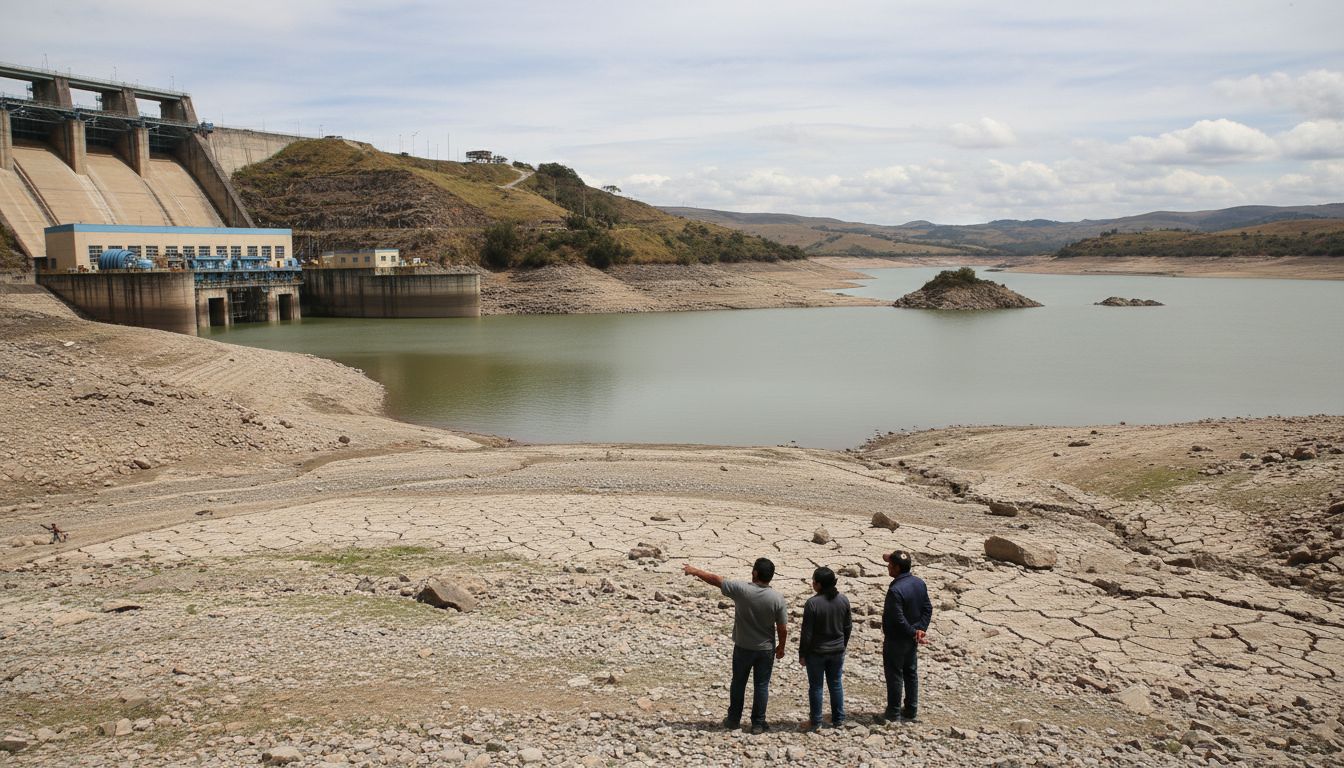
Mazar has fallen to a reported 2026 low of about 2,125 meters above sea level, a fresh sign of strain on Ecuador’s electricity system during the dry season. Reporting based on operational monitoring says the drop was registered on October 11, while authorities are also set to deepen programmed industrial power cuts from 48 to 72 hours per week starting October 12.
The development matters because Mazar is part of the Paute hydroelectric system, one of the country’s most important generation corridors. As reservoir levels move closer to the minimum operating band cited in public reporting, grid managers have less flexibility in how aggressively they can use stored water for generation.
Mazar reservoir hits its lowest reported level of 2026
Recent reporting based on CELEC-linked operational data describes the reservoir’s 2,125-meter reading as the lowest level recorded this year. Coverage from Ecuadorian outlets also says the level has continued trending downward in early October despite efforts to reduce pressure on the system.
That figure should be read as a sign of mounting stress, not as automatic proof of imminent nationwide outages. Still, the sustained attention on Mazar reflects how closely Ecuador’s power outlook is tied to hydrological conditions when inflows weaken during estiaje.
Why the 2,125-meter level matters for Ecuador’s grid
Public reporting and technical references linked to CELEC place Mazar’s minimum safe operating threshold at roughly 2,115 meters above sea level. With the reservoir now reportedly about 10 meters above that level, the operating margin appears much tighter than it was earlier in the year.
As the water level approaches that threshold, operators may face stricter limits on generation in order to protect equipment and preserve remaining reserves. That is especially significant because the broader Paute system plays a major role in Ecuador’s electricity supply, meaning conditions at Mazar can influence national power planning far beyond the reservoir itself.
Government extends industrial power cuts to 72 hours
Another major signal is the expansion of programmed industrial disconnections from 48 to 72 hours per week starting October 12, according to the reporting referenced here. Authorities are framing the measure as demand management intended to preserve hydrological reserves, rather than as confirmation of a nationwide household blackout schedule.
So far, the available reporting points mainly to large electricity users and industrial consumers as the targets of these temporary cuts. The sourced material does not establish an official nationwide schedule for residential blackouts, so that should not be inferred from the industrial restrictions alone.
What the recent trend shows
The immediate concern is not only the latest reading but the speed and persistence of the decline. Recent reports say Mazar has dropped more than 24 meters since late July, with weak inflows during the dry period adding to the strain on hydroelectric output.
Coverage tied to CELEC monitoring has also pointed to reduced inflows and tighter operating decisions within the Paute complex. Some reports say generation units at Mazar were taken out of operation at times to help preserve reserves, underscoring that the system response is already being managed cautiously rather than treated as a routine fluctuation.
What is confirmed and what remains uncertain
What appears confirmed by the reporting and technical references is that Mazar has fallen to a notably low level for 2026, that it is closer to the minimum operating band than before, and that Ecuador is expanding programmed industrial cuts in response to system stress. Those are concrete developments tied to reservoir monitoring and grid management.
What remains uncertain is whether these conditions will lead to broader shortages, additional rationing, or household blackouts. That will likely depend on near-term rainfall, reservoir inflows, hydro output across the system, the availability of thermal backup, possible imports, and whether authorities announce further emergency measures.
For now, the clearest takeaway is that Ecuador’s power managers are trying to buy time as Mazar remains under close watch. If reservoir levels stabilize, pressure on the grid could ease. If they keep falling, concerns about tighter supply conditions may grow.