El Oro Becomes Ecuador's Homicide Epicenter as Killings Surge 63 Percent in Six Months
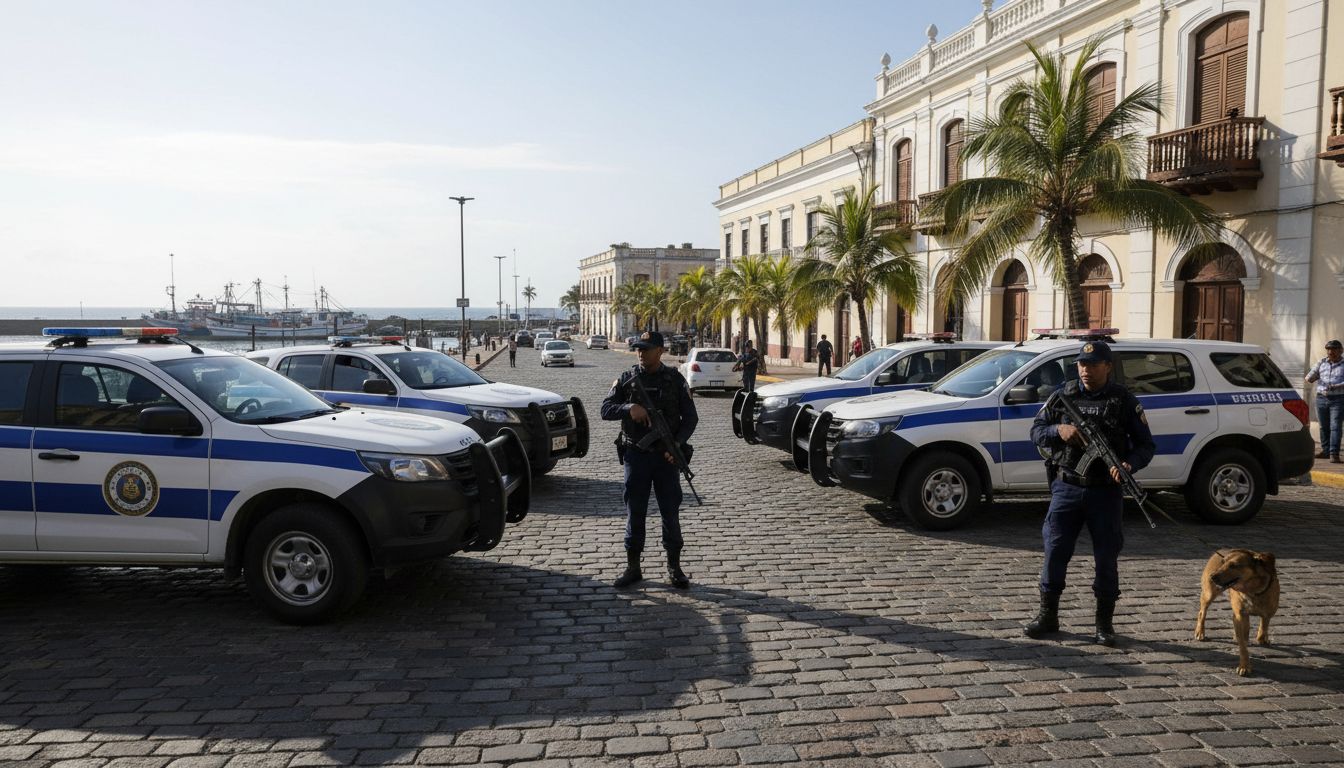
El Oro Becomes Ecuador's Homicide Epicenter as Killings Surge 63 Percent to 521 in Six Months
El Oro, a coastal province in southern Ecuador bordering Peru, has emerged as the country's proportionally most violent province in the first half of 2026. Provincial homicide counts rose from 319 cases in January-June 2025 to 521 cases in the same period of 2026, an increase of roughly 63 percent, according to police-derived statistics cited in local reporting. The surge is notable because it runs directly against the national trend: Ecuador recorded 4,154 homicides nationwide in the first half of 2026, a decline of nearly 11 percent from 4,659 cases in the same period a year earlier.
That contrast has led several outlets to frame El Oro as a statistical and geographic outlier within Ecuador's broader security picture. While much of the country appears to be moving toward relative stabilization, El Oro's numbers point in the opposite direction, prompting officials and commentators to describe the province as a new epicenter of violence relative to its population.
Machala: Ground Zero for the Province's Crisis
Much of the increase is concentrated in Machala, El Oro's provincial capital and a key port city. Homicides there rose from 138 to 223 cases, an increase of about 62 percent, described in reporting as the largest single-canton rise recorded anywhere in the country during the period. Machala's role as a commercial and port hub is frequently cited as a factor that increases its exposure to trafficking-related violence.
Several specific incidents from mid-to-late 2026 have been highlighted in coverage of the crisis. A bombing was reported at a judicial unit handling violence-against-women cases in Machala on July 26, 2026. Days later, on July 30, six people, including three women, were reportedly killed in a combined incident spanning Machala and the nearby canton of Arenillas. These events are presented in reporting as illustrative of an escalating pattern rather than isolated occurrences, though each incident should be understood as a discrete case within a broader statistical trend.
A Localized Crisis Against a National Downward Trend
The provincial-level data underscores how uneven Ecuador's security trends have become. Guayas, historically one of the country's most violent provinces, saw homicides fall by roughly 23 percent, while Los Ríos recorded a decline of about 28 percent. Manabí, by contrast, remained largely flat, with a marginal increase of just over 1 percent.
Set against these figures, El Oro's trajectory stands out sharply. Many observers note that the province's rise cannot easily be explained by factors affecting the rest of the country, since national-level gains in security appear not to have reached El Oro at all. This divergence has become a central point of discussion among analysts trying to understand shifting patterns of criminal activity in Ecuador.
Criminal Turf Wars Driving the Surge
Police-attributed assessments point to competition among criminal organizations, commonly named in reporting as Los Lobos, Los Choneros, and a group referred to as Saobox or Sao Box, as a central driver of the violence. These groups are described as contesting control over drug and arms trafficking routes that run through the province, including its port infrastructure, road networks, illegal mining sites, and proximity to the Peruvian border.
It is worth emphasizing that claims about specific alliances or rivalries between these groups are largely attributed to police diagnostic reports and unnamed law enforcement sources. Some accounts use qualifiers such as "alleged" or "reported" when describing these dynamics, suggesting that while the general pattern of criminal competition is treated as credible, the precise structure of alliances and disputes remains less firmly established.
Escalating Tactics and Unverified Claims
Some reporting describes especially violent tactics in recent incidents, including decapitation, dismemberment, and the use of explosives. These are generally framed as signs of an escalating or more brutal phase of criminal conflict in the province.
A recurring claim in some coverage links these tactics to methods associated with the Venezuelan criminal group Tren de Aragua, suggesting a possible transfer of violent techniques into Ecuador's criminal landscape. However, this specific claim appears to rest on the account of a single investigator or source in at least one outlet's reporting, rather than on corroborated multi-source or official confirmation. Readers should treat this as a possibility raised in some reporting rather than an established fact, and it is worth distinguishing this more speculative narrative from the underlying homicide statistics, which are grounded in official-style data.
Trafficking Infrastructure and the Puerto Bolívar Seizure
El Oro's infrastructure appears central to why criminal groups are contesting the region. Puerto Bolívar, the province's main port, has been the site of significant trafficking activity; authorities reportedly seized 2.4 tons of cocaine concealed within a banana shipment there, an incident cited as evidence of the port's role as a trafficking corridor.
Beyond the port, illegal mining operations and the province's border with Peru are also cited as assets that criminal organizations may be seeking to control. Taken together, these factors are presented in reporting as a plausible explanation for why competition among criminal groups has intensified specifically in El Oro, even as it has eased elsewhere in the country.
Security Response and Resource Allocation Questions
Despite recording the country's highest homicide rate in the first half of 2026, El Oro reportedly ranked only fourth in terms of military and police operational intervention as of mid-June, trailing Pichincha, Guayas, and Manabí. This has raised questions among some observers about whether security resources have been allocated in proportion to the severity of violence on the ground.
A recurring concern in some reporting involves allegations of criminal infiltration into municipal governments in the province. These claims remain unconfirmed and are generally described using cautious language in the original sourcing. Given the absence of corroborating regulatory or judicial findings in available reporting, this remains an area of concern and reported allegation rather than an established fact.
State Response: Late-Summer Crackdown
In late August 2026, authorities announced a multi-agency operation that resulted in 43 detentions linked to Los Choneros and Los Lobos. The operation has been characterized in some coverage as a possible turning point after months of escalating violence in the province.
Whether this crackdown will meaningfully affect homicide trends in El Oro remains to be seen. Given that the underlying drivers described in reporting, including control over trafficking routes and port infrastructure, appear to be structural rather than incidental, sustained reductions in violence may depend on factors beyond a single law enforcement operation. Many observers note that continued monitoring of provincial-level data in the coming months will be necessary to assess whether the province's homicide rate begins to align more closely with the national downward trend.