Ecuador's Wildfire Crisis: 13 Active Fires and Over 21,800 Hectares Burned as Imbabura and Azuay Bear the Brunt
Ecuador's Wildfire Crisis: 13 Active Fires and Over 21,800 Hectares Burned as Imbabura and Azuay Bear the Brunt
Ecuador is in the grip of a severe wildfire emergency. The country's national risk management agency, the Servicio Nacional de Gestión de Riesgos, known as SNGR, reported 13 active forest fires and two additional fires under control as of September 19, 2026. Cumulatively, more than 21,800 hectares of vegetation have burned nationwide so far this year, according to official figures.
The scale of the crisis extends well beyond the currently active blazes. Since January 1, authorities have recorded 3,550 individual fire incidents across 20 of Ecuador's 24 provinces, underscoring how widespread the danger has become. Among the provinces facing the most severe impacts are Imbabura and Azuay, both cited by officials as among the hardest hit.
Imbabura: Ground Zero on the Volcano's Slopes
Imbabura province has emerged as the epicenter of the crisis, with approximately 5,741 hectares burned according to official tallies—the highest provincial total reported. A significant portion of this damage, roughly 270 hectares, has occurred specifically on the slopes of Imbabura volcano near Otavalo, an area valued both for its ecological sensitivity and its proximity to nearby communities.
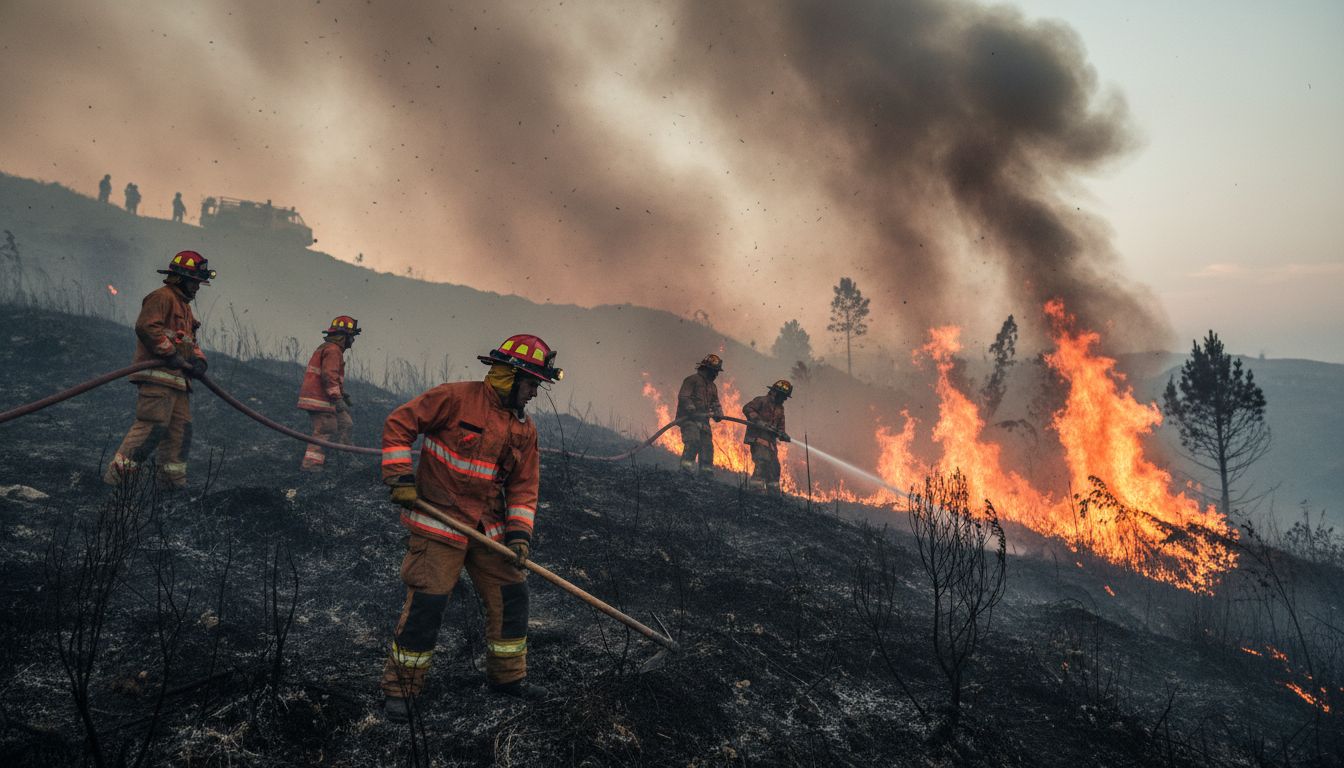
Firefighting crews and emergency personnel remain engaged in suppression efforts across the region. Many observers note that the combination of steep terrain, dry vegetation, and nearby population centers has made the Imbabura volcano fires particularly challenging to contain.
Azuay Among the Hardest Hit: What We Know
Azuay province has also been named among the most heavily affected areas in official reporting on the 2026 wildfire season. However, detailed hectare-by-hectare figures specifically for Azuay were not included in the sourcing available for this report. This is an area that will likely require further verification and follow-up reporting as authorities release more granular data.
What is clear is that Azuay's inclusion reflects the broader national pattern: fires have now touched 20 of Ecuador's 24 provinces, a recurring concern among officials and residents alike as the dry season conditions persist.
Human and Property Toll
The human cost of the crisis has been significant. Official figures cite two deaths and 14 injuries connected to the wildfires. Additionally, 103 people have been affected in some capacity, with 82 individuals displaced from their homes. Property damage includes nine homes destroyed and 14 more damaged.
Beyond Imbabura, Casitagua hill near Quito has also seen active fire activity in a populated area, illustrating how the crisis is not confined to rural or remote zones but is also placing pressure on emergency services near the capital.
Weather Warning No. 72: Conditions Expected to Worsen
Compounding an already difficult situation, Ecuador's national meteorological institute, INAMHI, issued Weather Warning No. 72, valid from September 19 through September 22, 2026. The advisory forecasts high daytime temperatures, low humidity, and strong winds—conditions officials say are favorable for new fire outbreaks and the rapid spread of existing ones.
Provinces identified as being at elevated risk under the advisory include Imbabura, Pichincha, Guayas, Los Ríos, Manabí, El Oro, Loja, Sucumbíos, Orellana, and Pastaza. According to INAMHI, these conditions are being driven by elevated sea surface temperatures and reduced tropospheric humidity, a combination that has historically preceded periods of heightened wildfire activity in the region.
A recurring concern among meteorologists and emergency planners is that this advisory window could see a fresh wave of fire starts or intensification of existing blazes, particularly in provinces already strained by ongoing suppression efforts.
Emergency Response and What Comes Next
The response to the crisis has involved close coordination among several government bodies, including SNGR, the Cuerpo de Bomberos (fire department), the ECU 911 emergency dispatch system, and INAMHI. Helicopters, drones, and ground personnel have been deployed to active fire zones, particularly in areas near populated communities and ecologically sensitive terrain.
With fires burning simultaneously across multiple provinces, resource strain has become a recurring theme in official communications. Many observers note that the coming days—covered by the September 22 weather advisory window—will be a critical test of whether current containment efforts can keep pace with worsening conditions. The overall trajectory of the crisis remains closely tied to how the weather develops through the end of the advisory period and beyond.