Ecuador's Seismic Century: Twenty Years of Quakes and What They Taught Us
 Ecuador records roughly 470 earthquakes in an average year. The overwhelming majority are small, deep, or remote enough that daily life never notices. But the last twenty years have delivered several hard lessons about which earthquakes hurt — and why.
**The ones that mattered**
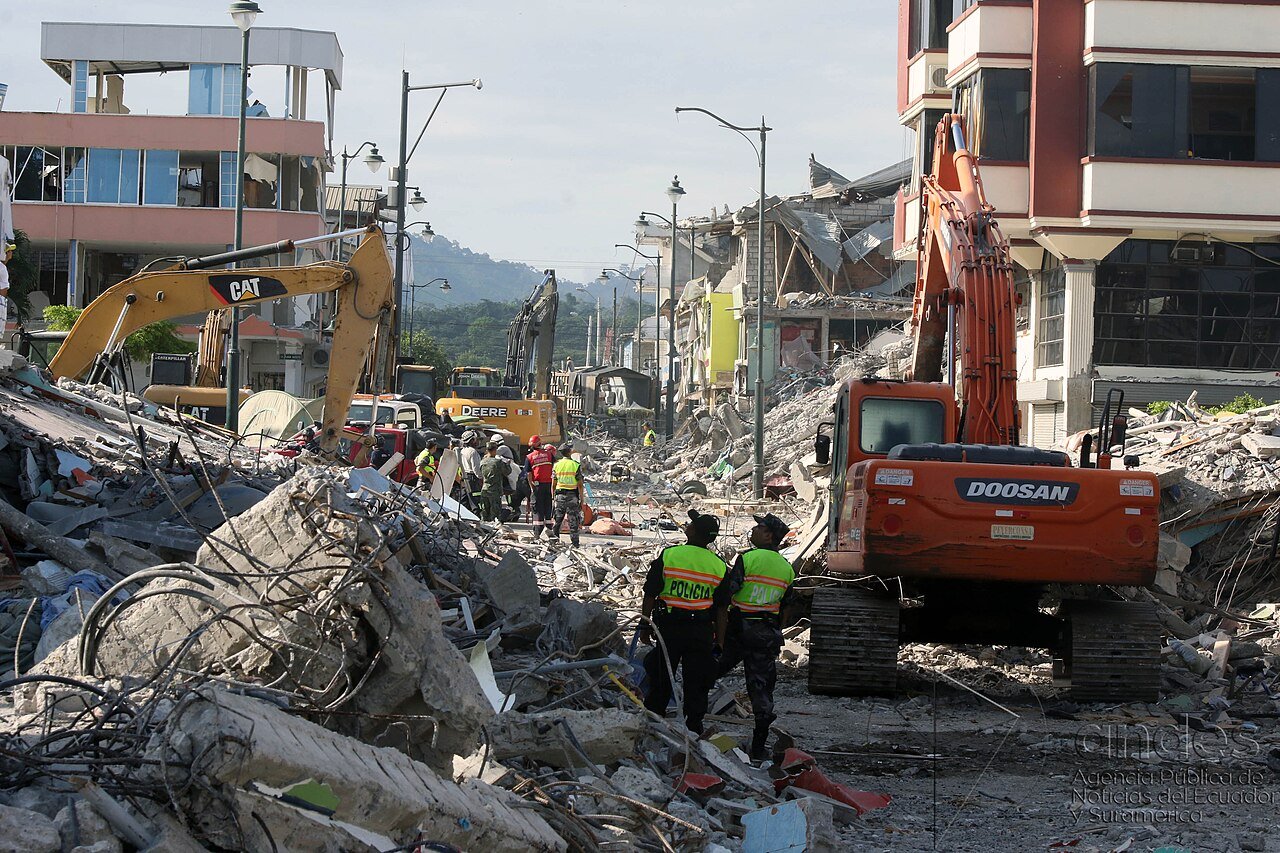
The deadliest by far was April 16, 2016: the Pedernales earthquake, magnitude 7.8, on the coastal subduction zone at a depth of about 20 kilometers. It killed roughly 663 people, injured more than 27,000, and flattened blocks of Pedernales, Portoviejo, and Manta. It was Ecuador's worst disaster in decades — and it broke a segment of the same plate boundary that produced the great 1906 earthquake.
Contrast that with August 2010, when a magnitude 7.1 earthquake struck near Tena, in the Amazon. On paper, a fearsome number — yet it killed no one. The reason: depth. That quake originated more than 200 kilometers down; by the time its energy reached the surface it had spread and weakened. Depth, as much as magnitude, decides what an earthquake does.
The pattern repeats through the recent record. A magnitude 7.5 near Pastaza in 2019 — deep, one death. A magnitude 6.8 in the south near the Peru border in March 2023 — shallower, around 15 to 18 dead, including damage in Cuenca province's neighbor Azuay's coastal-facing communities. A magnitude 6.3 off Esmeraldas in April 2025 — 32 injured, damage concentrated in the usual coastal zone.
**The geography of risk**
Put the map together and the lesson is consistent: Ecuador's highest seismic risk runs along the coast — Esmeraldas, Manabí, Santa Elena, Guayas, and El Oro — where the subduction zone is closest and shallowest. Quito carries its own distinct risk from local crustal faults directly beneath the city. Guayaquil's soft soils amplify shaking.
Cuenca's position is comparatively fortunate: inland, at altitude, away from the locked subduction interface and the capital's crustal faults. History bears this out — but "comparatively fortunate" is not "immune." The 2023 southern earthquake was felt strongly here, and the city's older unreinforced construction is its real vulnerability in any strong regional event.
The practical takeaway hasn't changed in a century: know your building, secure heavy furniture, keep water and documents ready, and agree on where your household reunites. The next chapters of this series look at why scientists say a great coastal earthquake is a matter of when, not if — and what warning technology can and cannot do.
*This article is part of CuencaLife's earthquake series with Marco. Figures from seismological records and contemporary reporting.*
Ecuador records roughly 470 earthquakes in an average year. The overwhelming majority are small, deep, or remote enough that daily life never notices. But the last twenty years have delivered several hard lessons about which earthquakes hurt — and why.
**The ones that mattered**
The deadliest by far was April 16, 2016: the Pedernales earthquake, magnitude 7.8, on the coastal subduction zone at a depth of about 20 kilometers. It killed roughly 663 people, injured more than 27,000, and flattened blocks of Pedernales, Portoviejo, and Manta. It was Ecuador's worst disaster in decades — and it broke a segment of the same plate boundary that produced the great 1906 earthquake.
Contrast that with August 2010, when a magnitude 7.1 earthquake struck near Tena, in the Amazon. On paper, a fearsome number — yet it killed no one. The reason: depth. That quake originated more than 200 kilometers down; by the time its energy reached the surface it had spread and weakened. Depth, as much as magnitude, decides what an earthquake does.
The pattern repeats through the recent record. A magnitude 7.5 near Pastaza in 2019 — deep, one death. A magnitude 6.8 in the south near the Peru border in March 2023 — shallower, around 15 to 18 dead, including damage in Cuenca province's neighbor Azuay's coastal-facing communities. A magnitude 6.3 off Esmeraldas in April 2025 — 32 injured, damage concentrated in the usual coastal zone.
**The geography of risk**
Put the map together and the lesson is consistent: Ecuador's highest seismic risk runs along the coast — Esmeraldas, Manabí, Santa Elena, Guayas, and El Oro — where the subduction zone is closest and shallowest. Quito carries its own distinct risk from local crustal faults directly beneath the city. Guayaquil's soft soils amplify shaking.
Cuenca's position is comparatively fortunate: inland, at altitude, away from the locked subduction interface and the capital's crustal faults. History bears this out — but "comparatively fortunate" is not "immune." The 2023 southern earthquake was felt strongly here, and the city's older unreinforced construction is its real vulnerability in any strong regional event.
The practical takeaway hasn't changed in a century: know your building, secure heavy furniture, keep water and documents ready, and agree on where your household reunites. The next chapters of this series look at why scientists say a great coastal earthquake is a matter of when, not if — and what warning technology can and cannot do.
*This article is part of CuencaLife's earthquake series with Marco. Figures from seismological records and contemporary reporting.*
Header photo / Foto de portada: Photo: Agencia de Noticias ANDES, CC BY-SA 2.0, via Wikimedia Commons