Ecuador's November 29 Vote: Who Must Cast a Ballot, Who Can Choose, and What a No-Show Costs
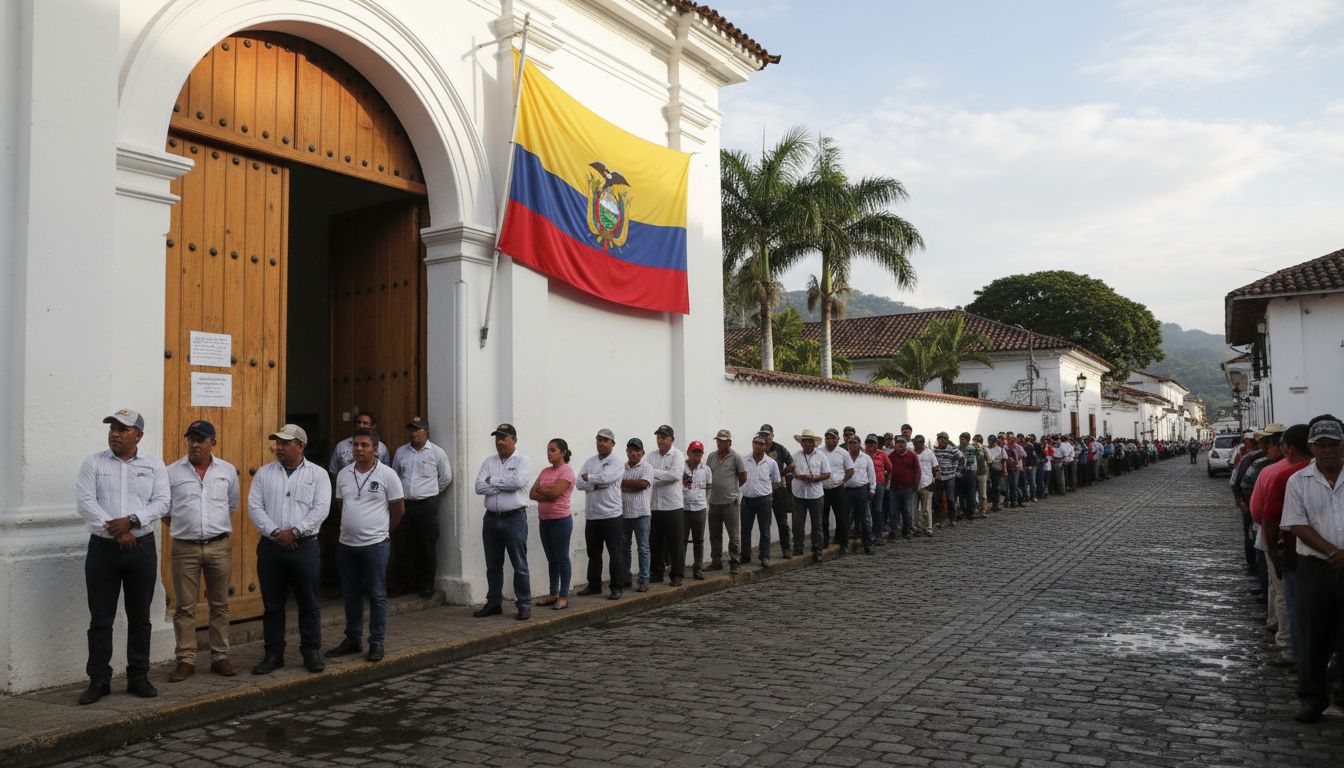
Ecuadorians are set to head to the polls on Sunday, November 29, for local elections known as 'seccionales,' with more than 13.8 million citizens eligible to cast a ballot. Voters will decide a wide range of local offices, including 23 prefects and vice-prefects, 222 mayors, 909 urban councilors, 457 rural councilors, 4,131 parish board members, and 7 members of the Council of Citizen Participation.
Domestic polling hours run from 07:00 to 17:00, while Ecuadorians voting from abroad will have an extended window, from 09:00 to 19:00 local time. The election date itself reflects a shift from the original schedule, with the vote reportedly moved up from a planned February 2027 date, though the precise reasoning cited varies by source.
Who Must Vote vs. Who Can Choose
Ecuador's electoral framework draws a clear line between mandatory and optional participation. Voting is legally obligatory for citizens between the ages of 18 and 65. Outside that range, the system shifts to what is known as 'voto facultativo,' or optional voting. This optional category includes citizens over 65, adolescents aged 16 and 17, people with disabilities, and foreign residents living in Ecuador. Many observers note that this tiered structure reflects an effort to balance civic obligation with flexibility for groups who may face greater barriers to participation.
The Price of Staying Home: What a No-Show Reportedly Costs
For those within the mandatory voting bracket, failing to vote without an accepted justification carries a financial penalty. According to figures circulating in local reporting, the fine amounts to 10% of Ecuador's unified basic salary, calculated at approximately USD 48.20 based on a basic salary of USD 482.
Separate and reportedly steeper penalties apply to citizens who are called to serve as poll workers, known as JRV members, but fail to do so. Here, sourcing is less consistent: some outlets cite a fine equal to 15% of the unified basic salary, while others reference a considerably larger range of six to ten basic salaries. A recurring point across reporting is that poll worker non-compliance can also result in suspension of certain civic participation rights for up to six months.
On the legal basis for these sanctions, reports point to Ecuador's Código de la Democracia, though there is some inconsistency in which article is cited, with references to both Article 292 and Article 299 appearing across different reports. Rather than resolve this discrepancy outright, it is worth noting as an open question pending clearer confirmation from the electoral authority. Separately, some reporting indicates that fines left unpaid after one year could be referred to a compulsory collection process known as coactivas, though this detail, like others tied to future-dated processes, is difficult to independently verify ahead of the election itself.
How to Justify an Absence and Avoid the Fine
For citizens who cannot vote, a formal justification process is available. Requests can be filed starting November 30, the day immediately following the election. Recognized justifications include a conflicting legal mandate, documented illness, a domestic emergency or calamity, and being outside the country on election day.
The process is free of charge and can be completed either in person at one of 24 provincial electoral delegations or through the National Electoral Council's online services. As with other procedural details tied to this election cycle, exact deadlines and documentation requirements are best confirmed directly with the CNE closer to the date.
Campaign Timeline and Electoral Oversight
The official campaign period runs from November 12 through November 26, giving candidates a two-week window ahead of the vote. The National Electoral Council is also organizing 45 mandatory electoral debates in jurisdictions with more than 100,000 registered voters, a measure aimed at giving voters direct exposure to candidates ahead of the election.
Taken together, the rules surrounding Ecuador's November 29 vote illustrate a system that treats voting as a civic duty for most adults while carving out flexibility for specific groups. A recurring theme in the available reporting is the need for voters to understand not just the voting hours and candidate offices at stake, but also the potential financial consequences of sitting out the election without a recognized excuse.