Ecuador's Dry Season Begins With Fuller Reservoirs, but Cenace Flags Possible 450 MW November Shortfall
Ecuador's Dry Season Begins With Fuller Reservoirs, but Cenace Flags Possible 450 MW November Shortfall
Ecuador's dry season, known locally as the estiaje, officially got underway around September 1, 2026. Reservoir levels, particularly at the Mazar dam, started this year's dry period from a noticeably stronger position than during the severe 2024 crisis. Even so, Cenace, the national electricity operator, has cautioned that the country could face a shortfall of up to 450 megawatts in November, historically the most demanding month of the season. This mix of relative optimism and lingering risk has become a familiar pattern in Ecuador's annual dry-season coverage.
Mazar Reservoir Levels Slipping Since Mid-August
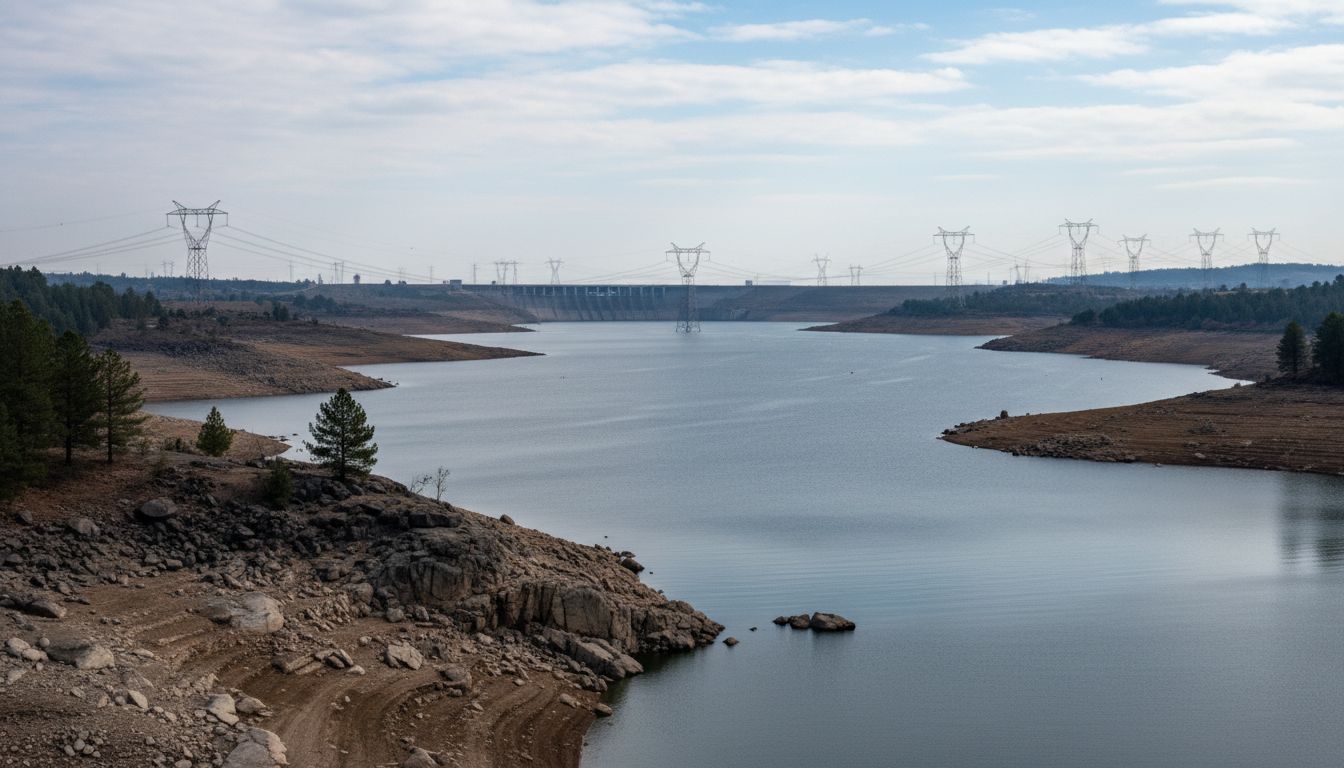
The Mazar reservoir, which regulates water flow into the larger Paute-Molino hydroelectric complex, measured a cota of 2,147.35 meters above sea level on August 31, 2026, roughly 5.65 meters below its maximum operational level. Regional outlets have reported that the reservoir lost several meters over just a few weeks despite entering the dry season from a favorable starting point. Because Mazar plays a central regulating role for one of Ecuador's most important hydro complexes, its trajectory in the coming weeks is widely seen as a key indicator to watch.
The 450 MW November Warning
Cenace has projected a possible electricity deficit of up to 450 MW in November 2026. At least one outlet has reported that under an extreme drought scenario, that figure could climb as high as 1,300 MW. At the same time, Cenace's own modeling reportedly places the probability of a deficit occurring in any single month between October 2026 and March 2027 at just 2 percent, a comparatively reassuring figure that sits somewhat uneasily alongside the more alarming megawatt totals circulating in press coverage. This tension between two ways of framing the same underlying risk is a recurring theme in coverage of the situation.
New Generation Capacity Running Behind Schedule
Officials have outlined plans to add roughly 1,092.1 megawatts of new generation capacity between June 2026 and August 2027, with about 490 MW of that total needed by November to help cover the anticipated gap. As of recent reporting, however, only an estimated 50 to 105 MW of new capacity had actually been secured, well short of what officials say is required. Contract renewals for Karpowership floating power barges have also faced delays: the renewal process for the Emre Bey barge, rated at 100 MW, was reportedly suspended in May 2026, and the Erin Sultan barge's renewal has similarly stalled, according to public procurement records. The Murat Bey barge, also rated at 100 MW, has reportedly had its contract renewed. Many observers describe the pace of new capacity additions as a central point of concern heading into November.
Leaning on Colombia — and Its Own Risks
Ecuador continues to rely significantly on imported electricity from Colombia to help balance its grid. Import flows have reportedly averaged between roughly 301.5 and 380 MW daily in recent weeks, approaching the technical limit of about 450 MW for the interconnection. A recurring concern noted in regional coverage is that Colombia faces its own drought-related vulnerabilities tied to the same forecasted El Niño pattern, which could limit how much support Ecuador can count on if conditions worsen simultaneously in both countries.
El Niño Forecast Raises the Stakes
Forecasters, including the National Oceanic and Atmospheric Administration, have placed the probability of an El Niño event above 80 percent for late 2026, with some regional projections raising that figure closer to 95 percent for the October-through-December window. This matters significantly for Ecuador's power supply because roughly 76 percent of the country's hydroelectric generation is concentrated in the eastern Amazon basin, a region considered particularly exposed to El Niño-driven drought. Underscoring the scale of this dependence, hydroelectric sources reportedly supplied about 76 percent of national electricity demand between August 1 and 19, 2026, while thermal generation covered around 20.4 percent.
What It Means for Ecuadorians Heading Into November
Coverage of the situation reflects a balance between official reassurance, embodied in Cenace's low 2 percent deficit-probability estimate, and more attention-grabbing megawatt shortfall figures that have circulated widely across regional outlets. It is worth noting that much of this coverage appears to trace back to a single primary source: figures attributed to Cenace and Ecuador's Viceministerio de Electricidad, republished or closely paraphrased across multiple publications. Key variables likely to shape how the situation unfolds include the trajectory of Mazar's reservoir levels, the pace at which new thermal capacity comes online, the availability of Colombian import capacity, and how strongly El Niño conditions ultimately develop in the coming months.