Ecuador Extradites Daniel Salcedo, Ronald Herrera and Los Choneros Leader 'Churrón' to the United States
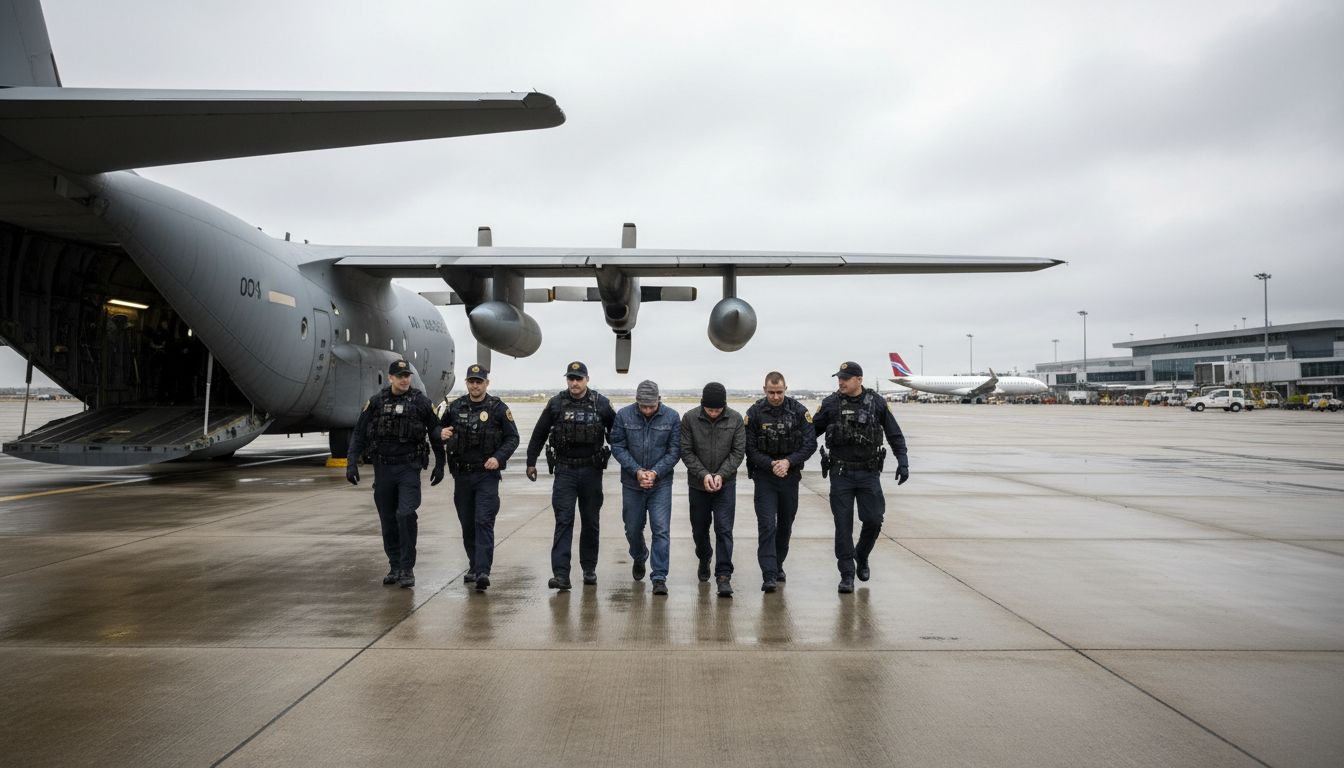
Ecuador Extradites Daniel Salcedo, Ronald Herrera and Los Choneros Leader 'Churrón' to the United States
On October 29, 2026, Ecuador extradited three individuals to the United States: Daniel Salcedo, Ronald Herrera, and Francisco Manuel Bermúdez, known by the alias 'Churrón,' a figure linked to leadership within the Los Choneros criminal organization. The extraditions bring the cumulative number of Ecuadorians sent to US custody to nine, following earlier high-profile cases such as alias 'Fito' in January 2025 and Celso Miguel Moreira Heredia in June 2026.
President Daniel Noboa publicly announced the extraditions, and officials described the action as a blow to organized crime. Observers note that the government has increasingly used extradition as a central pillar of its security strategy, presenting each case as evidence of sustained pressure on criminal networks operating in the country.
Three High-Profile Figures Extradited to the US
Ecuadorian officials framed the extradition of Salcedo, Herrera, and 'Churrón' as part of a continuing campaign against organized crime. This marks the ninth such extradition under the current administration, a sequence officials have repeatedly emphasized publicly as a marker of cumulative government action.
Daniel Salcedo: Convicted Figure and Alleged Intellectual Author of Villavicencio's Assassination
Daniel Salcedo was previously convicted in Ecuador's "Metástasis" case, a prominent corruption and organized crime investigation. He has been sentenced in six separate cases, accumulating more than 30 years in combined sentences, and was held at the Encuentro prison in Santa Elena province prior to his extradition.
Salcedo is also under investigation in Ecuador in connection with the 2023 assassination of presidential candidate Fernando Villavicencio, a case often referred to locally as "Magnicidio FV." Ecuadorian reporting has described him as the "presunto autor intelectual," or alleged intellectual author, of the killing — a characterization that reflects an ongoing allegation rather than a finalized judicial conclusion. A recurring concern among observers is how this pending domestic case will proceed, or whether it may stall, now that Salcedo is in US custody facing separate charges.
Ronald Herrera: From Police Officer to Protected Witness
Ronald Herrera, a former police officer previously commended for his service, became a key protected witness in the Villavicencio assassination investigation. Herrera has stated that he was recruited by Salcedo, and he has alleged attempts at witness tampering and bribery intended to alter his testimony. Multiple outlets report that the US charges against Herrera include three distinct counts, though the precise legal specifics are best confirmed through official US judicial filings.
A recurring concern raised in Ecuadorian coverage is whether Herrera's extradition — despite his role as a protected witness in a major domestic case — could complicate or undermine Ecuador's own prosecutorial efforts tied to the Villavicencio case.
'Churrón' and the Los Choneros Connection
The individual known as 'Churrón' has been identified as Francisco Manuel Bermúdez, associated with leadership roles within Los Choneros, one of Ecuador's most prominent criminal organizations. He faces US charges connected to drug trafficking, organized crime, and money laundering. His extradition is widely viewed as continuing a pattern of US-Ecuador cooperation targeting leadership figures within Los Choneros specifically.
Context: Noboa's Anti-Crime Strategy and US Security Alignment
The Noboa government has positioned these extraditions as part of a broader anti-organized-crime campaign, one that aligns closely — both rhetorically and strategically — with the US-backed "Escudo de las Américas" security initiative. Ecuadorian officials, including Interior Minister Reimberg and President Noboa, have publicly cited the extraditions as evidence of governmental resolve against criminal networks.
Officials have also pointed to Ecuador's homicide statistics as justification for an aggressive security posture, citing more than 9,200 violent deaths reported in the country during 2025. This figure has been used repeatedly in official statements to underscore the scale of the security challenge the government says it is addressing.
Unresolved Questions: Domestic Accountability After Extradition
Despite the government's framing of these extraditions as a significant law enforcement achievement, several questions remain open. Pending Ecuadorian judicial processes — particularly the Villavicencio assassination case — face uncertainty now that key figures, including both an alleged intellectual author and a central protected witness, are in US custody. It remains unclear how US prosecution of Salcedo and Herrera will intersect with, support, or potentially hinder Ecuador's own domestic accountability efforts.
Separately, unproven allegations involving former Interior Minister José Serrano — reportedly linked to claims of surveillance activity targeting Villavicencio prior to his assassination — remain unresolved and unverified in available reporting. These claims should be treated as allegations under investigation rather than established fact.
More broadly, a recurring concern among observers is what this case signals about Ecuador's capacity to pursue domestic justice in high-profile organized crime and political violence cases when central witnesses and defendants are transferred into foreign custody. As these legal processes continue on both sides of the border, significant aspects of accountability — particularly regarding the Villavicencio case — remain unresolved.