Ecuador Doubles Business Power Cuts to 48 Hours Weekly as Mazar Reservoir Crisis Deepens
Ecuador Doubles Business Power Cuts to 48 Hours Weekly as Mazar Reservoir Crisis Deepens
Ecuador's government has expanded electricity rationing measures for large consumers, doubling the voluntary disconnection period from 24 to 48 hours per week effective September 29, 2026. Medium-voltage consumers were newly incorporated into the restrictions the same week. The measures respond to rapidly declining water levels at the Mazar reservoir in Azuay province, as the country enters an unusually early dry season, or estiaje.
Many observers note that the expanded rationing marks a significant escalation from earlier, more limited restrictions targeting only large industrial consumers, raising questions about how far officials may need to go if conditions do not improve.
Why Mazar Matters: Ecuador's Hydroelectric Backbone
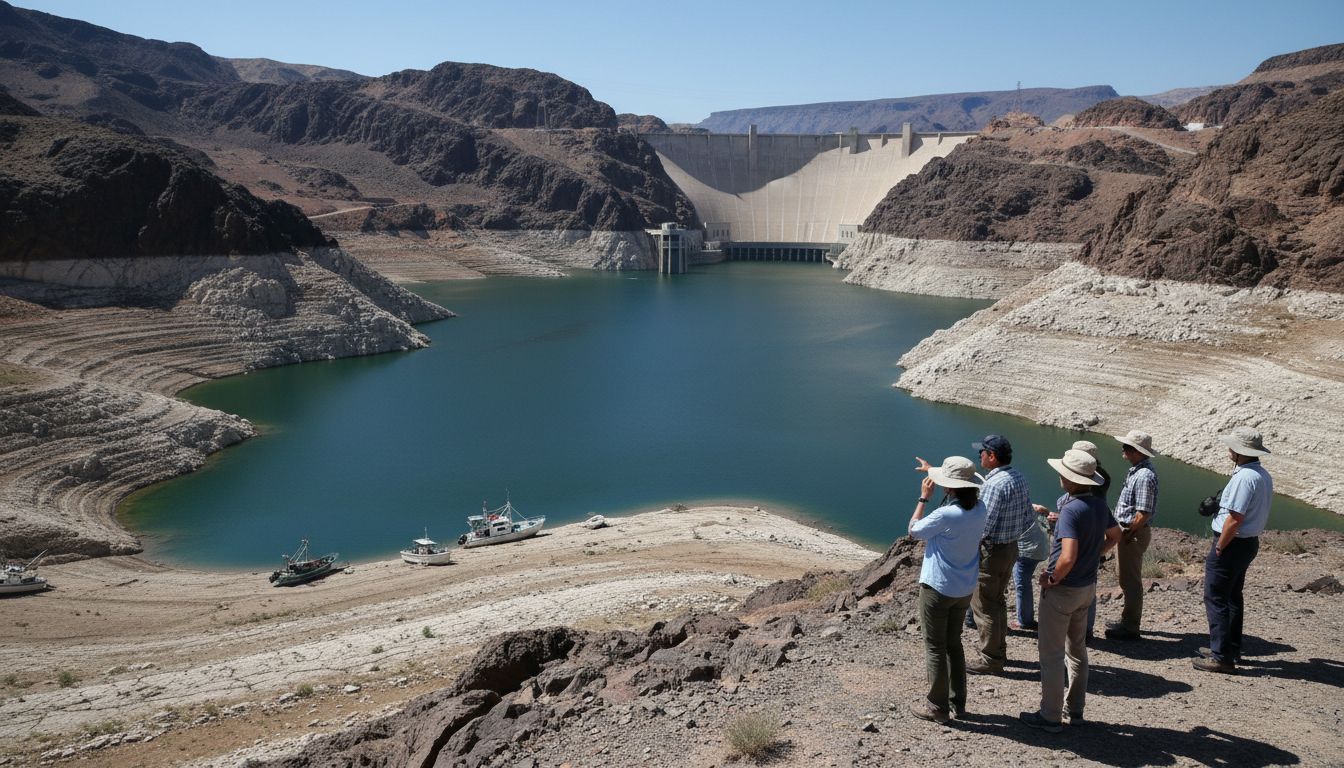
The Paute Integral complex—comprising the Mazar, Molino (Paute), and Sopladora facilities—has an installed capacity of 1,757 MW and supplies approximately 40% of Ecuador's national electricity demand. The Mazar reservoir, a central component of this system, reached a seasonal peak of 2,153.32 meters above sea level (masl) in late July 2026. By late September, the reservoir had fallen to approximately 2,133 masl, a decline of roughly 20 meters in about two months, with the bulk of the drop occurring during September alone.
The minimum safe operating level for the reservoir is set at 2,112 masl, meaning current levels remain about 21 meters above that threshold. While officials and technical sources describe the situation as serious, the reservoir has not yet approached the point at which operations would be directly threatened.
The Demand-Reduction Targets and Early Results
The government's stated goal is to reduce national electricity demand by approximately 500 MW, or about 11% of the average national demand of roughly 4,500 MW. During the first week of restrictions, which began September 22 and applied to 185 large AV1/AV2 consumers, authorities reported a reduction of 135 to 200 MW, or roughly 4.4% of demand.
The expanded measures announced for late September—extending disconnection windows and broadening the pool of affected consumers—are intended to close the remaining gap toward the 500 MW target.
Compounding Factors Behind the Shortfall
Several factors beyond rainfall have contributed to the current strain on Ecuador's electricity system. This year's dry season began roughly a month earlier than usual, catching planners off guard. Two contracted generation projects, known as Progen and ATM, were expected to add a combined 241 MW of capacity but failed to deliver as planned.
Ecuador has also been unable to rely on its usual option of importing supplemental power from Colombia, as that country is experiencing its own drought conditions. Limited availability of thermal generation capacity has further narrowed the government's options for offsetting the hydroelectric shortfall.
Government Response and Mitigation Efforts
Over the past two years, the government has invested approximately $900 million in emergency generation capacity, adding roughly 600 MW of backup power to the national grid. Alongside the mandatory measures for large consumers, authorities have launched a parallel voluntary campaign asking households to reduce electricity consumption by 10%.
Energy Minister Juan Carlos Blum has stated that no national blackout is currently anticipated under present conditions, a reassurance that is explicitly contingent on continued rainfall and consumer compliance with the rationing measures. A recurring consumer concern, however, is whether these conditions will hold if the dry season persists longer than expected.
Real-World Impact: Institutions Adjusting Operations
The effects of the restrictions are already visible in daily institutional life. ESPOL, one of Ecuador's prominent universities, shifted to virtual classes and remote work from September 30 through October 8 in response to the measures. The industrial sector has been curtailing consumption under government directive since restrictions began on September 22.
For businesses now facing extended, biweekly disconnection windows, the practical implications of the expanded rationing are becoming a growing operational concern.
What Comes Next: Risks and Uncertainty
Some experts and officials have offered more cautious assessments than the government's official reassurances, suggesting that residential-sector blackouts remain a possibility if rainfall does not materialize in coming weeks. The dry season could extend until March, prolonging strain on the hydroelectric system well beyond the current measures.
A recurring theme among technical observers is that the ultimate outcome hinges on two largely uncontrollable factors: weather patterns in the coming months and the degree to which large and medium consumers continue to comply with reduction targets. Many observers note that the situation remains fluid, with officials emphasizing that current measures are designed to avoid, rather than confirm, the need for broader residential rationing.