Decree 519: New Overnight Curfew to Hit Five Coastal Provinces Starting November 1, Azuay Not Included
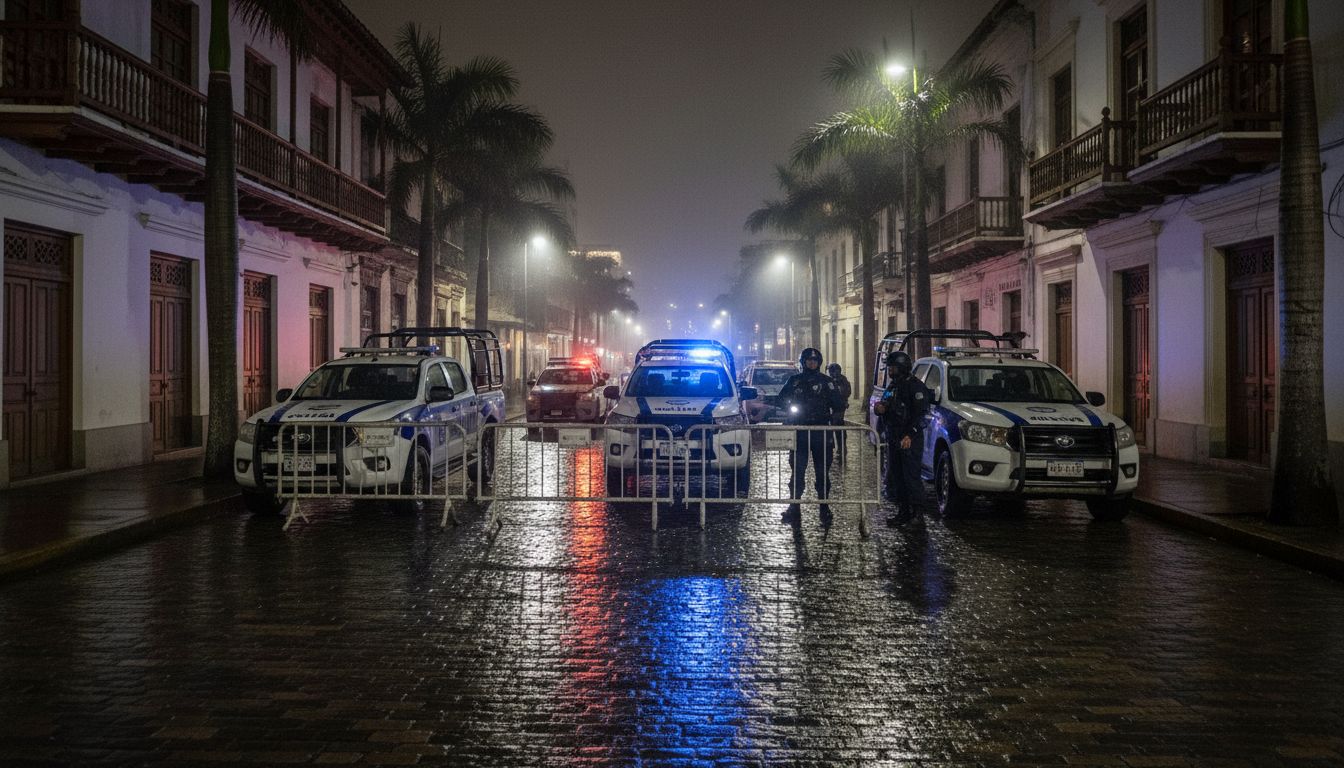
Noboa Signs Decree 519: New Curfew for Five Coastal Provinces
President Daniel Noboa signed Executive Decree 519, reportedly in Manta on October 15, 2026, establishing a nighttime curfew running from midnight to 5 a.m. between November 1 and November 10, 2026. The measure applies to five coastal provinces: Guayas, Manabí, Los Ríos, El Oro, and Esmeraldas. Azuay is explicitly excluded from the decree.
Multiple Ecuadorian outlets have reported on the decree, largely drawing from the same official decree text and government statements. A recurring theme in this coverage is that the reporting leans heavily on police, military, and executive sources, with limited independent verification of the underlying data.
Legal Justification: 'Grave Internal Commotion'
According to official statements, the decree invokes a legal clause describing a situation of grave internal commotion, tied to organized crime and armed violence in the affected provinces. The government has cited homicide and security statistics as the basis for the measure, describing the approach as rational, proportional, and individualized in its application.
Officials have also referenced intelligence reports and strategic analyses as supporting the decision, though these underlying documents have not been made independently available for outside review, according to seed reporting.
The Numbers Behind the Decree
Government figures cited in connection with the decree indicate that 483 homicide victims were reported nationally between September 17 and October 13, 2026, with approximately 58.18 percent of those deaths occurring between 6 p.m. and roughly 6 a.m. Within the five provinces named in Decree 519, officials report that 33 homicides occurred during the specific curfew window of midnight to 5 a.m. during that same period.
Authorities also cite 12,468 security emergencies coordinated by the ECU-911 emergency response system in those provinces during curfew hours. It is worth noting that all of these figures originate from government sources, and the seed reporting reviewed does not indicate independent verification by the outlets publishing them.
Lessons from the Prior Curfew (Decree 498)
Ecuador previously imposed a similar curfew under Decree 498, which ran from September 17 to September 26, 2026. Officials have stated that 1,673 military operations were conducted between September 17 and September 30 under that decree, resulting in 216 arrests and the seizure of various items, according to military reporting.
Separately, Ecuador's Interior Ministry reported 2,561 apprehensions between September 17 and September 29, while other reporting attributes a figure of nearly 1,989 detentions to the joint security task force known as the Bloque de Seguridad. These discrepancies between figures from different official channels point to a broader pattern of single-source attribution across the coverage, and a recurring consumer concern is the difficulty of reconciling these numbers into a consistent account.
Exemptions, Enforcement, and Oversight
Reporting indicates that exemptions exist for essential services, members of the press, humanitarian actors, and diplomatic personnel, though the precise scope of these exemptions appears to vary slightly across different outlets' accounts. Enforcement is reportedly being carried out through joint military and police operations under the Bloque de Seguridad structure.
Many observers note concerns about the potential for uneven enforcement across the five provinces, given the broad discretion described in official statements regarding what constitutes a necessity or emergency exception. Some coverage also references the involvement of Ecuador's Ombudsman's office, or Defensoría del Pueblo, suggesting an effort by officials to present a narrative that balances security enforcement with civil liberties considerations. Independent assessment of how these oversight mechanisms function in practice is not available in the sources reviewed.
International Response and Advisories
The curfew has drawn attention beyond Ecuador's borders. The United States Embassy in Ecuador issued a security alert referencing the curfew for American citizens in the country, and the Israeli Embassy issued a similar advisory for its nationals. These advisories appear to corroborate the curfew's dates and the list of affected provinces independently of statements made by the Ecuadorian government itself.
Context and Open Questions
Coverage of Decree 519 across Ecuadorian outlets relies heavily on the official decree text along with police and military data. None of the sources reviewed for this article include independent verification of the cited statistics, nor do they present opposition or critical viewpoints on the measure.
Whether the prior curfew under Decree 498 meaningfully reduced violence in the affected provinces remains an open and unverified question based on available reporting. A recurring consumer concern is what precedent repeated curfew decrees may set for future security policy, and whether the current measure will be extended or expanded beyond its stated November 1-10 window. As of this writing, no seed source indicates an official answer to that question.